
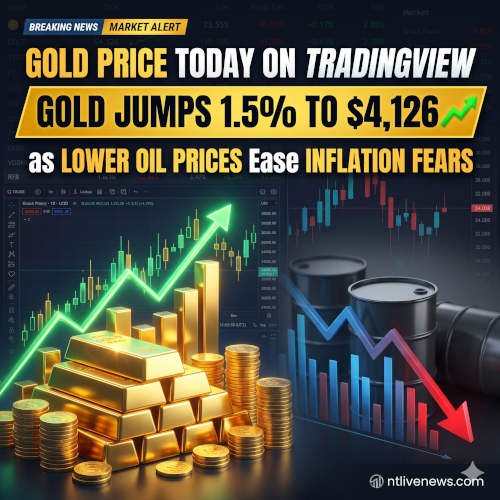
Gold prices climbed more than 1% on Monday, November 9, 2026, as lower crude oil prices eased concerns about inflation and a softer US dollar made bullion more attractive to international buyers. The latest rally has brought fresh attention to the gold price today on TradingView, with investors watching whether the precious metal can extend its recovery ahead of important US economic data.
According to Reuters, spot gold increased 1.5% to $4,126.25 per ounce by 9:26 a.m. ET. US gold futures for December delivery also advanced 1.5% to $4,135.50 per ounce.
The recovery came as oil prices dropped after US President Donald Trump played down the possibility of renewed military strikes against Iran. Lower energy prices helped reduce immediate inflation concerns, although shipping attacks near the Strait of Hormuz continued to create uncertainty for global oil supplies.
Investors are now preparing for the October US Consumer Price Index (CPI) report, scheduled for Tuesday, November 10. The inflation figures could influence expectations for Federal Reserve interest rates and determine whether gold maintains its upward momentum.
Gold Price Today on TradingView: What Is Driving the Rally?
The latest increase in gold prices reflects several factors working together.
First, crude oil prices declined as markets assessed the possibility of reduced tensions between Washington and Tehran. Lower oil prices can reduce transportation, manufacturing, and energy costs, potentially easing inflationary pressure across the economy.
Second, the US dollar weakened on Monday. Because international gold prices are generally quoted in dollars, a weaker dollar can make bullion less expensive for buyers using other currencies. This can support international demand.
Third, investors are adjusting their expectations ahead of the latest US inflation figures. If inflation begins to cool, markets may become less concerned about additional Federal Reserve tightening. That possibility can support gold because the metal does not pay interest.
Reuters quoted market analyst Jim Wyckoff of American Gold Exchange, who linked the weaker dollar and lower crude prices to improved sentiment toward gold and silver.
However, the market outlook remains uncertain. Strong US economic data could strengthen the dollar and increase expectations of higher interest rates, creating fresh pressure on bullion.
Why Falling Crude Oil Prices Matter for Gold
Oil prices have become an important influence on financial markets because energy costs affect inflation.
When crude oil becomes more expensive, businesses often face higher transportation, production, and operating costs. Some of these increases eventually reach consumers through higher prices for goods and services.
That can make central banks more cautious about reducing interest rates. If inflation remains elevated, policymakers may keep borrowing costs higher for longer or consider additional rate increases.
Such an environment can be challenging for gold. Unlike savings accounts and government bonds, physical gold does not generate regular interest income. Higher interest rates can therefore increase the opportunity cost of holding bullion.
On November 9, oil prices moved lower after Trump indicated that he was unlikely to order fresh strikes on Iran while negotiations continued.
Brent crude fell to $96.67 per barrel, down $1.65 or 1.7%, by 8:30 a.m. GMT. US West Texas Intermediate crude declined to $89.87 per barrel, a drop of 1%.
However, attacks on ships near the Strait of Hormuz kept supply concerns alive. The waterway is strategically important for global energy shipments, so any disruption could quickly change the oil market outlook.
The decline in crude prices helped ease immediate inflation concerns, supporting gold during Monday’s session.
US CPI Report Could Influence the Next Gold Price Move
The next major event for gold traders is the US Consumer Price Index report for October 2026.
The Bureau of Labor Statistics has scheduled the release for Tuesday, November 10, at 8:30 a.m. Eastern Time. The report will provide updated information about changes in consumer prices and help investors assess the direction of inflation.
The CPI measures changes in the prices consumers pay for goods and services. It covers areas such as housing, transportation, food, medical care, and energy.
For gold investors, the report matters because inflation data can influence Federal Reserve policy expectations.
A softer-than-expected inflation reading could reduce concerns about further interest-rate increases. That might weaken the dollar or lower Treasury yields, creating a more supportive environment for gold.
On the other hand, stronger inflation could reinforce expectations that the Federal Reserve will maintain a restrictive monetary policy. That could support the dollar and weigh on precious metals.
The October Producer Price Index report is also scheduled for Friday, November 13. Together, the CPI and PPI releases will give markets additional information about consumer and wholesale inflation trends.
Federal Reserve Rate Hike Expectations Create a Challenge
Despite Monday’s gold rally, interest-rate expectations remain a significant risk.
Reuters reported that traders were pricing in an 80.5% probability of a Federal Reserve rate increase in December. This market-implied probability reflects futures trading at the time of the report; it does not mean the Fed has decided to raise rates.
The possibility of another increase follows stronger-than-expected US employment data, which reinforced concerns that the economy may remain resilient enough to keep inflation pressures alive.
If the Federal Reserve raises rates, interest-bearing assets could become more attractive relative to gold. Higher US yields can also support the dollar, potentially limiting gains in dollar-priced bullion.
However, if inflation data weakens and energy prices remain lower, expectations could change.
This creates a difficult environment for investors searching for a reliable gold price forecast for 2026. The next direction may depend on whether inflation concerns or expectations of easier monetary conditions have a stronger influence on financial markets.
Investors should also remember that futures-market probabilities can change rapidly as new economic information becomes available.
China Adds 25.8 Tonnes of Gold to Its Reserves
Another important development supporting long-term interest in gold is continued central-bank buying.
China added approximately 25.8 metric tons of gold to its official reserves in October 2026. Reuters reported that this was the country’s largest monthly addition in three years.
The purchase is significant because central banks have become important participants in the international gold market. Their buying can reflect efforts to diversify reserves and reduce reliance on individual currencies or other financial assets.
China’s latest purchase also highlights the difference between short-term market movements and longer-term demand.
Gold prices can decline when interest-rate expectations rise or the dollar strengthens. However, central-bank purchases may provide an additional source of demand over longer periods.
The World Gold Council tracks reported central-bank gold holdings and purchases using official data. Its September 2026 report showed that central banks collectively reported 61 tonnes of net purchases during that month, the highest monthly total of 2026 at that point.
China’s October purchase adds another important development to the global gold demand picture.
Gold and Silver Prices Rise Together
Gold was not the only precious metal to gain on Monday.
Reuters reported that spot silver advanced 1.4% during the session. Platinum gained 1.9%, while palladium increased 0.5%.
These movements suggest that the improvement in precious-metal sentiment extended beyond gold.
Silver can respond to many of the same macroeconomic factors as gold, including changes in the dollar, interest rates, and investment demand. However, silver also has significant industrial uses, which means manufacturing and technology demand can influence its price.
Platinum and palladium are also affected by industrial demand, particularly from the automotive sector.
Investors tracking precious metals on TradingView may therefore compare gold, silver, and platinum charts to understand whether a market move is limited to bullion or reflects broader strength across the sector.
What Gold Traders Should Watch on TradingView
Gold traders are likely to focus on several developments over the coming sessions.
The $4,100 level: Gold was trading above this psychologically important price area during Monday’s rally. Investors will watch whether the metal can maintain momentum above it. This is a reference level, not a confirmed technical support level.
The October CPI report: Tuesday’s inflation data could influence the dollar, Treasury yields, and expectations for Federal Reserve policy.
The December Fed meeting: Market expectations for a rate increase remain elevated. Any change in those expectations could affect gold demand.
Crude oil and Middle East developments: Lower energy prices have supported gold by easing inflation concerns. However, renewed shipping disruptions or geopolitical escalation could quickly change market sentiment.
Central-bank purchases: China’s latest addition of 25.8 tonnes highlights the continuing role of official-sector demand in the gold market.
TradingView charts can help investors monitor spot gold, commonly represented by the XAUUSD symbol, alongside the US dollar index, crude oil benchmarks, and Treasury yields. Looking at these markets together can provide more context than following the gold chart alone.
Gold Price Forecast: Can Bullion Continue Its Recovery?
Gold’s latest advance has improved short-term sentiment, but the next move will depend on incoming economic data and developments in the energy market.
If US inflation eases, crude prices remain under pressure, and the dollar weakens, gold could receive additional support. Such conditions may reduce concerns about further monetary tightening and improve the appeal of non-yielding assets.
However, the outlook could change if October inflation comes in higher than expected. Stronger price growth may increase expectations of a December rate hike and put renewed pressure on bullion.
Geopolitical developments also remain important. A lasting reduction in tensions involving Iran could help stabilize energy markets and reduce inflation concerns. But further attacks near major shipping routes could push oil prices higher again.
China’s continued gold purchases provide another factor for long-term investors to monitor. Central-bank demand may support the market, although it cannot guarantee that prices will rise.
For now, the November 9 rally shows how quickly gold can respond to changes in oil prices, currency movements, and interest-rate expectations.
Final Outlook: Gold Investors Await US Inflation Data
Gold climbed 1.5% to $4,126.25 per ounce on November 9 as falling crude oil prices and a weaker US dollar helped ease inflation concerns.
The rally comes at an important time for the precious-metals market. Investors are preparing for the October US CPI report, monitoring expectations for a December Federal Reserve rate increase, and assessing the impact of geopolitical developments on energy prices.
China’s addition of 25.8 tonnes of gold to its reserves also highlights continued central-bank demand.
Although the latest movement has strengthened the short-term outlook, gold remains exposed to interest-rate and currency risks. The CPI release on November 10 could provide the next major signal for traders.
Investors following the gold price today on TradingView should monitor inflation data, crude oil prices, the US dollar, and Treasury yields before drawing conclusions about the next market direction.
Frequently Asked Questions
1. What is the gold price today, November 9, 2026?
Reuters reported spot gold at $4,126.25 per ounce, up 1.5%, by 9:26 a.m. ET on November 9. December US gold futures gained 1.5% to $4,135.50.
2. Why did gold prices rise on November 9?
Gold gained as crude oil prices declined, inflation concerns eased, and the US dollar weakened. Investors were also preparing for upcoming US inflation data.
3. What is the gold price on TradingView?
TradingView allows users to monitor gold-market instruments, including spot gold against the US dollar under the XAUUSD symbol. Prices change continuously during market trading.
4. When will the next US CPI report be released?
The October 2026 Consumer Price Index report is scheduled for November 10, 2026, at 8:30 a.m. Eastern Time.
5. How could a Federal Reserve rate hike affect gold?
Higher interest rates can increase the opportunity cost of holding gold because bullion does not pay interest. A rate increase may also support the US dollar, creating pressure on gold prices.
6. How much gold did China buy in October 2026?
China’s central bank added approximately 25.8 metric tons to its gold reserves in October, according to figures reported by Reuters.
Sources and References
- Reuters: Gold climbs more than 1% as inflation fears ease on lower crude prices, November 9, 2026.
- U.S. Bureau of Labor Statistics: November 2026 release schedule and October CPI announcement.
- World Gold Council: Central Bank Gold Statistics, September 2026.
- Reuters: Oil falls as Trump signals restraint on Iran despite fresh shipping attacks, November 9, 2026.