
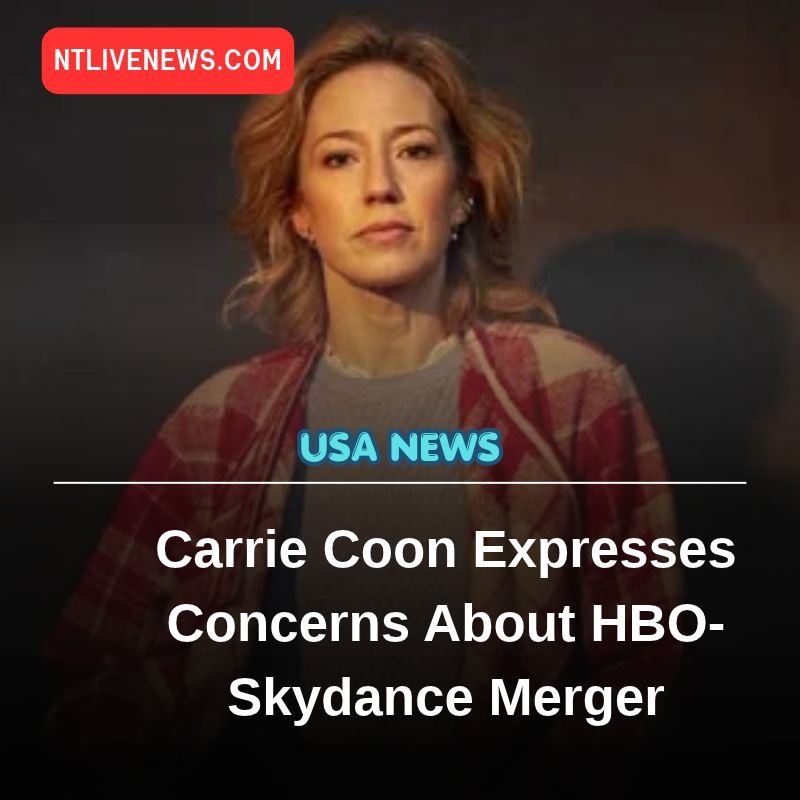
Actress Carrie Coon has a clear message for HBO’s new corporate leadership: she hopes the network does not lose the creative identity that made it one of television’s most respected brands.
In a recent interview with Elle, the star of The Gilded Age and The White Lotus discussed her concerns about the future of HBO following the merger involving Paramount and Warner Bros. Discovery. Coon said corporate consolidation can damage the creative process by encouraging gatekeeping and censorship.
The actress also questioned whether HBO would continue producing challenging, interesting and edgy programming under its new ownership. Her comments come at a major turning point for the entertainment industry, as the combined company prepares to integrate its film, television and streaming businesses.
“I’m an HBO gal,” Coon said in the interview. She added that she wants the network to preserve its identity rather than become less daring or creative.
Her remarks have drawn attention because HBO has built its reputation on ambitious storytelling, controversial subjects and distinctive television productions. Coon’s concern reflects a wider debate in Hollywood about whether large media mergers will protect creative freedom or place greater pressure on studios to prioritize financial returns.
What Carrie Coon Said About HBO After the Merger
Coon did not hide her concerns about the changes taking place at HBO. During her conversation with Elle, she described corporate consolidation as harmful to art because it can lead to gatekeeping and censorship.
She said she hopes HBO can maintain the qualities that have made the network stand out for decades. Those qualities include its willingness to develop unusual stories, take creative risks and support projects that may not fit traditional commercial expectations.
“I’m very eager to see how HBO comes out of this,” Coon said, questioning whether the network would retain its identity of making challenging, interesting and edgy work.
She also made clear that she does not want HBO to become softer around the edges.
Coon’s comments were not an announcement about any specific canceled show or programming change. Instead, they expressed concern about what could happen as the network adjusts to a new corporate structure.
The actress also pointed to the economic consequences of consolidation. She argued that when fewer large companies control the entertainment business, consumers may end up paying more while receiving fewer choices.
“When three big companies are running the show, we’re going to pay more, and we’re going to get less,” she said.
Her remarks highlight two major issues surrounding the merger: the future of creative independence and the effect of media consolidation on audiences.
Why HBO’s Creative Identity Matters
HBO has spent decades building a reputation for television that often pushes beyond conventional storytelling.
The network became known for high-profile dramas, complex characters and productions that attracted major actors, directors and writers. Its programming has included crime dramas, historical series, comedies and stories that explore difficult social issues.
Shows such as The Sopranos, The Wire, Game of Thrones and Succession helped establish HBO as a major force in premium television.
More recently, productions including The White Lotus, The Last of Us and The Gilded Age have continued to attract audiences and critical attention.
For performers such as Coon, HBO represents more than a television outlet. It is also a place where actors and creative teams can work on projects with distinctive characters and complicated themes.
Coon has a long professional relationship with the network. She played Nora Durst in The Leftovers and currently stars as Bertha Russell in The Gilded Age. She also appeared in the second season of The White Lotus.
Her experience working on multiple HBO productions helps explain why the network’s future matters to her.
However, the question is not simply whether HBO will continue making successful television. The bigger issue is whether it will retain the creative independence that allowed it to develop projects that might have struggled to find support elsewhere.
What Happened in the Paramount and Warner Bros. Discovery Merger?
The corporate changes behind Coon’s comments began with the acquisition of Warner Bros. Discovery by Paramount’s Skydance-led business.
The transaction was completed on October 6, 2026, bringing major entertainment properties under the combined company known as Skydance. The portfolio includes Paramount’s film and television operations, Warner Bros., HBO, streaming services and major news organizations.
The merger combines two major entertainment libraries and brings HBO and Paramount+ under the same corporate ownership.
The new company has described the transaction as an opportunity to create a larger entertainment business with broader distribution capabilities and a significant content portfolio.
However, mergers of this size also involve difficult decisions about costs, staffing, technology, programming and the future direction of individual brands.
That is why Coon’s comments have attracted attention. HBO has a recognizable identity, and viewers may want reassurance that its programming decisions will not become overly influenced by corporate priorities.
The company has not announced that HBO will abandon its established programming approach. Coon’s remarks should therefore be understood as a concern about the possible consequences of consolidation, not confirmation that the network has already changed its creative direction.
Will HBO Remain Independent Under Skydance?
One of the biggest questions following the merger is how much independence HBO will retain within the combined company.
Before the transaction closed, Skydance leadership had indicated that HBO should continue to operate as a distinctive brand. The company has emphasized the value of HBO’s reputation and its position in premium television.
That commitment will be closely watched by actors, writers, producers and viewers.
Maintaining a separate brand identity, however, is not necessarily the same as having complete creative independence. Corporate ownership can influence budgets, management structures, distribution strategies and the types of projects that receive financial support.
The challenge for Skydance will be balancing its financial objectives with the creative strengths that made HBO valuable in the first place.
If HBO continues to support distinctive programming, the merger could give its productions access to a larger distribution network and additional resources.
On the other hand, if cost-cutting decisions reduce opportunities for experimental projects, the network could face criticism from the creative community.
For now, the long-term outcome remains uncertain.
Streaming Changes Could Affect HBO Viewers
The merger also brings changes to the streaming market.
HBO Max and Paramount+ are now part of the same corporate portfolio. Skydance has announced plans to offer the services together in a bundle beginning in early 2027.
The company is also working toward bringing its streaming operations closer together over time.
For subscribers, the changes could affect how they access movies, television shows and exclusive programming. A bundle may offer convenience for people who already pay for both services.
However, viewers will want clear information about subscription prices, advertising options, content availability and whether the services will eventually become one platform.
The company has not yet provided every detail about the longer-term streaming structure.
Coon’s concern about audiences paying more for less is particularly relevant in this environment. Streaming customers have already experienced price increases and changes to subscription plans across the industry.
A larger entertainment company may have more content to offer, but the value of that content will depend on pricing, accessibility and the quality of its programming.
The merger’s success will therefore be judged not only by financial performance but also by whether viewers feel they are receiving better choices.
Corporate Consolidation and Creative Freedom in Hollywood
Coon’s comments are part of a wider discussion about media consolidation.
Hollywood has experienced several major changes in ownership over the past decade. Large companies have acquired studios, combined streaming operations and reorganized their entertainment businesses to compete with technology companies and global streaming platforms.
Supporters of consolidation argue that larger businesses can invest in expensive productions, expand distribution and compete more effectively in a crowded market.
Critics worry that fewer independent decision-makers can reduce opportunities for filmmakers and television creators.
When a small number of companies control a larger share of production and distribution, projects may face more centralized approval processes. Executives may also favor established franchises and productions with predictable commercial appeal.
That does not mean every large company will avoid creative risks. HBO’s future programming will depend on the decisions made by its leadership and the resources made available to creators.
Still, Coon’s comments reflect a concern shared by many people in the entertainment business: creative freedom can become harder to protect when financial and corporate priorities dominate decision-making.
Carrie Coon Also Discussed Aging and Acting
Coon’s Elle interview covered more than the future of HBO.
The actress also discussed aging, beauty standards and the pressure some performers face to maintain a youthful appearance.
She said women should be able to make their own choices about their appearance and do what makes them feel comfortable.
However, Coon also explained that she sometimes finds it harder to connect emotionally with a performance when an actor’s face appears unable to move naturally.
She described empathy and facial expression as important parts of how audiences connect with performers.
Coon said she personally does not want to make artistic decisions out of fear of aging or death. Instead, she would rather accept that aging is part of life.
Her comments add another dimension to the interview, showing her willingness to discuss subjects that can be uncomfortable within the entertainment industry.
What Happens Next for HBO?
HBO’s future will become clearer as Skydance continues integrating the businesses and implementing its plans for streaming and content production.
The company has said it wants to maintain HBO’s identity while using the combined business to reach a wider audience. However, the practical meaning of that commitment will depend on future programming decisions, budgets and leadership priorities.
Coon’s comments are a reminder that the network’s reputation was built through creative choices that sometimes challenged conventional television.
For viewers, the key questions will be whether HBO continues developing original dramas, supporting distinctive storytellers and taking risks on projects that stand apart from mainstream entertainment.
The merger could provide new opportunities, but it also creates uncertainty about how the network will balance creative ambition with corporate expectations.
Coon has made her position clear: she wants HBO to remain bold, challenging and recognizable.
Whether the network can preserve that identity under its new ownership is something audiences and the entertainment industry will be watching closely.
Frequently Asked Questions
Why is Carrie Coon concerned about HBO?
Carrie Coon is concerned that the Paramount and Warner Bros. Discovery merger could affect HBO’s creative independence. She believes corporate consolidation can encourage gatekeeping and censorship, potentially making programming less challenging.
What did Carrie Coon say about HBO becoming soft?
Coon said she hopes HBO will continue making challenging, interesting and edgy television. She expressed concern that the network could become “soft around the edges” after the merger.
Who owns HBO after the Paramount-Warner Bros. Discovery merger?
HBO is part of the combined Skydance company following the completion of the Paramount and Warner Bros. Discovery transaction on October 6, 2026.
What shows has Carrie Coon appeared in on HBO?
Coon has appeared in HBO productions including The Leftovers, The White Lotus and The Gilded Age.
Will HBO Max and Paramount+ combine?
Skydance has announced plans to offer HBO Max and Paramount+ together in a bundle beginning in early 2027. The company has also discussed bringing the streaming platforms closer together over time.
Has HBO announced that it will stop making edgy shows?
No. Coon expressed concern about the possible effects of the merger, but her comments do not confirm that HBO has changed its programming strategy or decided to stop making challenging television.