
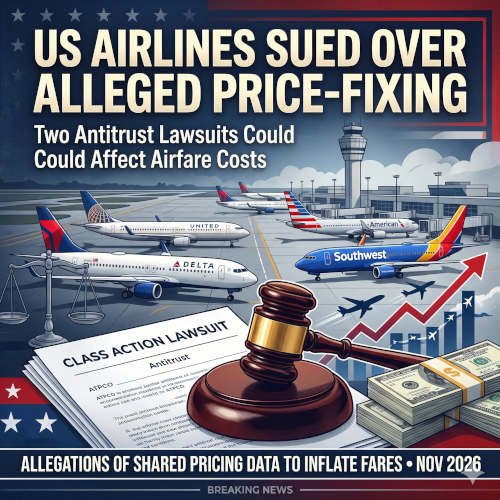
Major U.S. airlines are facing two proposed class-action antitrust lawsuits accusing them of sharing sensitive pricing and customer-shopping information to keep domestic airfares artificially high. The cases, filed in federal courts in Virginia and Washington in early November 2026, target major carriers and the Airline Tariff Publishing Company (ATPCO), a company that distributes airfare information across the travel industry.
The lawsuits claim that airlines used shared data systems to monitor competitors’ prices and respond quickly to discounts, potentially reducing competition and limiting opportunities for travelers to find cheaper tickets. However, these are allegations made by the plaintiffs. No court has determined that the airlines or other defendants violated antitrust laws.
Two Airline Antitrust Lawsuits Target Major U.S. Carriers
The first proposed class action, Brown v. Airline Tariff Publishing Company, was filed in the U.S. District Court for the Eastern District of Virginia. It names American Airlines, Delta Air Lines, Southwest Airlines, Alaska Airlines, JetBlue Airways, ATPCO and its subsidiary, 3Victors, as defendants.
A second lawsuit, Ward v. Airline Tariff Publishing Company, was filed in the U.S. District Court for the Western District of Washington. It names American, Delta, United Airlines, Southwest, JetBlue and Alaska Air Group, along with ATPCO and 3Victors. Alaska Air Group owns Alaska Airlines and Hawaiian Airlines.
Both cases accuse the defendants of participating in an arrangement that allegedly allowed airlines to exchange competitively sensitive information. The plaintiffs argue that the information exchange weakened price competition and helped keep domestic airline tickets more expensive.
The cases rely on Section 1 of the Sherman Antitrust Act, which prohibits agreements that unreasonably restrain trade. The plaintiffs are seeking legal remedies, including damages and restrictions on the alleged information-sharing practices.
What Is ATPCO and Why Is It Central to the Cases?
ATPCO, or the Airline Tariff Publishing Company, is a major airfare information and distribution business based in Herndon, Virginia. It collects and distributes airline fare information used by travel companies, booking platforms and other industry participants.
Airlines have used ATPCO to distribute fare information for decades. Its systems help ensure that ticket prices, fare rules and other details can be communicated across travel sales channels.
The lawsuits focus on a newer and more controversial issue: whether technology operated by ATPCO and its subsidiary 3Victors allowed participating airlines to exchange information beyond publicly available ticket prices.
According to the complaints, the systems could provide insight into competitors’ dynamic fares, customer searches and travel demand. Plaintiffs argue that access to this information could make it easier for airlines to monitor one another and respond to discounts before those offers attract more customers.
ATPCO is therefore a central defendant because the plaintiffs claim its technology helped facilitate the alleged information exchange. The company has denied the allegations in the Washington case and said it plans to defend itself vigorously.
How Dynamic Airline Pricing Works
Dynamic airline pricing is a system in which ticket prices can change based on several factors rather than remaining fixed. Airlines use revenue-management technology to adjust fares as market conditions change.
Factors that can influence airfare include:
- Passenger demand for a particular route.
- The number of seats remaining on a flight.
- Travel dates, holidays and seasonal demand.
- Competitors’ advertised ticket prices.
- Booking patterns and customer shopping activity.
- The time remaining before departure.
For example, a ticket that costs $180 several weeks before departure could become more expensive as seats sell out. A competing airline might also reduce its fare to attract passengers on the same route.
Dynamic pricing itself is a normal and widely used airline practice. The lawsuits do not establish that airlines are prohibited from adjusting their own fares or monitoring publicly available prices. Instead, they challenge the alleged sharing of non-public, competitively sensitive information through common data systems.
What the Plaintiffs Say About Airline Pricing Data
The complaints focus on technology associated with ATPCO and 3Victors, including systems identified as Iris, PriceEye and DemandView.
According to the allegations described in the filings and industry reporting, Iris serves as a repository for airline shopping and pricing information. PriceEye provides analytical tools that can help participating airlines monitor competitor pricing and identify changes in the market.
The Virginia complaint also discusses DemandView, which plaintiffs describe as a tool that provides information about developing travel demand.
The plaintiffs allege that airlines contribute their own information to shared systems in exchange for access to data from competitors. They argue that this arrangement could make it easier for carriers to identify discounts and adjust their own offers quickly.
The Washington lawsuit similarly claims that the systems allow airlines to monitor competitors’ dynamic pricing activity. Its attorneys argue that access to information about private offers could reduce the incentive to compete through lower fares.
These descriptions reflect the plaintiffs’ claims, not findings established by a court. The defendants may challenge the allegations and dispute how the technology is characterized.
What the Lawsuits Could Mean for U.S. Travelers
The cases could become important for millions of Americans who regularly purchase domestic airline tickets. If the plaintiffs establish their claims, the litigation could lead to changes in how participating airlines exchange pricing and shopping information.
Travelers could potentially benefit from stronger competition if airlines have fewer opportunities to monitor non-public offers made by competitors. However, there is no guarantee that ticket prices will fall as a result of these lawsuits.
Airfares depend on many factors, including fuel expenses, aircraft availability, staffing costs, passenger demand, airport charges and competition on individual routes. Even a successful antitrust case would not automatically produce lower prices across every airline or destination.
The lawsuits also do not mean that passengers are currently entitled to refunds. Any financial recovery would depend on the legal proceedings, the definition of any certified class, the evidence presented and the outcome of the cases.
What Have the Airlines and ATPCO Said?
American Airlines has rejected suggestions that its fares are coordinated with competitors. In a statement reported by Forbes, the carrier said it prices its products independently and competes for customers.
Delta declined to comment on the pending litigation, according to the same report. Other airlines named in the cases either did not respond to requests for comment or declined to comment.
ATPCO has also disputed the claims. Travel Weekly reported that a company spokesperson said ATPCO planned to defend itself vigorously against the allegations.
The defendants’ responses are important because the cases have not yet established whether the information-sharing practices described by the plaintiffs were unlawful. The courts will need to consider the evidence, the purpose of the systems and whether the alleged conduct violated federal competition laws.
Why the Sherman Antitrust Act Matters
The Sherman Antitrust Act is a key federal law designed to protect competition in the United States. Section 1 addresses agreements that unreasonably restrain trade.
In the airline lawsuits, the plaintiffs argue that the alleged exchange of sensitive pricing information amounted to an unlawful agreement that weakened competition. They claim the arrangement helped airlines keep fares higher than they might have been in a more competitive market.
However, exchanging information is not automatically illegal. The legal question involves the type of information exchanged, the circumstances surrounding the exchange, the conduct of the companies and its effects on competition.
The defendants can argue that their systems support legitimate business operations and that each airline continues to make independent pricing decisions.
The cases will therefore require more than evidence that airlines use common technology or monitor market conditions. Plaintiffs must establish the legal elements of their antitrust claims.
Could Passengers Receive Compensation?
Both lawsuits seek damages on behalf of proposed groups of airline passengers. The Virginia case seeks damages under federal antitrust law, including the possibility of treble damages if the plaintiffs ultimately establish liability.
Treble damages are a legal remedy under which qualifying antitrust damages may be multiplied by three. This does not mean every passenger will automatically receive three times the amount paid for a ticket.
The Washington case also seeks damages and asks the court to restrict the alleged information-sharing practices.
At this stage, neither case has established that passengers are owed compensation. The courts must first address the claims and determine whether the proposed class actions can proceed.
Passengers who purchased domestic airline tickets should keep their booking confirmations and payment records. These documents can help establish travel dates, ticket prices and the airline involved if a court-approved claims process becomes available in the future.
What Happens Next in the Airline Price-Fixing Cases?
Both lawsuits are at an early stage. The defendants will have opportunities to respond to the complaints, challenge the claims and present their legal arguments.
The courts may consider motions addressing whether the cases should proceed, whether the plaintiffs have sufficiently stated their claims and whether the proposed passenger groups meet the requirements for class-action certification.
A class-action lawsuit does not become a certified class simply because it has been filed. The court must decide whether the legal requirements for representing a larger group of passengers have been satisfied.
For now, the allegations remain unproven. The outcome could nevertheless have implications for airline pricing technology, data-sharing practices and competition across the U.S. travel industry.
Frequently Asked Questions About the Airline Antitrust Lawsuits
1. Why are U.S. airlines being sued?
Major airlines are facing two proposed class-action lawsuits alleging that they shared non-public pricing and customer-shopping information through ATPCO and its subsidiary, 3Victors. Plaintiffs claim the alleged arrangement weakened competition and kept domestic airfares artificially high.
2. Which airlines are named in the lawsuits?
The cases name American Airlines, Delta Air Lines, Southwest Airlines, Alaska Airlines and JetBlue. The Washington lawsuit also names United Airlines and Alaska Air Group’s Hawaiian Airlines business. The complaints also name ATPCO and 3Victors.
3. What is ATPCO?
ATPCO stands for Airline Tariff Publishing Company. It distributes airfare information and provides technology used by airlines and travel-industry businesses.
4. Are airlines legally allowed to use dynamic pricing?
Yes. Dynamic pricing is a common airline business practice. The lawsuits challenge the alleged sharing of non-public competitive information, not the general practice of changing ticket prices according to demand and market conditions.
5. Will airline ticket prices fall because of these lawsuits?
There is no guarantee. The cases could potentially lead to changes in airline data-sharing practices if the plaintiffs succeed, but ticket prices depend on many other market and operating factors.
6. Can passengers claim refunds now?
No automatic refund program has been established through these lawsuits. Passengers should wait for official court developments and any verified claims instructions.
7. Have the airlines been found guilty of price-fixing?
No. The lawsuits contain allegations, and no