
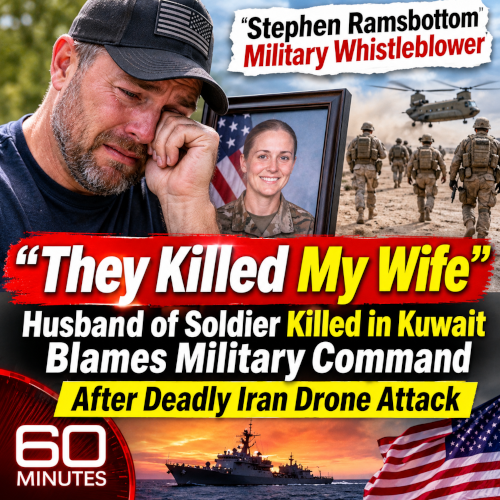
A deadly Iranian drone attack in Kuwait has sparked serious questions about US military preparedness after Army Major Stephen Ramsbottom filed a whistleblower complaint alleging that senior military officials ignored warnings about inadequate protection. The March 1, 2026, attack killed six American soldiers, including Master Sgt. Nicole Amor, whose husband, Joey Amor, says military leadership failed to protect his wife and fellow service members.
The Stephen Ramsbottom military whistleblower case is now drawing national attention following an eight-month investigation by CBS News’ 60 Minutes. Survivors and grieving families say the tragedy raises concerns about military leadership, battlefield safety, counter-drone defense systems and emergency medical preparedness.
The allegations could also intensify congressional scrutiny of the Pentagon’s decisions before the United States entered the war with Iran.
Stephen Ramsbottom Military Whistleblower Complaint Targets Army Leadership
Major Stephen Ramsbottom, a survivor of the Iranian drone attack, submitted a whistleblower complaint to the House and Senate Armed Services Committees on November 13, according to CBS News.
He alleges that Army leadership failed to respond adequately to warnings about the vulnerability of Port Shuaiba, a US military command post in Kuwait.
Ramsbottom served as deputy chief of operations for the 103rd Sustainment Command. He said the facility’s existing protection was designed primarily to address threats such as car bombs rather than aerial attacks involving Iranian drones.
“There was nothing there designed to protect from an aerial attack,” Ramsbottom told 60 Minutes.
He also described the incident as a failure of military planning and leadership, acknowledging that responsibility extended throughout the chain of command.
His complaint calls for an investigation into why the facility lacked dedicated protection against one-way attack drones.
Military Officials Allegedly Received Earlier Drone Threat Warnings
One of the most serious aspects of the Stephen Ramsbottom military whistleblower allegations concerns warnings reportedly delivered before the attack.
Ramsbottom said he raised concerns about the command post’s defenses during meetings and questioned whether troops stationed there had adequate protection.
He also said he warned senior officials, including Maj. Gen. John Hinson, who oversaw logistics for US Central Command.
According to Ramsbottom, he was told there was no need to worry about additional protection.
Six soldiers interviewed by 60 Minutes also said they had seen US intelligence information before the war identifying Port Shuaiba as a potential Iranian target.
Ramsbottom said the unit requested a counter-drone defense system, but it never arrived.
He questioned whether the equipment had even been formally ordered.
These allegations have not yet been independently established through a publicly released final investigation.
How the Iranian Drone Attack Killed Six US Soldiers in Kuwait
The attack occurred on March 1, during the first 24 hours of the US-Israeli war with Iran.
An Iranian drone struck an Army command post at Port Shuaiba, killing six American service members and injuring others.
The facility was approximately 65 miles from Iran.
The attack became the deadliest Iranian strike against US military personnel during the opening phase of the conflict.
According to the CBS investigation, the Pentagon had moved approximately 90% of its ground forces out of Kuwait and away from Iran in the weeks before the conflict because of concerns about retaliatory attacks.
However, around 70 members of the 103rd Sustainment Command were sent to Port Shuaiba to support military logistics operations.
Ramsbottom alleged that the facility lacked sufficient protection against the type of aerial threat that eventually struck it.
Pentagon Previously Said Troops Were Well Protected
Defense Secretary Pete Hegseth addressed the attack on March 2, 2026, and maintained that the soldiers had been stationed in a protected facility.
He described the drone as a weapon that managed to get through existing defenses and strike a fortified tactical operations center.
However, Ramsbottom’s account raises questions about whether the facility had appropriate protection against modern drone warfare.
The Pentagon declined to answer CBS News’ specific questions about whether the 103rd Sustainment Command had been denied adequate force protection.
The conflicting accounts have increased pressure for transparency about military planning and the decisions made before the attack.
Joey Amor Blames Command for Nicole Amor’s Death
The tragedy has left Gold Star families searching for answers.
Master Sgt. Nicole Amor was among the six Americans killed at Port Shuaiba. Her husband, Joey Amor, told 60 Minutes that she was proud of her military service and deeply committed to the soldiers she worked alongside.
He strongly criticized the leadership of the 103rd Sustainment Command.
Joey said his wife had expressed unusual concerns about her unit’s safety during the week before her death.
He recalled that it was the first time in their 15-year relationship that he had heard her speak with that level of concern.
He also questioned the emergency response following the drone strike.
According to surviving soldiers interviewed by CBS, Nicole was still breathing when fellow service members placed her in an SUV and transported her to a local Kuwaiti hospital.
Joey said soldiers had to search online for hospitals to take wounded personnel.
He believes better planning, medical support and protective measures could have given his wife a better chance of surviving.
His accusations represent the family’s perspective and have not been established as findings of an official investigation.
Families Demand Answers About Military Safety and Accountability
Nicole Amor was not the only service member whose family is seeking answers.
Chief Warrant Officer Robert Marzan, who had served for 36 years, was also killed in the attack. His wife, Tina Marzan, told CBS that DNA testing was needed to identify his remains.
Michelle Tietjens also described the devastating experience of telling her 13-year-old son that his father, Master Sgt. Noah Tietjens, would never return home.
The families said they had received military honors and outreach from the Trump administration but remained dissatisfied with the information provided about the circumstances surrounding the deaths.
Tina Marzan described the communication she had received from the Pentagon as inadequate.
The families want clear explanations about the intelligence available before the attack, the decisions made by military commanders and the emergency response.
Congressional Investigation and Army Findings Could Bring New Answers
The Stephen Ramsbottom military whistleblower complaint has added pressure on the Pentagon to explain the circumstances surrounding the Kuwait attack.
Sen. Richard Blumenthal, the ranking Democrat on the Senate Permanent Subcommittee on Investigations, called for Defense Secretary Pete Hegseth to provide a classified briefing and supply force-protection assessments for Port Shuaiba.
The Army completed its investigation into the attack in June 2026. According to CBS News, military officials were scheduled to brief affected families on the findings during the week of November 16.
However, the full findings have not yet been publicly disclosed in the reporting available at publication time.
CBS News also contacted Maj. Gen. John Hinson and Brig. Gen. Clint Barnes, who were named in Ramsbottom’s account. Neither responded to the network’s request for comment.
The Pentagon’s position on the specific allegations remains an important part of the developing story.
Why the Stephen Ramsbottom Case Matters for US Military Preparedness
The allegations raise broader questions about military defense spending, battlefield protection, drone warfare and emergency medical planning.
Modern military operations increasingly face threats from relatively inexpensive unmanned aerial vehicles capable of targeting personnel and infrastructure.
The Port Shuaiba attack highlights why military planners must consider aerial threats when selecting facilities and deploying service members.
For lawmakers, the case also raises questions about accountability, intelligence sharing and whether military commanders adequately responded to warnings from personnel on the ground.
The families of the six fallen Americans are seeking more than military honors. They want to know whether decisions could have prevented the deaths of their loved ones.
The investigation into the Stephen Ramsbottom military whistleblower complaint could become an important test of how the US Army addresses warnings about troop safety.
For Joey Amor, the central issue remains personal: he wants accountability for the death of his wife and reassurance that other American soldiers will not face the same circumstances.