
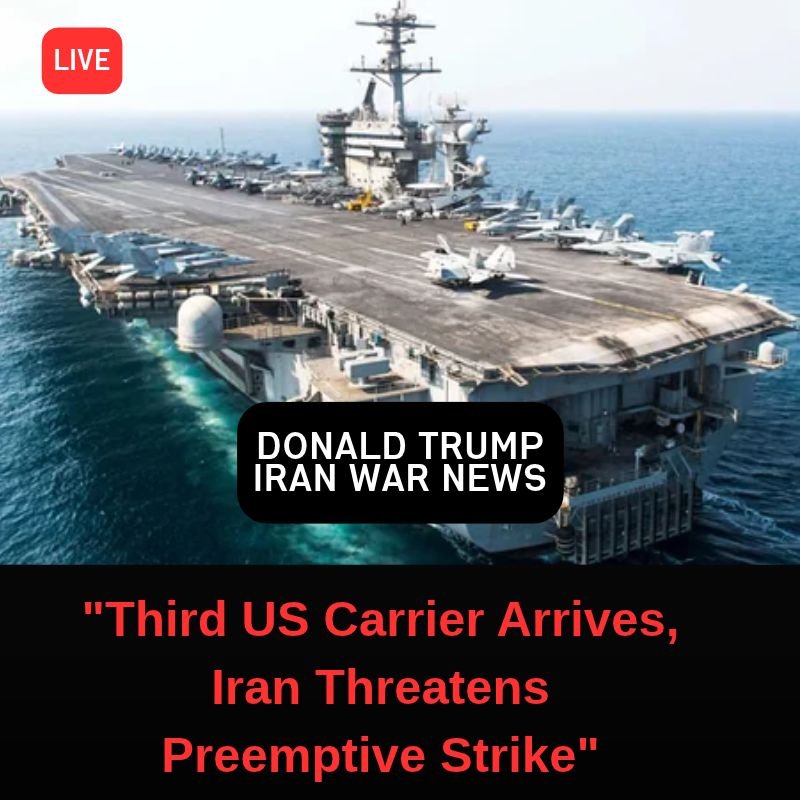
The Iran war latest news is drawing international attention after a third US aircraft carrier arrived in the Middle East, adding to Washington’s military presence in the region. The arrival of the USS Theodore Roosevelt comes as tensions between Washington and Tehran continue to rise, with Iranian officials warning that their country will not necessarily wait for the United States to launch another attack.
The latest developments have increased concerns about a wider military confrontation across the Middle East. The strategic Strait of Hormuz, a critical international shipping route for oil and other energy supplies, is also becoming a major focus of the growing crisis.
Iran’s Deputy Foreign Minister for Legal and International Affairs, Kazem Gharibabadi, has warned that Tehran will not wait for Washington to strike first. His comments raise questions about whether diplomatic efforts can prevent another escalation.
Meanwhile, reports from Iranian media say two oil tankers struck sea mines while traveling through the southern route of the Strait of Hormuz. The reported incident highlights the growing risks to commercial shipping and international energy markets.
Iran War Latest News: Third US Aircraft Carrier Arrives as Tehran Warns It Could Strike First
The conflict between the United States and Iran is entering another tense phase after a third American aircraft carrier arrived in the Middle East. The deployment of the USS Theodore Roosevelt comes as Tehran issues a warning that it will not necessarily wait for Washington to launch another military attack before responding.
The latest Iran war live updates also include reports of oil tankers hitting sea mines near the strategically important Strait of Hormuz, growing security concerns in Bahrain, and reported airstrikes in Yemen. These developments are increasing pressure on international shipping, energy markets, and diplomatic efforts to prevent another escalation.
Iran’s Deputy Foreign Minister Kazem Gharibabadi has accused Washington of potentially using diplomatic negotiations to prepare for another military operation. His warning comes as the United States strengthens its naval presence across the US Central Command (CENTCOM) region.
With three US aircraft carrier strike groups now operating in the region, the latest developments raise important questions about the direction of the conflict and the possibility of further military action.
Third US Aircraft Carrier USS Theodore Roosevelt Arrives in Middle East
The arrival of the USS Theodore Roosevelt marks a significant development in the latest US military deployment.
A US official confirmed to Al Jazeera that the aircraft carrier entered the Middle East on Sunday, November 15, 2026. It joins two other American aircraft carriers already operating within the US Central Command area of responsibility.
The three carriers are:
- USS Theodore Roosevelt
- USS George H.W. Bush
- USS George Washington
The deployment brings three US carrier strike groups into the same regional military command area. According to CBS News, the increased presence is expected to be temporary as American carrier strike groups rotate through the region. Al Jazeera
Aircraft carriers are among the most important assets in the US Navy. Each strike group can include fighter aircraft, guided-missile destroyers, cruisers, submarines, and other supporting vessels.
Their presence allows the United States to maintain air operations, protect naval forces, monitor military developments, and respond to potential threats.
The USS Theodore Roosevelt’s arrival comes amid continuing hostilities involving the United States, Israel, and Iran.
However, the carrier deployment does not automatically mean another American attack is imminent. It does demonstrate Washington’s expanded military capacity in the region during an increasingly uncertain period.
Iran Warns It Could Strike Before the United States
Iran has delivered a strong warning as American military forces strengthen their presence across the Middle East.
Kazem Gharibabadi, Iran’s deputy foreign minister for legal and international affairs, said Tehran would not wait for the United States to attack first.
His statement suggests that Iranian authorities are considering the possibility of taking military action before another American strike occurs.
Gharibabadi also questioned Washington’s intentions regarding diplomatic negotiations. He suggested that the United States might be using discussions as a way to gain time while preparing for another military operation.
The warning highlights the growing mistrust between the two countries.
Iran has repeatedly argued that American military pressure and diplomatic negotiations cannot be separated from the broader security situation. Washington, meanwhile, has maintained military operations and regional security measures during the conflict.
The latest Iranian comments have added uncertainty to an already fragile diplomatic environment. Al Jazeera
A potential preemptive strike would carry serious risks because American military assets are spread across several locations in the Middle East.
It could also increase the possibility of retaliation involving regional military bases, naval forces, and strategic infrastructure.
For now, Gharibabadi’s statement represents a warning rather than confirmation that Iran has ordered a new offensive.
Strait of Hormuz Crisis: Iran Reports Oil Tankers Hit Sea Mines
The Strait of Hormuz has become another major concern in the developing Iran conflict.
The waterway connects the Persian Gulf with the Gulf of Oman and is one of the world’s most important routes for international oil shipments. Any prolonged disruption could affect energy supplies, shipping costs, and global oil prices.
On November 16, Iran’s Revolutionary Guard reported that two oil tankers had struck sea mines while attempting to travel through the southern route of the Strait of Hormuz.
According to Iran’s Fars news agency, the vessels were traveling under the protection of US aircraft when the explosions occurred.
The Islamic Revolutionary Guard Corps (IRGC) Navy described the reported incidents as a response to the American blockade and violations of Iranian restrictions imposed on the strategic waterway.
Iranian authorities also warned that vessels refusing to follow their instructions would face serious consequences.
However, the claims require independent verification. The available reports do not independently establish the identities of the two vessels, the circumstances surrounding the alleged mine strikes, or the full extent of the damage. Anadolu Agency
The incident follows other reported attacks on commercial shipping in the region.
The United Kingdom Maritime Trade Operations (UKMTO) also received information about an attack on a tanker in the Gulf from Indian shipping authorities. The crew members were reported safe, although the extent of the damage remained unclear. شفق نيوز..
Why the Strait of Hormuz Matters to Global Oil Prices
The Strait of Hormuz is essential to international energy transportation.
Large quantities of crude oil and liquefied natural gas pass through the waterway on their way to markets across Asia, Europe, and other regions.
Countries including Saudi Arabia, Iraq, Kuwait, Qatar, and the United Arab Emirates depend on shipping routes connected to the Persian Gulf.
A prolonged closure or serious disruption could create several economic consequences:
- Higher crude oil prices: Reduced shipping capacity could increase concerns about global oil supplies.
- Rising fuel costs: Expensive crude oil could eventually affect gasoline, diesel, and transportation prices.
- Shipping insurance increases: Maritime insurers may raise premiums when vessels face greater military risks.
- Supply chain disruptions: Delayed energy shipments could affect businesses and industrial operations.
- Market uncertainty: Investors may react to concerns about inflation and energy security.
For the United States, developments in the Strait of Hormuz matter because international oil prices influence domestic fuel costs, inflation expectations, and financial markets.
Although the United States produces substantial amounts of oil domestically, it remains connected to global energy markets.
Bahrain Faces Growing Security Concerns Amid Iranian Attacks
Bahrain has also become an important part of the latest regional developments.
The country hosts the US Navy’s Fifth Fleet, making it strategically significant for American maritime operations in the Persian Gulf.
According to recent reporting, Iran’s Islamic Revolutionary Guard Corps claimed responsibility for drone attacks targeting a US military helicopter facility in Bahrain.
The developments followed earlier Iranian claims involving a US early-warning radar installation.
US Central Command said American forces intercepted two Iranian attack drones heading toward Bahrain, disputing Iranian claims about the destruction of the radar system. The National
Bahrain has also reported intercepting Iranian attacks and issued security warnings as regional tensions increased.
The country’s location makes it particularly important during the current confrontation.
Any further attacks involving American military facilities in Bahrain could increase the risk of a wider confrontation involving additional regional partners.
The developments also demonstrate how the Iran conflict extends beyond the immediate military confrontation between Washington and Tehran.
Yemen Airstrikes Add Another Dimension to the Middle East Conflict
The situation in Yemen is also attracting attention.
Houthi-affiliated media have reported that airstrikes hit Hodeidah International Airport on Yemen’s Red Sea coast. Reports also described strikes in the Hijat al-Abd area of Taiz governorate.
The reports have not independently established the full details of the alleged attacks, including the responsible forces and the extent of the damage.
Yemen remains strategically important because of its location near the Bab al-Mandeb Strait, another major international shipping route.
The Iran-aligned Houthi movement has previously targeted commercial shipping and regional infrastructure during periods of heightened conflict.
Any escalation in Yemen could create additional risks for vessels traveling between the Red Sea and the Gulf of Aden.
This could further complicate international shipping operations at a time when the Strait of Hormuz is already facing serious security concerns. Dawn
Iraq’s President Calls for an End to Regional Wars
Iraq’s President Nizar Amedi has also commented on the wider regional situation.
According to Al Jazeera’s November 16 live coverage, Amedi said US President Donald Trump should concentrate on ending wars, referring to the commitment Trump made during his 2024 presidential campaign.
Iraq has significant reasons to be concerned about further escalation.
The country maintains relationships with both Washington and Tehran and has experienced the consequences of regional military confrontations for decades.
An expanded conflict could threaten Iraqi security, economic activity, energy infrastructure, and diplomatic relationships.
Baghdad’s position reflects the broader concerns of regional governments seeking to avoid becoming directly involved in another major military confrontation.
Could the Iran War Trigger Another Global Energy Crisis?
The latest military developments are raising concerns about the economic consequences of a prolonged conflict.
Energy markets are particularly sensitive to developments around the Strait of Hormuz. Even the possibility of shipping disruptions can influence oil prices because traders consider the risk of future supply shortages.
If attacks on commercial vessels continue, shipping companies could face higher insurance costs and longer routes. These additional expenses could eventually affect consumers and businesses.
The conflict could also create challenges for central banks.
Higher oil prices can contribute to inflation by increasing transportation, manufacturing, and production costs. If energy prices remain elevated, policymakers may face additional pressure when making interest rate decisions.
For American households, the potential consequences include:
- Higher gasoline and diesel prices.
- Increased transportation and delivery expenses.
- More expensive imported products.
- Greater uncertainty in financial markets.
- Additional inflation pressure.
However, the actual economic impact will depend on how long the conflict continues and whether international shipping routes remain accessible.
What Happens Next in the US-Iran Conflict?
The arrival of the USS Theodore Roosevelt, Iran’s warning about striking first, and reported incidents involving oil tankers have created another critical moment in the conflict.
Diplomatic negotiations remain important, but the latest statements suggest that significant disagreements continue between Washington and Tehran.
Several developments will be important to watch:
- Whether the United States announces additional military deployments.
- Whether Iran follows its warnings with further military action.
- Whether commercial shipping through the Strait of Hormuz experiences additional disruptions.
- Whether Bahrain faces further attacks involving American military facilities.
- Whether diplomatic negotiations produce progress toward reducing hostilities.
The international community will also be watching developments around Yemen and other regional security hotspots.
For now, the arrival of the third US aircraft carrier and Iran’s increasingly forceful warnings underline the uncertainty surrounding the Middle East conflict.
Frequently Asked Questions (FAQs)
1. Has the third US aircraft carrier arrived in the Middle East?
Yes. The USS Theodore Roosevelt arrived in the US Central Command area on November 15, 2026, joining the USS George H.W. Bush and USS George Washington.
2. Why is the United States sending three aircraft carriers to the Middle East?
The deployment increases American naval and air capabilities in the region amid escalating tensions with Iran. It also provides additional military flexibility and operational support.
3. Has Iran threatened to attack the United States first?
Iranian Deputy Foreign Minister Kazem Gharibabadi said Tehran would not wait for the United States to attack first. His comments indicate a warning about possible preemptive action.
4. What happened to the oil tankers in the Strait of Hormuz?
Iran’s Revolutionary Guard reported that two oil tankers struck sea mines while traveling through the southern route of the Strait of Hormuz. The claims have not been independently verified.
5. Why is the Strait of Hormuz important?
The Strait of Hormuz is a major international shipping route connecting the Persian Gulf with the Gulf of Oman. Significant volumes of global oil and gas shipments pass through it.
6. Is Bahrain involved in the Iran conflict?
Bahrain has reported Iranian attacks and intercepted incoming threats. The country is strategically important because it hosts the US Navy’s Fifth Fleet.
7. Could the Iran war increase US gasoline prices?
Yes. A prolonged disruption to international oil shipments could increase global crude prices, potentially contributing to higher gasoline and diesel costs in the United States.
8. Is the United States preparing another attack on Iran?
The arrival of another aircraft carrier increases US military capabilities, but it does not independently confirm that Washington has decided to launch another attack.
Final Takeaway
The Iran war latest news on November 16, 2026, highlights growing military and economic uncertainty across the Middle East. The arrival of the USS Theodore Roosevelt gives the United States a third aircraft carrier strike group in the region, while Tehran’s warning raises concerns about possible preemptive military action.
Meanwhile, reported incidents involving oil tankers near the Strait of Hormuz, security concerns in Bahrain, and reported airstrikes in Yemen show how the conflict could affect multiple countries and international shipping routes.
The biggest question remains whether diplomatic negotiations can prevent another major escalation.