
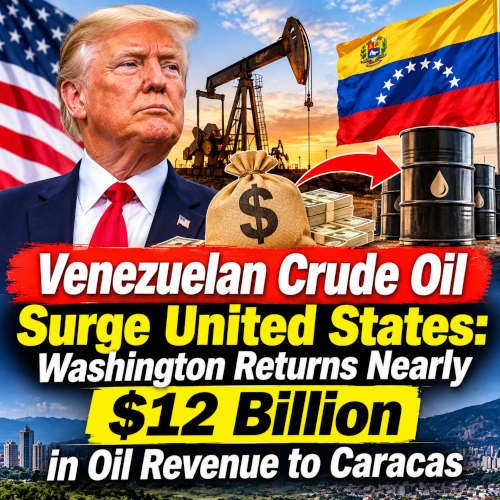
The United States has handled more than $12 billion in revenue generated from Venezuelan oil and other natural resources since the Trump administration took control of the country’s resource sales earlier this year. However, a newly released government report shows that Washington returned almost all the money to Venezuela, raising fresh questions about how the arrangement works and who ultimately controls the country’s oil wealth.
A report released by the U.S. Department of State on November 12, 2026, provides the first detailed accounting of the funds collected and distributed through U.S.-controlled accounts. It shows that approximately $12.26 billion entered the accounts between January 3 and September 30, 2026.
By the end of September, around $12.11 billion had been disbursed, leaving approximately $168.56 million under U.S. custody for future authorized payments.
The figures provide an important distinction in the debate over Venezuelan oil revenue. Although President Donald Trump has said the United States has benefited financially from the sales, the report describes the funds as Venezuelan sovereign revenue managed under U.S. oversight.
The disclosure is likely to intensify debate over the Trump administration’s role in Venezuela’s economy, the transparency of its oil arrangements and the future of one of the world’s largest oil-producing countries.
U.S. Venezuelan Oil Revenue Reaches $12.26 Billion
The State Department report, supported by accounting work from KPMG, covers transactions involving Venezuelan natural resources during the first nine months of 2026.
The total deposits reached approximately $12.26 billion. Most of the money came from crude oil and petroleum-related transactions, while smaller amounts were generated through gold, minerals and fertilizer sales.
The arrangement began after U.S. forces captured Venezuelan President Nicolás Maduro on January 3, 2026, and brought him to the United States to face drug-trafficking charges. Maduro has denied the allegations.
Following his removal, the Trump administration took a central role in managing Venezuelan natural-resource sales and the proceeds generated from them. The arrangement involved authorized buyers depositing payments into accounts controlled by the U.S. government.
Instead of allowing the proceeds to flow directly into accounts controlled by Venezuela’s government, Washington established a system requiring oversight and approval before funds could be distributed.
The newly released report offers the clearest public picture so far of how much money entered the system and where much of it went.
How the U.S.-Managed Venezuela Oil Account Works
Under the arrangement, approved buyers purchase Venezuelan crude oil and other authorized resources through transactions permitted by the U.S. government.
The proceeds are deposited into designated accounts managed under American oversight. Venezuelan authorities can then seek approval to use the money for authorized purposes, including economic support, infrastructure requirements and humanitarian needs.
The system gives Washington significant influence over the movement of Venezuela’s natural-resource revenue.
The report also describes the use of foreign-exchange transactions through Venezuelan commercial banks. These transactions allow dollars to enter the local economy and support access to foreign currency for businesses and individuals.
This structure is particularly important for Venezuela, which has experienced years of economic instability, currency pressure, international sanctions and declining confidence in its financial institutions.
By controlling the accounts and approving disbursements, the U.S. government maintains oversight of money generated from Venezuelan resources even when the funds are returned to the country.
Nearly 99% of the Revenue Was Disbursed
One of the report’s most significant findings is that almost all the money collected had been distributed by September 30.
Approximately $12.11 billion had been disbursed from the accounts, representing nearly 99% of the reported deposits. Around $168.56 million remained under U.S. Treasury custody for future authorized payments.
Most of the disbursements were directed into Venezuela’s economy through foreign-exchange operations involving commercial banks.
The report indicates that approximately $9.4 billion went to legal entities, while around $2.9 billion was distributed to individuals through the financial system.
These figures show that the majority of the money was not simply transferred as a single payment to Venezuela’s central government. Instead, the funds moved through financial channels intended to support economic activity inside the country.
Around $133 million was also used for direct payments covering services and supplies required by the Venezuelan government.
The distinction matters because the headline figure of more than $12 billion can create the impression that Washington collected the money and kept it. The accounting report instead says that nearly all the reported revenue had been disbursed by the end of September.
Where Did the Venezuelan Oil Money Go?
The report identifies several categories of spending and financial support approved through the U.S.-managed system.
Among the disclosed transactions was approximately $5 million for the Miami-based law firm Greenberg Traurig.
The report also listed nearly $24 million for dialysis and coal-mining equipment. Another $8.7 million was used to settle Venezuela’s outstanding debts connected to vaccine procurement through the Pan American Health Organization.
These payments illustrate how the arrangement covers more than oil exports and government operating expenses.
Healthcare equipment, industrial supplies and international obligations can also receive funding through approved transactions.
However, the report does not provide a complete public breakdown of every final recipient. It also does not identify the companies that deposited money into the accounts.
The identities of approximately 20 companies involved in purchasing oil and gold were redacted from the public report.
That decision leaves important questions about the commercial side of the arrangement, including which companies handled the largest transactions and how the buyers were selected.
Trump’s Claims and the Question of U.S. Financial Benefits
President Donald Trump has publicly described the Venezuelan oil arrangement as a financial benefit for the United States.
However, the newly released accounting provides a more detailed picture of how the revenue was handled. The funds were treated as Venezuelan sovereign property and managed through U.S.-controlled accounts under the arrangement.
This distinction is important when discussing whether the United States actually profited from Venezuelan oil sales.
Managing the revenue does not automatically mean the U.S. government owns the proceeds or keeps the money as profit. The report shows that most of the funds were returned through approved disbursements.
The arrangement nevertheless gives Washington considerable financial and political influence. The U.S. government can oversee approved buyers, monitor deposits and determine whether proposed payments meet the required conditions.
For Venezuela, this creates a system in which revenue from its natural resources remains subject to American supervision.
For the Trump administration, the arrangement provides a mechanism to influence how oil income supports the country’s economy and government operations.
Transparency Concerns Remain Despite the New Report
The release of the accounting report addresses some questions about the money, but it does not resolve every concern.
The redaction of buyer identities is one major issue. Without knowing which companies deposited the funds, the public cannot fully evaluate the commercial relationships behind the transactions.
The lack of detailed information about final recipients also limits independent assessment of how the money benefited Venezuelan households, private businesses and public institutions.
The use of foreign-exchange operations creates another challenge. Although these transactions can support the local economy, the report does not provide a complete account of every person or business that ultimately received the dollars.
Political scrutiny had already increased before the report’s release. Democratic lawmakers had questioned the lack of public information about the accounts and demanded greater transparency over the use of Venezuelan natural-resource revenue.
The KPMG accounting provides a significant new source of information, but the redactions mean that some details remain unavailable.
What the Report Means for Venezuela’s Oil Industry
Venezuela has some of the world’s largest proven oil reserves, making its petroleum industry central to the country’s long-term economic prospects.
However, years of underinvestment, deteriorating infrastructure, political instability and international restrictions have weakened its ability to produce and export oil at its potential capacity.
The U.S.-managed revenue arrangement could provide a route for authorized exports to generate money for economic activity inside Venezuela.
The return of billions of dollars may help support businesses, imports, healthcare supplies and other essential services. Foreign-exchange operations could also provide access to dollars in a country where currency stability has been a persistent concern.
But the arrangement raises a broader question about economic sovereignty.
Venezuela’s natural resources generate the revenue, yet Washington retains substantial control over the financial channels through which that money moves.
That balance could become a major issue in future discussions about the country’s political transition, oil production and international relations.
What Happens Next?
The next phase will depend on how the U.S. government manages future oil transactions and whether it provides more information about the companies, payments and final beneficiaries.
Further reporting and independent scrutiny will be important for determining whether the system delivers lasting economic benefits to Venezuelan citizens.
The report establishes that more than $12 billion was handled and that nearly all of it had been disbursed by September 30. It does not, by itself, prove that every payment reached its intended beneficiaries or that Venezuela’s economic problems have been resolved.
The future of the arrangement will also depend on political developments in Caracas and Washington, as well as the ability of Venezuela’s oil industry to attract investment and maintain authorized exports.
The Bottom Line on the $12 Billion Venezuela Oil Revenue
The new State Department report changes the picture of how the Trump administration handled Venezuelan oil money.
The United States collected approximately $12.26 billion from authorized natural-resource transactions between January and September 2026. Nearly $12.11 billion had been disbursed by the end of September, leaving about $168.56 million in U.S. custody.
The findings show that Washington managed the proceeds but returned nearly all the reported revenue through approved channels. They also highlight the difference between Trump’s claims of U.S. financial gains and the report’s accounting of Venezuelan funds.
For now, the biggest unanswered questions concern transparency, the identities of the buyers and the final destination of the money. Those details will help determine whether the arrangement delivers meaningful economic benefits to Venezuela while keeping its natural-resource wealth under foreign oversight.