

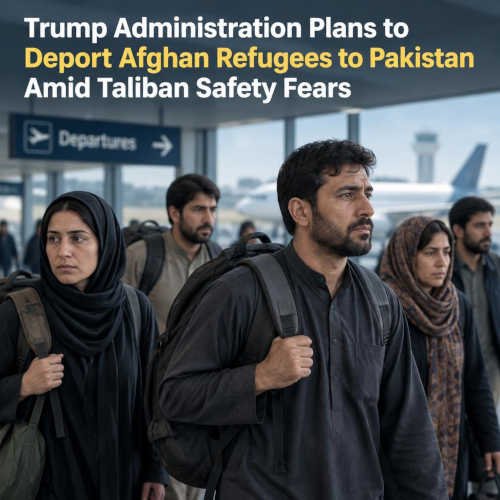
The Trump administration is reportedly preparing to deport dozens of Afghan immigrants and asylum seekers to Pakistan, raising serious concerns among refugee advocates and families who fear they could eventually be sent back to Taliban-controlled Afghanistan.
According to an NBC News report published October 31, 2026, a senior U.S. administration official confirmed that preparations were underway for a charter flight carrying Afghan nationals to Pakistan. The proposed flight could take place as early as Monday, November 2, according to rights advocates and families of detainees. However, the operation had not been publicly announced by the government.
The situation has triggered renewed debate about U.S. immigration enforcement, asylum protections, third-country deportations and the safety of people who fled Afghanistan after the Taliban returned to power in 2021.
Some of those reportedly facing deportation are relatives of Afghans who worked with American military forces during the United States’ 20-year war in Afghanistan. Advocates warn that sending these individuals to Pakistan could expose them to another forced removal, potentially placing their lives at risk.
Why the Trump Administration Is Planning Deportations to Pakistan
The reported deportation plan comes amid the Trump administration’s broader immigration crackdown, which has included efforts to remove migrants from the United States to countries other than their countries of origin.
NBC News reported that a senior administration official confirmed the proposed flight to Pakistan. The official also said the charter flight could not land in Pakistan without the Pakistani government’s knowledge and approval.
However, important details remain unclear. The precise arrangements between Washington and Islamabad have not been publicly explained, and the administration has not announced the final passenger list or confirmed the flight’s departure date.
The controversy centers on whether Pakistan would provide a safe destination for the Afghan nationals. Although Pakistan has hosted millions of Afghan refugees over several decades, its immigration enforcement policies have become increasingly restrictive.
Pakistan’s Deportation Policy Raises Concerns
Pakistan began a major crackdown on undocumented foreign nationals in 2023, putting pressure on Afghan communities to leave the country. The campaign resulted in large numbers of Afghans returning to Afghanistan, including people who reportedly faced forced deportation.
That history is particularly concerning for Afghan families who fear persecution under Taliban rule.
Advocates argue that transferring Afghan detainees from the United States to Pakistan may not provide lasting protection. If Pakistani authorities subsequently deport them to Afghanistan, they could face the very dangers that caused them to flee.
The issue also raises questions about whether the United States has adequate safeguards to ensure that people removed to a third country will not face further forced removal or persecution.
Afghan Families Fear Being Returned to Taliban-Controlled Afghanistan
The Taliban regained control of Afghanistan in August 2021 following the withdrawal of U.S.-led international forces and the collapse of the former Afghan government.
Since then, Afghanistan has faced serious humanitarian and human rights challenges. Restrictions on women and girls have sharply limited access to education, employment and public life. Economic hardship, food insecurity and political repression have added to the country’s difficulties.
For Afghans who previously worked with U.S. forces, the security situation can be especially worrying. Former interpreters, military contractors, government employees and their relatives may fear retaliation because of their perceived connections to the United States.
The proposed deportation plan has therefore raised concern beyond the individuals directly involved. Families who supported American operations during the war may also fear that their relatives could be exposed to danger.
Why Relatives of Former U.S. Allies May Be Vulnerable
The United States worked with thousands of Afghan nationals during its military involvement in Afghanistan. Local employees and their families often faced security threats because of their association with American forces.
Following the Taliban takeover, many Afghans sought protection abroad. Tens of thousands reached the United States after the chaotic withdrawal in 2021.
Advocates now fear that some family members could face serious consequences if they are returned to Afghanistan.
Shawn VanDiver, president of the San Diego-based advocacy organization AfghanEvac, warned that the administration should understand the risks involved in sending Afghan detainees to Pakistan.
The concern is that Pakistani authorities could return some of those individuals to Afghanistan, where Taliban officials may view their family connections or previous associations as grounds for suspicion.
At Least 80 Afghans Reportedly Transferred to Louisiana ICE Facility
The proposed deportation flight has also drawn attention to the detention of Afghan immigrants across the United States.
VanDiver told NBC News that AfghanEvac had confirmed that at least 80 Afghans were recently transferred to Louisiana from 34 other ICE facilities nationwide.
He said 19 of those individuals did not have legal representation. He also suggested that hundreds of Afghans could potentially be held at the Central Louisiana ICE Processing Center in Jena.
The facility has been used as a detention location for people awaiting deportation from the United States.
The reported transfers have raised concerns among immigration advocates about access to attorneys, communication with family members and the ability of detainees to understand their legal options.
Legal Representation Could Be Critical
Access to legal assistance is particularly important for people who may face deportation to countries where they fear persecution.
Immigration cases can involve complicated questions about asylum eligibility, removal orders, protection claims and appeals. A person’s options depend on their individual immigration history and the stage of their case.
Families may also struggle to locate relatives when detainees are transferred between facilities in different states.
Advocates say detainees should have a meaningful opportunity to understand their cases and seek legal advice before removal proceedings move forward.
Third-Country Deportations Raise Serious Immigration Law Questions
The proposed deportations have renewed scrutiny of third-country removal policies.
A third-country deportation occurs when the United States sends an individual to a country other than the country where that person was born or holds citizenship.
The practice can raise complex legal questions, particularly when the receiving country may send the individual onward to a place where they face persecution or torture.
One important principle is non-refoulement, a protection under international refugee law that generally prohibits returning people to territories where they face specified serious dangers.
The application of these protections depends on the individual’s circumstances and the relevant legal framework. Immigration lawyers argue that authorities must carefully consider credible claims of danger before carrying out removal.
The proposed Afghan deportations could become another important test of the administration’s immigration enforcement approach.
What the U.S. Government Has Said So Far
According to NBC News, the senior administration official confirmed that the proposed charter flight would require Pakistan’s knowledge and approval.
However, the Department of Homeland Security did not publicly confirm future removal operations, citing operational security reasons. ICE also did not respond to NBC News’ request for comment.
The State Department said it had no plans to announce and reiterated that countries should be able to manage their borders and immigration processes.
Pakistan’s Ministry of Foreign Affairs and its embassy in Washington did not respond to NBC News’ requests for comment, according to the report.
These responses leave several important questions unanswered, including the final timing of the flight, the number of people involved and the specific arrangements for their arrival in Pakistan.
What Happens Next for Afghan Detainees?
The immediate question is whether the reported charter flight will proceed and whether U.S. and Pakistani officials will provide further information.
Advocacy organizations are pressing for clarity about the detainees’ identities, immigration cases and access to legal representation. Families are also seeking information about where their relatives are being held and whether they have an opportunity to challenge removal decisions.
The proposed operation could have consequences beyond the individuals on the flight. It may influence future debates about the treatment of asylum seekers, refugee protection and the use of third-country deportation arrangements.
For Afghan families who fled political instability or feared retaliation because of their connections to American forces, the uncertainty is particularly difficult.
Frequently Asked Questions
1. Is the Trump administration deporting Afghan refugees to Pakistan?
NBC News reported on October 31, 2026, that the administration was preparing a charter flight to send dozens of Afghan immigrants and asylum seekers to Pakistan. The proposed flight had not been publicly announced, and its final arrangements remained unclear.
2. Why are Afghan refugees concerned about being sent to Pakistan?
Pakistan has carried out large-scale deportations and returns of Afghan nationals. Advocates fear that people sent from the United States could subsequently be returned to Taliban-controlled Afghanistan.
3. How many Afghans were reportedly transferred to Louisiana?
AfghanEvac president Shawn VanDiver told NBC News that at least 80 Afghans had recently been transferred to Louisiana from 34 ICE facilities across the country.
4. What is a third-country deportation?
A third-country deportation occurs when a government removes an individual to a country other than their country of origin. Such removals can raise legal concerns when the individual faces possible persecution or onward deportation.
5. Can Afghan asylum seekers challenge deportation?
Depending on their immigration status and individual circumstances, people facing removal may have legal options to challenge deportation or raise protection concerns. They should seek advice from a qualified U.S. immigration attorney or accredited representative.
6. Has Pakistan officially confirmed the proposed flight?
The NBC News report said Pakistan’s Ministry of Foreign Affairs and its embassy in Washington did not respond to requests for comment. The precise arrangements had not been publicly confirmed.
7. Why could returning Afghans to Taliban-controlled Afghanistan be dangerous?
Human rights advocates warn that some returnees could face persecution, detention or other serious harm because of their personal histories, family connections or perceived association with U.S. forces and the former Afghan government.
Conclusion: The reported plan to deport Afghan immigrants and asylum seekers to Pakistan has raised serious questions about refugee protection, immigration law and the risks of third-country deportations. Although the proposed flight had not been publicly confirmed, advocates warn that some detainees could face danger if Pakistan sends them onward to Taliban-controlled Afghanistan. The situation remains an important immigration and human rights story to watch.
