

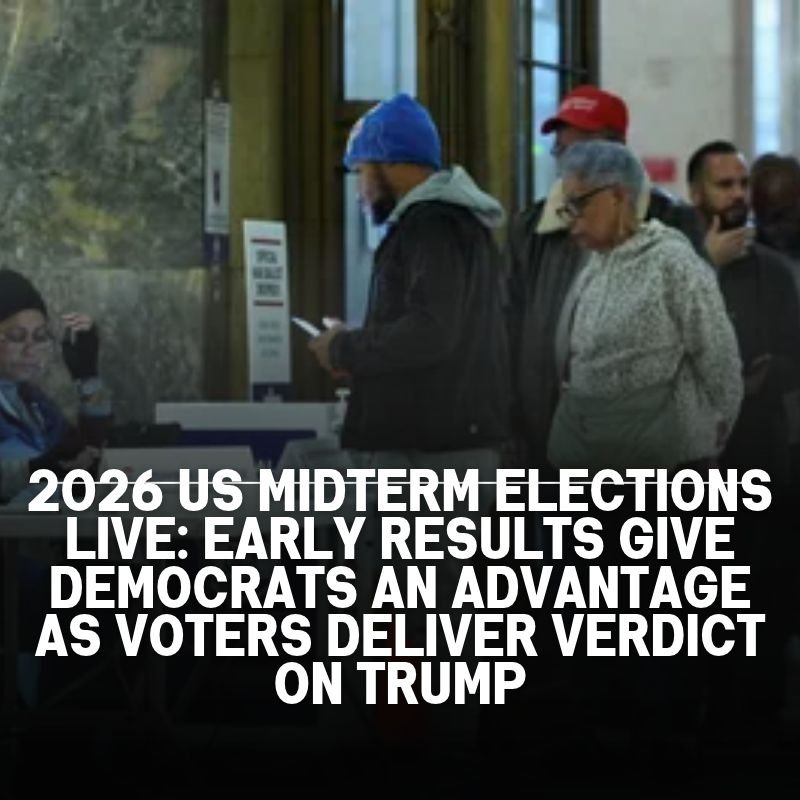
The 2026 US midterm elections are producing significant political developments as early results point to important Democratic victories in several closely watched races. Millions of Americans headed to polling stations on November 3, delivering their verdict on President Donald Trump’s leadership, the economy, immigration policies and the direction of the country.
The first major election developments have increased Democratic hopes of challenging Republican control of Congress. Among the biggest headlines, former North Carolina Governor Roy Cooper defeated Republican Michael Whatley, Democratic Senator Jon Ossoff secured reelection in Georgia, and Chris Pappas captured New Hampshire’s open Senate seat, according to Associated Press reporting.
The results are particularly important because Republicans entered the midterm elections controlling both chambers of Congress. Democrats have been working to turn voter dissatisfaction into electoral gains, while Republicans have attempted to defend their congressional majorities.
Meanwhile, voter participation in several competitive states has attracted attention. Election monitoring has also become a major issue after the Justice Department announced an unusually large deployment of federal election monitors across the country.
With several races still being counted, the 2026 midterm election results could reshape Washington’s political landscape and influence the final two years of Trump’s presidency.
2026 Election Results: Democrats Secure Important Early Victories
The early results have given Democrats reasons for optimism.
One of the most significant developments came from North Carolina, where former Democratic Governor Roy Cooper defeated Republican Michael Whatley in the Senate contest. The victory represents an important gain for Democrats in a state that has remained highly competitive in national elections.
Georgia delivered another major Democratic result. Incumbent Senator Jon Ossoff defeated Republican challenger Mike Collins, protecting a seat that Republicans had hoped to capture.
In New Hampshire, Democrat Chris Pappas won the state’s open Senate seat, adding another important victory to the Democratic column.
These results have increased pressure on Republicans as the country waits for additional Senate and House outcomes.
Democrats are not guaranteed control of Congress, however. Several competitive races remain unresolved, and early victories in individual states do not automatically establish which party will control the Senate or House.
The Associated Press has reported that Democrats need four net Senate seats and three net House seats to secure majorities under the election-night calculations.
The remaining contests will therefore play an important role in determining the final balance of power.
Voters Deliver Their Verdict on Donald Trump
The 2026 midterm elections are widely viewed as an important political test for President Donald Trump.
Midterm elections traditionally provide voters with an opportunity to express their satisfaction or frustration with the president’s performance.
Trump’s administration has faced political debates involving inflation, household expenses, immigration enforcement, federal spending, foreign policy and government accountability.
For many Americans, economic conditions remain a major concern. The cost of groceries, housing, transportation, healthcare and other essential expenses continues to influence household decisions.
Democrats have attempted to connect these concerns with Republican economic policies and the administration’s broader political agenda.
Republicans, meanwhile, have defended their approach and argued that their policies are necessary to strengthen the economy, improve border security and advance conservative priorities.
The early election results suggest that Democrats have successfully defended or captured several important seats. However, the complete national picture will depend on the remaining vote counts.
Why the Midterm Elections Matter for Trump
The election outcome could significantly affect Trump’s ability to advance his legislative priorities.
If Democrats gain control of either congressional chamber, they could use committee leadership and congressional oversight powers to investigate administration policies and challenge legislative proposals.
A Democratic-controlled House could also create difficulties for Republican efforts to pass legislation.
If Republicans retain both chambers, the administration would have a stronger congressional foundation for pursuing its political agenda.
The outcome will therefore influence federal spending, immigration legislation, healthcare debates, taxation and government oversight.
Senate Election Results: The Battle for Congressional Control
The US Senate remains one of the most important battlegrounds in the 2026 elections.
Thirty-five Senate seats are part of the 2026 election cycle, including regular elections and special contests.
Before Election Day, Republicans held a 53-seat majority, compared with 45 Democrats and two independents who caucus with Democrats.
Democrats entered the election needing substantial gains to take control.
The victories in North Carolina, Georgia and New Hampshire have strengthened their position, but additional competitive races remain important.
States such as Maine, Ohio, Alaska, Iowa and Texas have attracted national attention because their Senate contests could influence the final result.
The Senate has considerable authority over federal legislation, presidential appointments and judicial confirmations.
A change in party control could therefore affect the direction of national policy.
House Election Results: Why Every Seat Counts
All 435 seats in the US House of Representatives are being contested in the 2026 midterm elections.
Republicans entered Election Day with a narrow majority, making several competitive districts particularly important.
Democrats need to gain three net seats to reach the 218-seat majority required for control of the House.
The outcome will depend on voting patterns across suburban, urban and rural congressional districts.
Economic concerns, candidate popularity, local issues and national political attitudes could all influence the final results.
Even a relatively small shift in voter preferences can change control of the House because the Republican majority is narrow.
Voter Turnout Rises as Americans Head to the Polls
Voter participation has been one of the major developments of the 2026 midterm elections.
Competitive Senate and House races have encouraged campaigns to invest heavily in voter outreach, early voting operations and election-day mobilization.
Both major political parties have worked to encourage supporters to participate.
High turnout can benefit either party depending on which groups participate and where those voters live.
Democrats have focused on mobilizing younger voters, urban communities, independents and voters concerned about healthcare and economic affordability.
Republicans have emphasized conservative voters, rural communities, border security and support for Trump’s political agenda.
Participation levels in key battleground states are particularly important because a relatively small number of votes can determine the outcome of competitive contests.
However, turnout figures should be interpreted carefully. High participation does not automatically indicate that one political party is winning.
Federal Election Observers: Justice Department Deploys Around 1,000 Monitors
Another major development during the 2026 elections involves federal election monitoring.
The US Justice Department announced that it would deploy approximately 1,000 election monitors and observers across all 50 states.
According to Reuters reporting on November 3, the department described the deployment as the largest Election Day monitoring effort in its history.
The announcement generated political debate about federal oversight, voter confidence and the independence of state election administration.
The Justice Department said the monitors would focus on compliance with federal voting rights laws and applicable election protections.
However, the deployment attracted criticism from Democrats and voting-rights advocates, who raised concerns about possible voter intimidation and the political implications of federal involvement.
State and local election officials also prepared guidance regarding the authority and permitted activities of federal observers.
Federal monitors do not automatically have authority to interfere with voting procedures. Their access and activities must follow applicable federal and state laws.
Why Election Monitoring Has Become Controversial
Election monitoring is intended to help protect voting rights and identify potential violations.
However, the presence of federal officials at polling locations can generate concern when political tensions are already high.
Voting-rights organizations have also organized volunteers to observe election activities and report potential problems.
The Associated Press reported before Election Day that Democratic organizations and outside watchdog groups had prepared extensive monitoring efforts.
The competing monitoring initiatives highlight the importance of transparency, clear legal authority and public confidence in election administration.
Economic Concerns Shape the 2026 Midterm Elections
Economic conditions have been central to the political debate.
Many voters have expressed frustration over inflation and the rising cost of everyday necessities.
Housing affordability, healthcare costs, energy prices and household debt have become important issues for families.
For Democrats, these concerns have created an opportunity to challenge the administration’s economic record.
Republicans have argued that their policies will strengthen domestic industries, support businesses and improve economic conditions.
The election results will provide political parties with important information about how voters evaluate those arguments.
A strong Democratic performance could indicate that economic dissatisfaction has become a significant political problem for Republicans.
However, election results reflect many issues, and it would be inaccurate to attribute every victory or defeat to a single economic factor.
What Happens After Election Day?
Election-night reporting is only one stage of the election process.
State and local election officials must continue counting eligible ballots, reviewing provisional ballots and completing required verification procedures.
Media organizations such as the Associated Press may call a race when their analysts determine that the remaining votes cannot realistically change the outcome.
A media projection is different from official state certification.
Close contests may take additional time to resolve, particularly where large numbers of ballots remain outstanding or state election laws require further counting procedures.
Readers should therefore distinguish between candidates who are leading, candidates whose races have been called and officially certified winners.
What Americans Should Watch Next
The next major development will be the final balance of power in Congress.
The remaining Senate contests could determine whether Democrats can take control of the upper chamber.
House results will also be crucial because Republicans entered the election with a narrow majority.
Beyond congressional control, the results will influence political strategy ahead of the 2028 presidential election.
Both parties will study turnout, voter demographics, economic concerns and candidate performance to understand what worked and what failed.
For Trump, the election results represent an important assessment of his presidency halfway through his second term.
For Democrats, early victories provide momentum but also create expectations about their ability to govern if they secure congressional majorities.
Frequently Asked Questions About the 2026 Midterm Elections
Who is leading in the 2026 midterm election results?
Early reported results include important Democratic victories in North Carolina, Georgia and New Hampshire. The national results remain incomplete.
Did Democrats win the Georgia Senate race?
Yes. Democratic Senator Jon Ossoff defeated Republican challenger Mike Collins, according to the Associated Press.
Who won the North Carolina Senate race?
Former Democratic Governor Roy Cooper defeated Republican Michael Whatley, according to AP reporting.
Why are the 2026 midterm elections important?
The elections determine the composition of the US House and the Senate seats contested in 2026. They will influence legislation, federal oversight and Trump’s remaining presidency.
How many federal election observers were deployed?
The Justice Department announced a deployment of approximately 1,000 election monitors and observers across all 50 states.
Are the 2026 election results final?
Not necessarily. Media race calls, preliminary vote counts and official certification are different stages of the election process.
Can Democrats take control of Congress?
Democrats have secured important early victories, but control depends on the final results across the remaining competitive Senate and House races.
Final Takeaway
The 2026 US midterm elections have delivered an important early message about America’s political mood. Democratic victories in North Carolina, Georgia and New Hampshire have strengthened the party’s hopes of challenging Republican control of Congress.
Voter concerns about inflation, household expenses, government accountability and the direction of the country have remained central to the election debate.
The unusually large federal election-monitoring deployment has also placed election security and voting rights under the national spotlight.
With additional races still being counted, Americans will be watching closely to see whether Democrats can turn their early momentum into control of Congress or whether Republicans can retain their majorities.
