
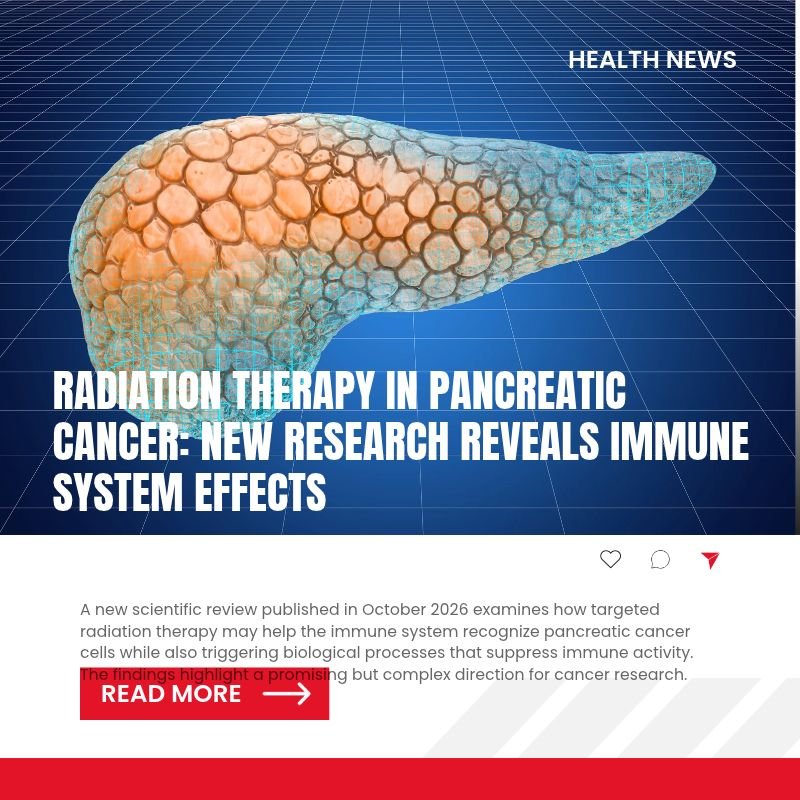
A new scientific review published in October 2026 examines how targeted radiation therapy may help the immune system recognize pancreatic cancer cells while also triggering biological processes that suppress immune activity. The findings highlight a promising but complex direction for cancer research.
The research focuses on stereotactic body radiotherapy (SBRT), a highly targeted form of radiation treatment that delivers concentrated doses to tumors while limiting exposure to surrounding healthy tissue.
Scientists are particularly interested in how radiation changes the pancreatic cancer microenvironment, the complex environment surrounding cancer cells. Radiation can encourage immune cells to attack tumors, but it can also activate mechanisms that help cancer cells avoid immune destruction.
This creates a difficult biological balance. Understanding how to increase immune activation while limiting immune suppression could help researchers develop more effective treatment combinations for pancreatic ductal adenocarcinoma (PDAC), the most common form of pancreatic cancer.
The review, published in Discover Oncology on October 30, 2026, explores these mechanisms and discusses how radiation could potentially work alongside immunotherapy. However, the findings do not establish a new cure or prove that radiation alone can prevent pancreatic cancer from spreading. Springer
Why Pancreatic Cancer Remains One of the Deadliest Cancers
Pancreatic cancer continues to present major challenges for doctors and researchers because it is often diagnosed after the disease has advanced.
According to the National Cancer Institute (NCI), the overall five-year relative survival rate for pancreatic cancer is approximately 13%. Survival differs significantly depending on whether the cancer remains localized or has spread to other parts of the body. Cancer.gov
The disease is also a major cause of cancer-related deaths in the United States.
The latest 2026 estimates from the National Cancer Institute’s Surveillance, Epidemiology, and End Results (SEER) program project approximately 67,530 new pancreatic cancer cases and 52,740 deaths in the country. Pancreatic cancer ranks third among causes of cancer deaths in the United States. SEER
One major challenge is the tumor microenvironment.
Unlike some other cancers, pancreatic tumors often develop a dense protective structure known as desmoplastic stroma. This tissue contains connective tissue, immune cells, blood vessels, and other biological components that influence how tumors grow and respond to treatment.
The environment can make it difficult for cancer-fighting immune cells to enter tumors and perform their intended functions.
Researchers are therefore investigating treatments that can change this environment rather than simply destroying cancer cells.
What Is Stereotactic Body Radiotherapy?
Stereotactic body radiotherapy, commonly known as SBRT, is an advanced radiation technique that delivers carefully planned, concentrated radiation doses to a specific tumor.
Unlike conventional radiation therapy, which may require many treatment sessions, SBRT generally uses a smaller number of highly focused treatment sessions.
The technique relies on detailed imaging, treatment planning, and precise positioning to target the tumor while protecting nearby organs.
This precision is particularly important in pancreatic cancer because the pancreas sits close to sensitive structures, including the stomach and small intestine.
Doctors may consider SBRT in selected patients with localized or locally advanced pancreatic cancer, depending on tumor location, disease stage, previous treatments, and overall health.
The treatment has traditionally been studied for its ability to improve local tumor control. However, researchers are increasingly interested in another possibility: radiation may also influence the body’s immune response.
That possibility is central to the October 2026 review.
How Radiation Can Activate the Immune System Against Pancreatic Cancer
One of the most important findings discussed in the review is that radiation can cause cancer cells to release biological signals that alert the immune system.
This process is known as immunogenic cell death.
When radiation damages tumor cells, dying cells release molecules called damage-associated molecular patterns (DAMPs). These molecules act as warning signals that can encourage immune cells to recognize the damaged tissue.
Three important signals are involved:
1. Calreticulin: Radiation can increase the exposure of calreticulin on the surface of dying cancer cells. This molecule acts as an “eat-me” signal, encouraging immune cells to remove damaged cells.
2. HMGB1: High-mobility group box 1 is a protein released by damaged cells. It can help activate immune responses by interacting with receptors involved in inflammation and immune signaling.
3. ATP: Adenosine triphosphate released from dying cells can activate purinergic signaling pathways and help recruit immune cells involved in tumor recognition.
Together, these signals can help dendritic cells identify tumor-related material and present it to T cells.
This process is important because T cells are among the immune system’s major weapons against cancer.
Radiation can also influence major histocompatibility complex class I (MHC-I) expression. These molecules help cells display protein fragments that allow immune cells to recognize abnormal cells.
When tumor cells display more recognizable antigens, cancer-fighting T cells may have additional opportunities to identify them.
However, these immune-stimulating effects do not automatically produce long-lasting protection against cancer.
Why Radiation Can Also Trigger Immune Suppression
The same treatment that stimulates immune activity can also activate biological pathways that weaken the immune response.
Pancreatic cancer is particularly challenging because its microenvironment contains several immunosuppressive cell populations.
These include regulatory T cells, tumor-associated macrophages, and myeloid-derived suppressor cells.
Such cells can interfere with the activity of cytotoxic T lymphocytes, which normally help destroy cancer cells.
Radiation-related changes can influence these populations and the signaling molecules they produce.
The result may be a mixed response in which some immune pathways become more active while others suppress the body’s ability to eliminate remaining cancer cells.
This helps explain why improving local tumor control does not always prevent distant metastases.
Researchers are therefore investigating how radiation dose, treatment timing, and combinations with immunotherapy could influence the overall immune response.
The Role of Dendritic Cells and Cancer-Fighting T Cells
Dendritic cells play an essential role in connecting the body’s early immune response with its targeted immune defenses.
They collect material from damaged or abnormal cells and present relevant antigens to T lymphocytes.
This process is called antigen presentation.
One particularly important group is conventional type 1 dendritic cells, also known as cDC1 cells.
These cells are especially important for cross-presentation, a process through which antigens from cancer cells are presented to CD8-positive T cells.
Once activated, CD8-positive T cells can recognize and attack cancer cells displaying matching antigens.
However, pancreatic tumors often contain insufficient numbers of functional dendritic cells to support an effective immune response.
This creates another barrier to successful immunotherapy.
The research discussed in the review highlights the importance of improving dendritic-cell activity alongside radiation treatment.
Scientists are also studying chemokines such as CXCL9, CXCL10, and CXCL16, which help guide immune cells toward tumor tissue.
These signaling molecules may influence how effectively cancer-fighting lymphocytes move into pancreatic tumors.
What Human Tissue Studies Reveal About Radiation Treatment
Laboratory research and animal studies have provided important evidence that radiation can stimulate immune activity against pancreatic cancer.
However, findings from laboratory models do not always translate into similar outcomes in human patients.
The review discusses human tissue research, including observations associated with stereotactic body radiotherapy.
Some analyses have identified increased markers of immunogenic cell death and changes in immune-cell populations following radiation treatment.
However, increased immune activation markers do not necessarily mean that more cancer-fighting T cells successfully enter the tumor.
This distinction is important.
A tumor may show signs of immune stimulation while still maintaining biological barriers that prevent an effective immune attack.
Researchers must therefore evaluate several factors, including immune-cell density, T-cell activity, antigen presentation, and tumor progression.
Can Radiation Therapy Improve Pancreatic Cancer Survival?
Radiation therapy can be an important component of treatment for selected pancreatic cancer patients, particularly those with locally advanced disease.
However, its benefits depend on individual circumstances.
For some patients, radiation may help control a tumor that cannot be removed immediately through surgery. In other cases, doctors may consider radiation before or after an operation or use it to relieve symptoms.
The 2026 review emphasizes that combining radiation with immunotherapy could offer additional opportunities for improving treatment responses.
Nevertheless, researchers still need stronger clinical evidence to determine which combinations work best and which patients are most likely to benefit.
Radiation should not be described as a proven cure for pancreatic cancer or as a guaranteed way to activate the immune system.
The American Cancer Society and National Cancer Institute provide additional information about established treatment approaches and survival statistics.
What This Research Could Mean for Future Cancer Treatment
The most important message from this research is that radiation should be understood as more than a method of damaging cancer cells.
It can also change the biological environment surrounding a tumor.
Future research may investigate combinations involving SBRT, immune checkpoint inhibitors, dendritic-cell therapies, and other treatments designed to improve immune recognition.
Scientists will also need to determine how radiation doses influence immune activation and suppression.
The goal is to identify treatment strategies that destroy tumor cells while encouraging a stronger and more durable immune response.
Frequently Asked Questions About Radiation and Pancreatic Cancer
1. What is the latest research on radiation and pancreatic cancer in November 2026?
A review published on October 30, 2026, examines how stereotactic body radiotherapy changes the immune microenvironment of pancreatic ductal adenocarcinoma. It explores both immune activation and immunosuppressive responses.
2. What is stereotactic body radiotherapy (SBRT)?
SBRT is a highly focused radiation treatment that delivers concentrated doses to tumors over a limited number of sessions while attempting to minimize damage to surrounding healthy tissues.
3. Can radiation activate the immune system against pancreatic cancer?
Radiation can release tumor antigens and biological signals that encourage immune activation. However, pancreatic tumors can also trigger immunosuppressive mechanisms that limit the effectiveness of this response.
4. Why is pancreatic cancer difficult to treat?
Pancreatic cancer is difficult to treat because it is frequently diagnosed at an advanced stage and often develops a dense tumor microenvironment that restricts immune-cell activity.
5. What are dendritic cells?
Dendritic cells are immune cells that collect and present antigens to T lymphocytes. They help the immune system recognize abnormal cells, including cancer cells.
6. Does radiation therapy cure pancreatic cancer?
No. Radiation is one treatment option for selected patients, but it is not a guaranteed cure. Treatment decisions depend on cancer stage, tumor location, overall health, and other medical factors.
7. What is immunogenic cell death?
Immunogenic cell death occurs when dying cells release signals that can stimulate an immune response. Radiation can trigger this process in cancer cells.
8. Can radiation prevent pancreatic cancer from spreading?
Radiation can help control tumors in targeted areas, but it does not guarantee that cancer will not spread to distant organs. More research is needed to improve systemic disease control.
Final Outlook: Balancing Immune Activation and Suppression
The October 2026 research review highlights an important challenge in pancreatic cancer treatment: radiation can stimulate immune activity, but tumors can also activate protective mechanisms that weaken the response.
Understanding this balance could help scientists develop more effective combinations of radiation and immunotherapy.
Although the findings offer promising research directions, further clinical studies are needed before these approaches can be considered established improvements in patient survival.
For patients and families, the message is clear: pancreatic cancer research continues to advance, but treatment decisions should remain based on established medical evidence and guidance from qualified cancer specialists.
References
- 2026 Scientific Review – SBRT and Pancreatic Cancer Microenvironment
- National Cancer Institute – Pancreatic Cancer Survival Rates
- NCI SEER – Pancreatic Cancer Statistics
- American Cancer Society – Pancreatic Cancer
Editorial note: This is a research news report, not medical advice. The review describes biological mechanisms and potential treatment strategies, not a clinically proven breakthrough that guarantees better survival.