
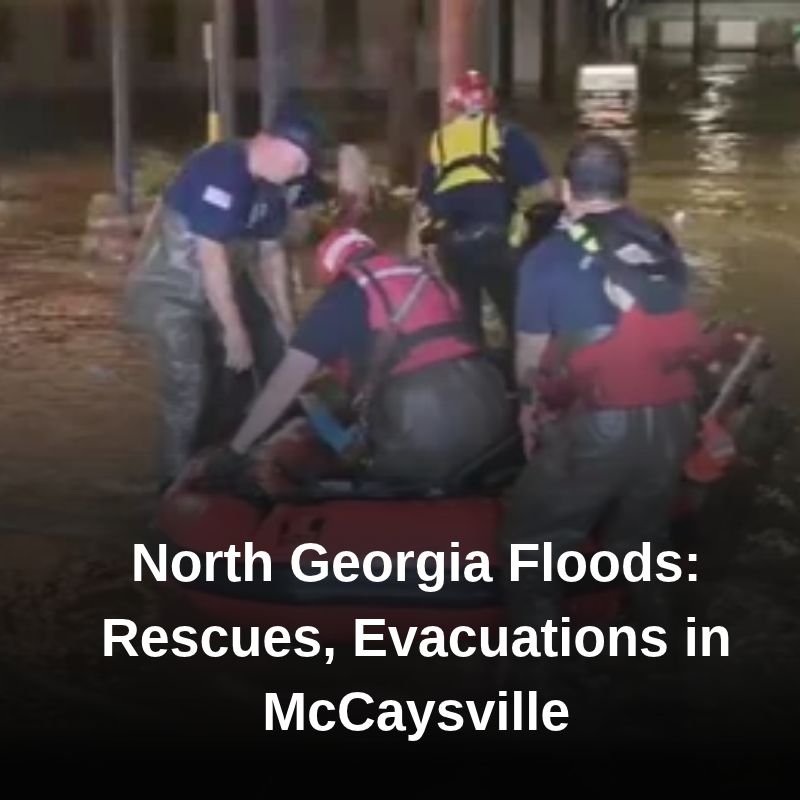
Severe thunderstorms triggered dangerous flash flooding across north Georgia on Thursday, November 5, 2026, forcing emergency crews to carry out water rescues and evacuate residents from flooded neighborhoods. The hardest-hit community was McCaysville, where floodwaters rose rapidly after several inches of rain fell overnight.
The National Weather Service (NWS) reported that thunderstorms dropped between 3 and 5 inches of rain in McCaysville, creating life-threatening flash-flood conditions. Local police officials said emergency personnel had conducted more than 30 water rescues overnight, while some residents remained trapped in homes that rescue teams could not safely reach.
The flooding also affected nearby communities, including areas around Blue Ridge and the Georgia-Tennessee border. Authorities warned residents not to assume conditions were safe simply because the rain had stopped.
The emergency highlights the serious risks of flash flooding, the importance of timely evacuation and the financial consequences that severe weather can create for homeowners, businesses and local communities.
What Happened in North Georgia? Heavy Rain Triggers Life-Threatening Flooding
The flooding developed overnight Wednesday into Thursday as slow-moving thunderstorms brought intense rainfall to parts of north-central Georgia.
McCaysville, a small community in Fannin County near the Tennessee border, experienced particularly dangerous conditions. The town sits across the Toccoa River from Copperhill, Tennessee, where flooding also affected the surrounding region.
According to the National Weather Service, rainfall totals reached 3 to 5 inches in McCaysville. Other parts of the wider region experienced heavier rainfall, with reports of 5 to 6 inches or more in some locations.
The rapid rainfall caused rivers, streams and low-lying streets to flood. Water moved into residential neighborhoods and commercial areas, making several roads difficult or impossible to navigate.
The NWS issued a Flash Flood Emergency for McCaysville, describing the situation as particularly dangerous and instructing people to seek higher ground immediately. National Weather Service
More Than 30 Water Rescues as Residents Become Trapped
Emergency responders faced difficult conditions as floodwaters continued to rise.
McCaysville Police Chief Michael Earley told local news outlets that crews had completed more than 30 water rescues overnight. He described water rising over the roofs of some homes, leaving residents in dangerous situations.
Rescue boats also experienced difficulties navigating the powerful currents. Some areas were too dangerous for emergency personnel to reach immediately.
The Fannin County Emergency Management Agency confirmed that swift-water rescue teams were evacuating residents. However, officials said numerous people remained stranded, including residents in locations where rescue crews could not safely operate.
Authorities did not initially provide a confirmed total of affected residents or injuries in the Associated Press report. It is important not to confuse the number of rescues with the total number of people affected by the flooding. AP News
The situation demonstrated how quickly severe weather can turn into a life-threatening emergency, particularly in communities near rivers and steep terrain.
McCaysville Flooding Breaks Previous River Record
The flooding was not limited to streets and residential properties. River levels also reached historic territory.
Local reporting citing National Oceanic and Atmospheric Administration data placed the river level at approximately 18.05 feet, exceeding the previous reported record of 17.8 feet set on February 16, 1990.
The rising water created additional pressure on emergency crews as roads, bridges and public facilities became difficult to access.
The city declared a state of emergency, and local officials restricted access to McCaysville to protect residents and emergency responders.
Authorities also urged people to stay away from flooded roads and affected neighborhoods unless they were responding to official evacuation instructions. https://www.atlantanewsfirst.com
Schools Closed and Emergency Shelters Open
The flooding disrupted daily life across parts of north Georgia.
Schools in Fannin and Gilmer counties were canceled Thursday as officials responded to dangerous road conditions and flooding.
Local emergency arrangements also included shelter locations for residents displaced by the rising water. Atlanta News First reported that Copperhill City Hall, McCaysville City Hall and the Fannin County Recreation Center were being used as shelters.
The response involved local emergency personnel and assistance from neighboring jurisdictions. Georgia Governor Brian Kemp said the state’s emergency management agency was coordinating a multi-agency response, including boats, aviation support and assistance from Tennessee responders, according to local reporting. https://www.atlantanewsfirst.com
Residents should rely on local emergency management announcements for updated shelter availability, road closures and evacuation instructions.
Why Flash Flooding Can Remain Dangerous After Rain Stops
One of the most important warnings from Fannin County officials was that the end of rainfall does not mean the danger has passed.
The agency specifically warned residents not to let the rain stopping create a false sense of security. Floodwater can continue moving downstream, river levels can remain elevated, and additional runoff can reach neighborhoods after storms have moved away.
Flash floods are especially dangerous because water can rise quickly and carry debris, vehicles and other objects. Even relatively shallow moving water can knock people off their feet.
Flooded roads also create serious risks for drivers. Water can conceal damaged pavement, fallen trees, electrical hazards and washed-out sections of roads.
The National Weather Service repeatedly advises people to turn around rather than drive through flooded roadways. National Weather Service
Important Flash Flood Safety Steps
Residents in flood-prone areas should take the following precautions:
- Move to higher ground immediately when authorities issue an evacuation instruction.
- Never walk, swim or drive through moving floodwater.
- Avoid bridges, riverbanks and flooded road crossings.
- Stay away from downed power lines and damaged electrical equipment.
- Follow official emergency alerts and local road closure notices.
- Do not return home until authorities say the area is safe.
- Keep essential medication, identification documents and emergency supplies accessible.
People who are trapped should contact emergency services rather than attempting dangerous self-rescue through fast-moving water.
Flood Damage, Homeowners Insurance and Financial Recovery
The North Georgia flooding could create significant financial challenges for homeowners, renters and local businesses.
Floodwater can damage foundations, electrical systems, heating equipment, vehicles, furniture and personal belongings. Commercial properties may also face temporary closures, equipment losses and business interruption.
One important issue for property owners is flood insurance coverage.
Standard homeowners insurance policies generally do not cover damage caused by flooding from rising water outside the home. Separate flood insurance, often obtained through the National Flood Insurance Program or private insurers, may be needed for this type of loss.
Property owners should review their policy documents carefully rather than assume that ordinary homeowners insurance covers every type of water damage.
After floodwater recedes, residents should consider these steps:
- Photograph and document visible property damage before beginning cleanup, when it is safe to do so.
- Contact the insurance company or flood insurance provider to report the damage.
- Keep receipts for emergency repairs, temporary accommodation and other eligible expenses.
- Avoid entering buildings with structural damage or standing water near electrical systems.
- Use qualified restoration professionals when cleanup involves contaminated water, mold or electrical hazards.
Coverage depends on the policy, exclusions, limits and circumstances of the loss. Homeowners should speak directly with their insurer before assuming that a particular repair or expense will be reimbursed.
Federal disaster assistance may also become relevant if government disaster declarations are issued. Residents should check official FEMA announcements for eligibility and application information rather than assume assistance has already been approved.
Could Climate and Extreme Rainfall Increase Flood Risks?
The North Georgia event has renewed attention on the dangers of intense rainfall in communities located near rivers, creeks and mountainous terrain.
Slow-moving thunderstorms can drop large amounts of rain over a small area. When the ground cannot absorb water quickly enough, runoff moves into streams and drainage systems, increasing the risk of sudden flooding.
The region’s geography can make the situation more complicated. Water flowing downhill from surrounding areas can reach rivers and residential communities even after rainfall has weakened elsewhere.
CNN’s meteorological reporting described widespread rainfall of 3 to 6 inches across parts of the region, with isolated locations receiving more than 8 inches. The report also discussed how warmer air can hold more moisture, potentially increasing the intensity of some heavy-rainfall events. However, one flooding incident alone does not establish that climate change caused it. ABC17NEWS
For communities facing repeated flood risks, local drainage improvements, updated flood maps, emergency planning and appropriate flood insurance can all play important roles in reducing future losses.
What Happens Next in North Georgia?
Emergency crews face the difficult task of checking flooded homes, locating stranded residents and assessing damage to roads and public facilities.
Officials must also determine whether buildings are structurally safe and whether water systems require additional precautions. Local authorities should provide updates about reopening roads, restoring services and lifting emergency restrictions.
Residents should continue following official instructions even after floodwater begins to recede. Returning too early can expose people to hidden hazards, contaminated water and unstable structures.
The November 5 flooding is a reminder that severe weather emergencies can develop rapidly. For families in north Georgia, the immediate priorities remain safety, evacuation support and recovery.
Frequently Asked Questions
Where did the flash flooding happen in Georgia?
The most serious flooding reported in the supplied Associated Press story occurred in McCaysville, in Fannin County, north Georgia. Nearby communities along the Georgia-Tennessee border were also affected.
How much rain fell in McCaysville?
The National Weather Service reported approximately 3 to 5 inches of rainfall in McCaysville. Other parts of the wider region recorded higher totals.
How many water rescues were reported?
McCaysville Police Chief Michael Earley said more than 30 rescues had been conducted overnight.
Were people evacuated from their homes?
Yes. Swift-water rescue teams evacuated residents, while emergency officials reported that some people remained stranded in areas that crews could not safely reach.
Were there any deaths or injuries?
The initial Associated Press report did not provide a confirmed injury or death total. Readers should check subsequent official emergency updates for verified information.
Does homeowners insurance cover flash flood damage?
Standard homeowners insurance generally does not cover damage caused by flooding from rising outside water. Separate flood insurance may be necessary, depending on the property and policy.
What should residents do after a flash flood?
Residents should wait for official clearance before returning, avoid standing water and damaged electrical systems, document property damage safely and contact their insurance provider if their property was affected.
Final Takeaway
Heavy rain triggered a dangerous flash-flood emergency in north Georgia on November 5, 2026, with McCaysville experiencing severe flooding, more than 30 reported water rescues and evacuations. The river also reportedly exceeded its previous record level, adding to the emergency response challenges.
Although rainfall had stopped, officials warned that floodwater remained dangerous. Residents should continue to follow emergency instructions, avoid flooded roads and prioritize safety while rescue and recovery operations proceed.
