
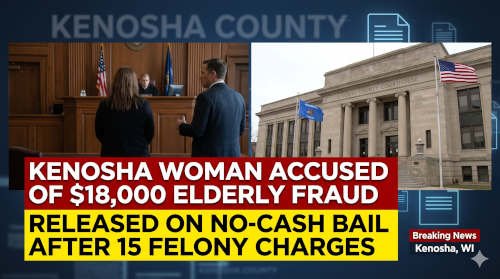
A 41-year-old Kenosha woman accused of obtaining more than $18,000 through fraudulent loans involving elderly customers has been released without cash bail while facing 15 felony charges. The case has drawn attention because the allegations reportedly involve forged signatures, identity theft, financial transactions and purchases of Ticketmaster tickets.
Candice L. DeFord of Kenosha was arrested on November 6, 2026, according to a report published by Kenosha County Eye. The report states that she was released on no-cash bail on Monday, November 9, following a court appearance before Kenosha County Court Commissioner Daniel Kellum.
DeFord faces charges that reportedly include money laundering, identity theft, forgery and fraudulent use of financial transaction cards. The reported financial losses exceed $18,000, with elderly customers among the alleged victims.
The release decision followed an earlier $50,000 arrest warrant, according to the local report. However, the available reporting does not provide the complete criminal complaint or the court’s detailed reasoning for changing the financial release requirement.
The allegations remain unproven. DeFord is presumed innocent unless prosecutors establish the charges in court.
What Is Known About the Alleged Kenosha Financial Fraud Case?
The case centers on allegations that DeFord used fraudulent financial activity involving elderly customers to obtain loans and access money without proper authorization.
According to the November 9 report by Kenosha County Eye, the alleged scheme involved forged signatures, fraudulent loan applications and financial transactions connected to more than $18,000 in losses.
The report also references Ticketmaster ticket purchases as part of the alleged activity. However, the publicly accessible information reviewed for this article does not establish the exact number of tickets purchased, the specific transactions involved or the full sequence of events.
Those details matter because financial fraud investigations often involve multiple transactions, financial institutions and records. Investigators may examine loan applications, signatures, account activity, transaction histories and communications to determine whether financial information was used without authorization.
At this stage, the allegations should not be treated as established facts. The criminal complaint and evidence presented in court will be important in determining what prosecutors can prove.
Who Is Candice L. DeFord?
Candice L. DeFord, 41, is identified in the local report as a Kenosha resident.
The report states that she was arrested on November 6, 2026, and faces 15 felony charges connected to the alleged financial fraud investigation.
The reported charges include:
- Money laundering
- Identity theft
- Forgery
- Fraudulent use of financial transaction cards
The available report does not provide a complete count-by-count breakdown of all 15 charges. It would therefore be inaccurate to assign a specific number of counts to each offense without reviewing the official charging documents.
The allegations involve elderly customers, making the case particularly significant for discussions about financial exploitation and consumer protection.
Why Was the $50,000 Bail Reduced to Zero?
One of the most closely watched developments in the case is the decision to release DeFord without requiring cash bail.
According to Kenosha County Eye, a $50,000 arrest warrant had been issued before her arrest. Following her appearance on November 9, Court Commissioner Daniel Kellum reportedly removed the cash requirement and allowed her release on no-cash bail.
A no-cash release generally means that a defendant does not have to deposit a specified amount of money to leave custody. It does not mean that the criminal charges have been dismissed or that the defendant has been found innocent.
The defendant remains subject to the court’s release requirements and must comply with applicable conditions. Failure to follow those conditions can create additional legal consequences.
The available reporting does not include the complete hearing transcript or a detailed explanation of why the commissioner changed the original financial requirement. As a result, the specific reasons behind the decision cannot be independently established from the information currently available.
What Wisconsin Law Says About Pretrial Release
Wisconsin’s rules governing bail and pretrial release focus on ensuring that defendants appear in court, protecting the community from serious harm and preventing witness intimidation.
Article I, Section 8 of the Wisconsin Constitution states that people awaiting trial are generally eligible for release under reasonable conditions. It also limits the circumstances in which monetary conditions can be imposed.
Wisconsin’s bail framework also recognizes that courts can consider different release conditions rather than automatically requiring cash in every criminal case.
Relevant considerations under Wisconsin’s bail statutes include the nature and seriousness of the alleged offenses, the potential penalties, the defendant’s ability to provide bail, prior criminal history, community ties and previous compliance with court requirements.
This means that a no-cash release does not necessarily indicate that a court has dismissed the seriousness of the allegations. Release decisions are made under legal standards that apply before a defendant has been convicted.
The exact factors considered in DeFord’s hearing remain unclear without the complete court record.
Why Elderly Victims Are a Major Concern in Financial Fraud Cases
Financial crimes involving older adults can create serious financial and personal consequences.
Elderly customers may face additional challenges when unauthorized loans, identity theft or fraudulent transactions affect their accounts. In some cases, victims may need to spend considerable time contacting financial institutions, reviewing account statements, disputing transactions and correcting inaccurate financial records.
Identity theft can also create problems beyond the immediate amount of money involved. Unauthorized financial activity may affect credit reports, loan applications and access to banking services.
Wisconsin authorities recognize elder financial exploitation as an important consumer protection issue. The Wisconsin Department of Justice provides information about protecting older residents and addressing crimes that target elderly or disabled people.
In cases involving alleged fraudulent loans, investigators may examine whether the affected customers authorized the transactions, whether their personal information was used without permission and whether financial institutions followed appropriate verification procedures.
The DeFord case highlights why accurate documentation and prompt reporting can be important when suspicious financial activity is discovered.
How Fraudulent Loans and Identity Theft Can Affect Victims
Fraudulent loans can create financial obligations that victims never intended to accept.
If someone uses another person’s identity to apply for credit, the affected individual may discover unfamiliar accounts, unexpected loan balances or suspicious inquiries on a credit report.
Victims may also experience difficulties proving that they did not authorize the transactions. Resolving the situation can require communication with lenders, banks, credit reporting agencies and law enforcement.
In an investigation such as the one reported in Kenosha, financial records may help establish whether transactions were authorized and identify where money was transferred or spent.
However, the specific methods allegedly used in DeFord’s case should be determined from the charging documents and evidence rather than assumed from the reported total loss.
What Role Does the Kenosha County Court Commissioner Play?
Daniel Kellum is listed by Kenosha County as one of its circuit court commissioners. The county’s official website identifies him as serving in Courtroom 157.
Court commissioners handle designated judicial responsibilities, including proceedings involving initial appearances and release conditions.
In DeFord’s case, the local report identifies Kellum as the commissioner who approved the reported no-cash release on November 9.
The distinction between a bail decision and a final criminal judgment is important. A commissioner handling pretrial release does not determine guilt simply by deciding whether a defendant must remain in custody or may be released under conditions.
The criminal case must continue through the appropriate court process. Prosecutors must present evidence supporting the charges, and the defense has the opportunity to challenge the allegations.
What Happens Next in the Criminal Case?
The next important developments will likely involve court proceedings, the review of evidence and any additional filings by prosecutors or the defense.
The prosecution will need to establish the elements of the charged offenses. That may involve financial records, loan documentation, transaction histories, signature evidence and testimony from affected customers or other witnesses.
The defense will have the opportunity to challenge the evidence and contest the allegations.
The case may also involve further hearings concerning release conditions, scheduling and other procedural matters. Any future changes to DeFord’s release status will depend on court decisions and the applicable legal standards.
Members of the public can use the Wisconsin Court System’s case-search service to look for publicly available circuit court case information. The system provides access to eligible public records, although some documents or information may not be available online.
At the time of the November 9 report, the central development was DeFord’s release without cash bail while facing the reported felony charges.
What the Case Means for Financial Fraud Awareness
The allegations in Kenosha offer a reminder that financial fraud can involve more than stolen cash or unauthorized credit card purchases.
Fraudulent loan applications and identity theft can potentially create long-term financial difficulties for victims, particularly when their personal information is used without their knowledge.
Consumers can take several practical steps to reduce their exposure to financial fraud:
- Review bank and credit card statements regularly.
- Contact financial institutions immediately about unfamiliar transactions.
- Check credit reports for accounts or loan applications that were not authorized.
- Avoid sharing sensitive personal or banking information with unverified callers or websites.
- Report suspected identity theft to the appropriate financial institution and law enforcement agency.
Older adults may also benefit from discussing suspicious financial requests with a trusted family member or financial professional before sharing sensitive information.
These precautions do not eliminate every risk, but they can help people identify suspicious activity earlier.
Conclusion
The Kenosha case involving Candice L. DeFord has brought attention to allegations of financial fraud involving elderly customers, forged signatures and more than $18,000 in reported losses.
DeFord faces 15 felony charges and was released without cash bail on November 9, according to local reporting. The decision followed an earlier reported $50,000 arrest warrant and has raised questions about the pretrial release process.
However, the charges have not been proven, and the complete court record is needed to understand the reasons behind the release decision and the details of the alleged transactions.
The next stages of the case will determine how prosecutors support the charges and how the defense responds. Until then, the allegations should be reported carefully while keeping attention on the importance of protecting elderly consumers from financial exploitation.