
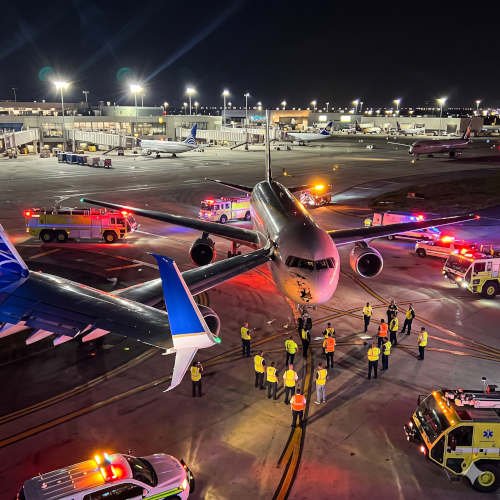
A ground collision involving a UPS cargo aircraft and a Copa Airlines passenger jet at Miami International Airport left two people with minor injuries and damaged both planes, according to airport officials and the Federal Aviation Administration (FAA).
The incident happened at approximately 9:15 p.m. on Saturday, November 14, 2026, while both aircraft were taxiing on the airport surface. Emergency responders treated two people at the scene, but neither required transportation to a hospital.
The Copa Airlines aircraft was carrying 166 passengers and six crew members. The airline said the remaining passengers and crew members were reported to be in good condition after the collision.
The incident has raised questions about aircraft movement and communication on busy airport taxiways. The FAA has confirmed that it is investigating what happened.
What Happened in the Miami International Airport Plane Collision?
According to the FAA, the collision involved a UPS Boeing 767 cargo aircraft and a Copa Airlines Boeing 737-800NG passenger jet.
Both aircraft were moving on the taxiway when their parts came into contact. The Copa Airlines aircraft was taxiing toward its gate, while the UPS cargo plane was preparing to depart for Bogotá, Colombia.
The FAA said the wingtip of the Copa Airlines Boeing 737 struck the nose of the UPS Boeing 767. Photographs taken after the incident showed visible damage to the nose area of the cargo aircraft.
The airport confirmed that the collision occurred at approximately 9:15 p.m. on Saturday. Initial information indicated that the aircraft were moving on the ground rather than taking off or landing when the contact happened.
Although the incident caused damage to the aircraft, airport officials said flight operations were not affected. Other aircraft were directed to alternative taxiways while the situation was addressed.
The exact sequence of events leading to the collision remains under investigation.
Two People Treated for Minor Injuries
Miami-Dade Fire Rescue responded after the aircraft made contact. Two people received treatment at the scene for what airport officials described as minor injuries.
Neither person needed to be transported to a hospital.
Copa Airlines confirmed that its aircraft had six crew members and 166 passengers onboard at the time of the incident. The airline said the two people treated for apparent minor injuries were the only reported injuries among those onboard.
The company added that the other passengers and crew members were in good condition.
The available information does not establish the identities of the injured individuals or the precise circumstances in which they were hurt.
The response from emergency personnel helped ensure that the affected passengers and crew members received attention while airport authorities assessed the situation.
FAA Reveals Details About Aircraft Movement
The FAA provided an important detail about the aircraft movements before the collision.
According to the agency, air traffic controllers had instructed the UPS crew to give way to the Copa Airlines aircraft.
The Copa jet was taxiing toward its gate when its wingtip struck the nose of the UPS cargo aircraft, which was moving for departure.
Audio from air traffic control included a pilot saying, “Somebody hit us,” after the contact occurred.
The statement provides a glimpse of the immediate reaction in the cockpit, but it does not establish why the collision happened or whether either crew failed to follow an instruction.
Investigators will need to examine the aircraft movements, communications between pilots and controllers, and other available evidence to determine how the incident developed.
The FAA has not announced a final cause.
What Copa Airlines Said About the Collision
Copa Airlines confirmed that one of its aircraft was involved in a ground incident at Miami International Airport.
In its statement, the airline said preliminary information indicated that a cargo aircraft came into contact with the left wingtip of the Copa passenger jet while both aircraft were taxiing.
The airline expressed regret for the disruption caused to passengers and emphasized that passenger and crew safety remained its top priority.
Copa also said it would cooperate with authorities investigating the incident.
The aircraft involved was identified as a Boeing 737-800NG. It had 166 passengers and six crew members onboard.
The airline’s statement indicated that the passengers and crew members were generally in good condition, apart from the two people treated for apparent minor injuries.
The airline has not publicly provided further details about the extent of the damage to its aircraft or the expected timeline for repairs.
UPS Confirms Its Cargo Crew Is Safe
UPS also acknowledged that one of its aircraft was involved in the Miami airport incident.
The company said its crew was safe and confirmed that it would work with authorities to determine what happened.
UPS emphasized that the safety of its employees and the public was its highest priority.
The cargo aircraft was a Boeing 767 preparing to depart for Bogotá, Colombia, when the collision occurred.
The company has not released additional details about the crew members, the aircraft’s damage assessment, or whether the incident will affect its cargo schedule.
The aircraft’s nose sustained visible damage, according to photographs taken after the collision.
Further information about the aircraft’s condition and return to service will depend on inspections and any repairs required.
Did the Collision Disrupt Miami Airport Flights?
Despite the collision, Miami International Airport said its operations were not affected.
Airport officials said aircraft were being directed to other taxiways following the incident. This allowed airport activity to continue while authorities addressed the situation.
The statement is significant because taxiway incidents can require temporary changes to aircraft movement and ground operations. However, officials did not report a broader operational disruption connected to this collision.
The airport did not announce a full shutdown or a general suspension of flights because of the incident.
Travelers scheduled to fly through Miami should continue checking directly with their airlines for flight status, gate changes, and other travel updates.
Passengers should also monitor official airport announcements if further operational changes are reported.
Why Taxiway Safety Matters at Busy Airports
Taxiways are the designated routes aircraft use to move between runways, gates, terminals, and other airport areas.
Unlike runways, which are primarily used for takeoffs and landings, taxiways support ground movement. Pilots follow air traffic control instructions and airport markings to navigate these routes safely.
Aircraft movement on the ground requires careful coordination. Large passenger jets and cargo aircraft may operate in nearby areas, sometimes moving in different directions as they approach gates or prepare for departure.
The Miami collision illustrates why communication between pilots and air traffic controllers is important even when aircraft are not airborne.
A wingtip or aircraft nose can extend beyond the central path of a plane. If aircraft move too close to one another, contact can occur even at relatively low ground speeds.
However, the specific factors behind Saturday’s collision have not yet been established. It would be premature to conclude that the incident resulted from pilot error, a communication failure, or an air traffic control mistake.
The FAA investigation will be important in determining whether any procedures or instructions were misunderstood or not followed.
What Will the FAA Investigation Examine?
The FAA has confirmed that it is investigating the collision.
Investigators are expected to examine the circumstances surrounding the aircraft movements and the communication between the pilots and air traffic controllers.
Important questions include:
- What taxi instructions were issued to the UPS and Copa Airlines crews?
- Did both aircraft follow their assigned taxi routes?
- How close were the aircraft before contact occurred?
- Were there any communication or coordination problems?
- What damage did each aircraft sustain?
- Did the incident reveal any safety concerns involving taxiway procedures?
The FAA may review air traffic control communications, available airport surveillance information, aircraft records, and statements from the crews.
The investigation will help establish the sequence of events and determine whether additional safety measures are necessary.
No final findings or official cause have been announced.
What Passengers Should Know
For passengers, the most important confirmed details are that two people were treated for minor injuries, the Copa aircraft’s other passengers and crew members were reported to be in good condition, and UPS said its crew was safe.
Miami International Airport reported that aircraft were being directed to alternative taxiways and that airport operations were not affected.
Travelers should avoid relying on unverified social media claims about the collision. Official updates from Miami International Airport, the FAA, UPS, and Copa Airlines remain the most reliable sources for confirmed information.
Passengers booked on either airline can contact the carrier directly for information about possible aircraft changes or schedule updates.
Miami Airport Plane Collision: What Happens Next?
The collision between the UPS Boeing 767 and Copa Airlines Boeing 737 has drawn attention to aircraft safety during ground operations at one of the country’s major international airports.
Although the incident caused visible aircraft damage and left two people with minor injuries, officials reported no broader impact on airport operations.
The FAA investigation will now be central to understanding why the aircraft came into contact despite air traffic control instructions directing the UPS crew to give way.
Until investigators release further findings, the precise cause remains unknown.
Both airlines have said they will cooperate with authorities, while airport officials have indicated that operations continued using alternative taxiways.
Frequently Asked Questions
1. What happened at Miami International Airport on November 14, 2026?
A UPS Boeing 767 cargo plane and a Copa Airlines Boeing 737 passenger jet collided while taxiing at Miami International Airport at approximately 9:15 p.m. on Saturday.
2. Were there injuries in the Miami airport plane collision?
Yes. Two people were treated at the scene for apparent minor injuries. Neither required transportation to a hospital.
3. How many passengers were on the Copa Airlines plane?
The Copa Airlines Boeing 737-800NG was carrying 166 passengers and six crew members. The airline reported that everyone else onboard was in good condition.
4. Which aircraft hit the UPS cargo plane?
According to the FAA, the wingtip of the Copa Airlines Boeing 737 struck the nose of the UPS Boeing 767 cargo aircraft.
5. Is the FAA investigating the Miami airport collision?
Yes. The FAA confirmed that it is investigating the incident. Officials have not yet announced a final cause.
6. Were Miami International Airport flights disrupted?
Airport officials said aircraft were directed to alternative taxiways and that there was no impact on airport operations.
Bottom Line: The UPS and Copa Airlines collision at Miami International Airport resulted in two minor injuries and visible aircraft damage, but airport operations continued. The FAA investigation will determine how the two aircraft came into contact while taxiing and whether additional safety measures are needed.