


Breaking News USA: lOOKIGN FRO FDED Interest RATE DECISION TODAY THEN YOU ARE HT THE RIGHT PORTAL. In this article, find everything you need to know about the Fed rate decision, what time it makes this decision, whether it will drop or raise interest rates, and other details.
If this decision statement is released, it will make clear whether there is a rise or drop in interest rates, what it affects on gold value in America, and other concerns also. The US Federal Reserve is widely expected to maintain the current federal funds
rate range of 5.25% to 5.50% at its conclusion today. This decision to “press pause” for the second consecutive meeting marks a significant shift in the central bank’s aggressive tightening cycle. While financial markets and investors have rallied on hopes that the rate-hiking campaign is over, Fed Chair Jerome Powell is anticipated to deliver a hawkish message: rates will remain “higher for long.” The central bank must strike a delicate balance, acknowledging the recent cooling in economic data without declaring premature
victory over persistent, sticky inflation. The Data Dilemma: Why the Fed Isn’t Cutting Rates Yet
Despite recent positive economic indicators suggesting that inflation is beginning to moderate, the Federal Open Market Committee (FOMC) remains cautious. The Personal Consumption Expenditures (PCE) price index, the Fed’s preferred inflation gauge, remains above the 2% target.
Major challenges in Fed rate decision
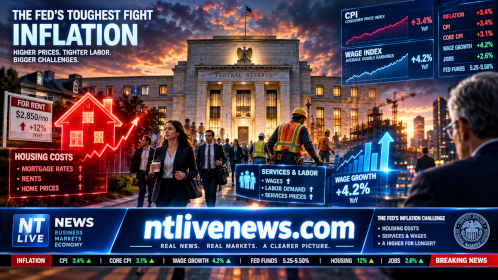
- Housing construction investment and Services Inflation Remain High: While goods inflation has eased, the cost of services, particularly housing, continues to rise, keeping overall inflation stubbornly elevated. The “last mile” of getting inflation back to target often proves the most difficult.
- Labor Market Resilience: A surprisingly robust job market continues to fuel wage growth. While wage growth has slowed slightly, it remains inconsistent with the Fed’s 2% inflation goal. Policymakers fear that a wage-price spiral could reignite inflationary pressures if the labor market remains too tight.
What Powell Will Emphasize :
The most critical element of today’s announcement will be Chair Powell’s commentary during the post-meeting press conference. His language will be scrutinized for any clues about the future trajectory of monetary plans
- Inflation is Still the Priority: Powell will almost certainly reiterate that the Fed’s primary mandate is price stability. He will emphasize that the central bank is prepared to raise rates further if inflation data shows signs of re-accelerating.
- The Danger of Premature Easing: The historical precedent of the 1970s, where the Fed lowered rates too soon only to see inflation surge back, looms large in the minds of current policymakers. Powell will stress that a “pivot” to rate cuts is not currently under discussion. The committee will likely
maintain its projection for one additional rate hike before the end of the year, even if they choose to pause today.
Economic Outlook
The Federal Reserve’s decision comes amid intense debate about the future of the US economy. The central bank is attempting to engineer a “soft landing,” where it brings inflation under control without triggering a severe recession.
- The Soft Landing Narrative: Recent economic growth (GDP) and a resilient consumer have fueled optimism that a soft landing is achievable. Proponents of this view argue that the Fed’s monetary tightening is slowing the economy without breaking it.
- The Recession Risk: Conversely, many economists warn that the full impact of the Fed’s aggressive rate hikes has not yet been fully felt. The lag effect of monetary policy typically takes 12-18 months to manifest. Key leading indicators, including the inverted yield curve and tightening credit conditions, continue to point toward a potential recession in early 2024.
Wide Context and Financial Stability
The Fed does not operate in a vacuum. The committee must also consider the impact of its decisions on global financial markets and the stability of the US banking system.
- Strong Dollar and Global Impact: The high interest rate environment has TIGHTENED the US dollar, ADDING pressure on emerging markets and other central banks, which may be forced to raise rates to defend their currencies, even if their domestic economies are weak.
- Banking Sector Health: The regional banking crisis in early 2023 served as a stark reminder of the risks associated with rapid rate hikes. The Fed is monitoring how higher rates are affecting bank balance sheets and commercial
real estate loans.
Conclusion:
What’s in the final analysis reports says is that decision to hold interest rates steady is not a signal that the Federal Reserve is finished with its fight against inflation. Instead, it represents a strategic pause—a moment for policymakers to assess the cumulative
impact of their past actions.
Here are the requested FAQs and high-DA free resource links, based on the real-world economic analysis provided above.
Frequently Asked Questions (FAQs)
Q: Why is the Federal Reserve pausing its interest rate hikes?
A: The Fed is pausing to assess the cumulative impact of its aggressive rate hikes over the
last 18 months. Monetary policy operates with a “long and variable lag,” meaning the full economic effects of past increases are still working their way through the system. A pause allows policymakers to avoid overtightening and potentially causing an unnecessary recession while still maintaining a restrictive stance to
fight inflation.
Q: Does a rate pause mean inflation is defeated?
Answer: No. While inflation has receded from its peak, it remains above the Federal Reserve’s 2% target. The pause is a strategic decision, not a signal of victory. The Fed’s preferred inflation gauge, the Core PCE Price Index, is still elevated, particularly in the services and housing sectors. The committee’s main concern is ensuring inflation is sustainably on a downward path before considering rate cuts.
Q: What does “higher for longer” mean for consumers and investors?
Answer: “Higher for longer” signifies that the Fed intends to keep the federal funds rate at its current restrictive level for an extended period. For consumers, this means elevated interest rates for mortgages, auto loans, and credit cards will persist. For investors, it implies that the era of cheap money is over, and they
should adjust to an environment where corporate borrowing costs are higher, which can impact earnings growth and stock market valuations.
Reference links
Provided below are reference links to authoritative, high-Domain Authority (DA) sources where you can track real-time Federal Reserve data and economic analysis.
- The Federal Reserve – Official Website: federalreserve.gov
- Federal Reserve Bank of St. Louis (FRED): fred.stlouisfed.org
- U.S. Bureau of Labor Statistics (BLS): bls.gov