
United States of America Self-Driving Car Insurance vs. Self-Insured Car: Costs, Coverage, and Rules in 2026
The automotive industry is changing rapidly as artificial intelligence, autonomous driving technology, and advanced driver assistance systems reshape how Americans use their vehicles. These developments are also creating new questions about car insurance, liability, accident claims, and financial protection.
Drivers increasingly search for information about self driving car insurance, auto insurance self driving cars, and whether traditional insurance policies will cover vehicles that can perform certain driving tasks automatically.
At the same time, another question is gaining attention: can you self-insure your car instead of purchasing a traditional auto insurance policy?
Although these topics sound similar, they describe two different insurance concepts. Self-driving car insurance concerns vehicles equipped with autonomous technology, while self-insurance means taking financial responsibility for your own vehicle-related losses.
In 2026, both subjects matter to American drivers as insurance companies, regulators, and automotive manufacturers adapt to new technology and changing financial risks.
What Is Self-Driving Car Insurance?
Self-driving car insurance refers to insurance coverage designed to protect vehicles equipped with automated driving technology.
These vehicles use combinations of cameras, radar, sensors, artificial intelligence, and computer systems to assist with or perform certain driving tasks.
However, not every vehicle advertised with advanced driving features is fully autonomous.
According to the National Highway Traffic Safety Administration (NHTSA), vehicles currently available for consumers in the United States are not fully self-driving. Drivers must remain attentive and responsible for safe operation when using available driver-assistance technologies.
This distinction is important when purchasing car insurance.
A vehicle equipped with adaptive cruise control, lane-keeping assistance, or automatic emergency braking generally still requires traditional auto insurance.
Future autonomous vehicles may require additional insurance considerations involving software failures, cybersecurity, sensor damage, manufacturer responsibility, and automated driving systems.
How Does Auto Insurance Work for Self-Driving Cars?
Insurance for autonomous vehicles introduces questions that traditional auto insurance policies were not originally designed to address.
For example, imagine a vehicle operating with an automated driving system that becomes involved in an accident.
Investigators may need to determine whether the accident resulted from:
- Human driver error.
- An automated driving system malfunction.
- Software programming problems.
- Sensor or camera failure.
- Incorrect vehicle maintenance.
- Another driver’s actions.
These questions can make insurance claims more complicated.
Traditional liability insurance generally addresses injuries and property damage for which an insured driver is legally responsible. However, an autonomous vehicle accident may also involve product liability claims against manufacturers or technology suppliers.
For this reason, insurance self driving cars policies and future coverage arrangements may need to account for multiple parties and different types of responsibility.
Why Is Car Insurance for Self-Driving Cars Different?
Autonomous technology creates opportunities for improved road safety, but it also introduces new financial risks.
One major difference involves accident responsibility.
In a traditional vehicle accident, investigators generally examine driver behavior, road conditions, vehicle maintenance, and other contributing factors.
With automated vehicles, investigators may also need access to software records, system performance information, sensor data, and details about whether automated driving features were engaged.
Another important difference involves repair costs.
Self-driving vehicles may contain expensive cameras, radar equipment, sensors, electronic control units, and specialized computing systems.
Even a relatively minor accident could damage components that cost considerably more to replace than conventional vehicle parts.
Latest 2026 News: What Insurance Companies Expect From Autonomous Vehicles
The future of self driving car insurance is attracting attention from insurance analysts and financial researchers.
In February 2026, Fitch Ratings reported that autonomous vehicles were unlikely to have a meaningful impact on insurers over the following decade.
The agency identified several factors slowing widespread adoption, including high vehicle costs, regulatory differences between states, and consumer preferences.
However, Fitch also highlighted important long-term insurance challenges.
These include potentially lower accident frequency, higher repair expenses, cybersecurity concerns, and more complicated liability questions.
This means autonomous technology could eventually change how insurance companies calculate premiums and manage claims.
The insurance industry must prepare for a market in which vehicle manufacturers, software developers, vehicle owners, and insurance companies may share different responsibilities following an accident.
What Is Self Insured Car Insurance?
The term self insured car insurance describes a financial arrangement in which a vehicle owner assumes responsibility for certain losses instead of transferring those risks to a traditional insurance company.
However, self-insurance does not automatically mean drivers can legally operate vehicles without insurance.
Most U.S. states require drivers to demonstrate financial responsibility through an approved form of coverage or another legally accepted arrangement.
For example, California allows qualifying individuals and businesses to establish financial responsibility through a DMV-issued self-insurance certificate or an approved cash deposit.
California’s DMV lists a $75,000 cash deposit as one available alternative to a traditional liability insurance policy.
This option is not a simple substitute available to every driver without conditions. Applicants must satisfy the applicable state requirements.
Can You Self-Insure Your Car Instead of Buying Insurance?
The answer depends on the state where the vehicle is registered and operated.
Some states allow qualifying individuals, businesses, or fleet operators to establish financial responsibility through approved self-insurance arrangements.
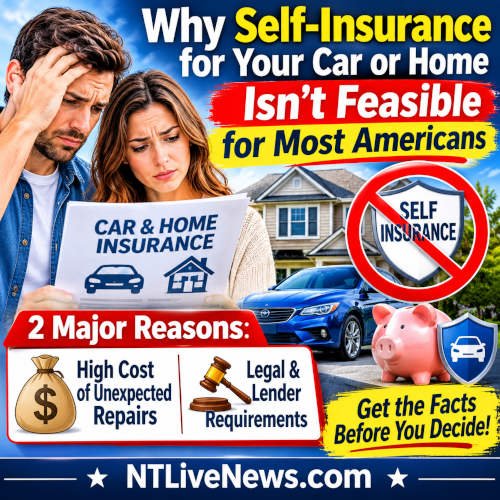
However, most ordinary drivers purchase traditional liability insurance because the alternative arrangements can require substantial financial resources.
There is also an important distinction between liability protection and vehicle damage protection.
Even when someone qualifies to self-insure against liability claims, that arrangement does not automatically provide financial protection for vehicle theft, collision damage, or other losses.
Drivers considering how to self-insure their car should first contact their state motor vehicle department and understand the legal requirements.
How to Self-Insure Your Car: Rules and Financial Requirements
Anyone considering self-insurance should understand that requirements differ across states.
For example, California provides several approved financial responsibility options:
- Purchase a qualifying motor vehicle liability insurance policy.
- Make an approved cash deposit with the DMV.
- Obtain a qualifying surety bond.
- Apply for a DMV-issued self-insurance certificate when eligible.
The California DMV identifies a $75,000 cash deposit and a $75,000 surety bond as alternatives under its financial responsibility requirements.
Other states have different rules, minimum coverage amounts, and eligibility conditions.
Drivers should not assume that an arrangement accepted in one state will automatically satisfy another state’s requirements.
What Are the Financial Risks of Self-Insurance?
The biggest disadvantage is the possibility of a major financial loss.
Consider a hypothetical situation in which a driver causes an accident involving multiple vehicles and serious injuries.
The resulting medical expenses, property damage, and legal costs could exceed the driver’s available savings.
Traditional liability insurance helps protect policyholders against covered claims, subject to policy limits and conditions.
Self-insurance transfers that financial responsibility back to the individual or organization.
This approach may work for financially strong businesses with large reserves and professional risk-management teams, but it can be dangerous for ordinary households.
Another disadvantage is the absence of automatic protection for collision damage, comprehensive losses, or other optional coverage.
Drivers should carefully compare the potential savings against the financial consequences of an uninsured loss.
How Much Could Self-Driving Car Insurance Cost?
There is no single nationwide premium for autonomous vehicles.
Insurance prices depend on vehicle value, location, coverage limits, driving history, claims experience, and the specific technology installed in the vehicle.
The cost of repairing advanced sensors and computing systems may also influence future premiums.
Tesla, for example, offers an insurance premium benefit for eligible customers using Full Self-Driving (Supervised) in certain states.
According to Tesla’s official insurance information, the benefit is available in participating states and depends on eligibility requirements.
This illustrates how vehicle technology and driving behavior can influence insurance pricing.
However, a discount for supervised driver-assistance technology should not be confused with a separate insurance policy for fully autonomous vehicles.
What Should Drivers Know Before Buying Coverage?
Whether someone owns a conventional vehicle or one equipped with advanced driving technology, comparing insurance policies remains essential.
Drivers should consider:
- Liability insurance: Protection against covered third-party injury and property damage claims.
- Collision coverage: Protection for qualifying vehicle damage following a collision.
- Comprehensive insurance: Protection against covered non-collision events, including theft, fire, and certain weather-related damage.
- Uninsured motorist coverage: Protection in qualifying accidents involving drivers without sufficient insurance.
- Cybersecurity risks: Potential technology-related exposures associated with connected and automated vehicles.
- Repair costs: Whether specialized vehicle components and sensors are covered under the policy.
Consumers should also ask insurers whether aftermarket technology, manufacturer-installed systems, and software-related damage affect policy coverage.
The Future of Self Driving Cars and Insurance in America
The relationship between self driving cars and insurance will become increasingly important as autonomous technology develops.
NHTSA continues to monitor automated vehicle safety and requires manufacturers to report certain crashes involving automated driving systems and advanced driver assistance systems under its applicable Standing General Order.
Meanwhile, state governments continue developing different rules for autonomous vehicle testing and deployment.
A July 2026 Connecticut Office of Legislative Research report documented the different insurance requirements adopted across states for autonomous vehicles.
For example, Florida’s 2026 statutes establish specific liability coverage requirements for certain fully autonomous vehicles operating through on-demand transportation networks.
These developments show that autonomous vehicle insurance is not simply a question of replacing traditional car insurance with a new product.
It involves determining who is responsible when technology, human behavior, and vehicle systems interact.
Final Verdict: Which Insurance Option Makes More Sense?
For most American drivers, traditional auto insurance remains the most practical way to meet legal financial responsibility requirements and protect against potentially expensive accidents.
Self-insurance may be appropriate for qualifying businesses or individuals with substantial financial resources, but it requires careful planning and compliance with state regulations.
Meanwhile, self driving car insurance will continue evolving as autonomous vehicle technology becomes more widely available.
Drivers should understand the difference between supervised driver-assistance features and fully autonomous driving systems before purchasing coverage.
The smartest financial decision is to compare available policies, understand exclusions, evaluate liability limits, and avoid assuming that advanced vehicle technology automatically eliminates insurance risks.
Frequently Asked Questions About Self-Driving Car Insurance and Self-Insurance
1. What is self driving car insurance?
Self-driving car insurance refers to coverage for vehicles equipped with automated driving technology. Depending on the vehicle and policy, coverage may address accidents, property damage, liability, and technology-related risks.
2. Can you self insure your car in the USA?
Yes, in certain states and under specific financial responsibility requirements. Some jurisdictions allow approved deposits, bonds, or self-insurance certificates. Eligibility varies.
3. What is self insured car insurance?
It is an arrangement in which a qualifying vehicle owner or organization assumes financial responsibility for covered losses rather than relying entirely on a traditional insurance company.
4. How to self insure your car legally?
Contact your state’s DMV or insurance regulator to determine whether self-insurance is permitted. Review the required financial deposits, certificates, bonds, and eligibility conditions before changing your coverage.
5. Is auto insurance for self driving cars more expensive?
It depends on the vehicle, coverage, repair costs, location, and insurer. Expensive sensors and specialized components could increase repair costs, while improved safety performance could reduce certain claims.
6. Do self-driving cars need insurance?
Autonomous vehicles must comply with applicable financial responsibility and insurance requirements. The exact rules depend on the state and type of vehicle operation.
7. Does regular car insurance cover self-driving features?
Many vehicles with supervised driver-assistance features remain covered under conventional auto insurance policies. However, drivers should check their individual policy terms and exclusions.
8. What is the difference between self-insurance and self-driving car insurance?
Self-insurance means accepting financial responsibility for your own losses. Self-driving car insurance concerns coverage for vehicles equipped with automated driving technology. They are different insurance concepts.
