
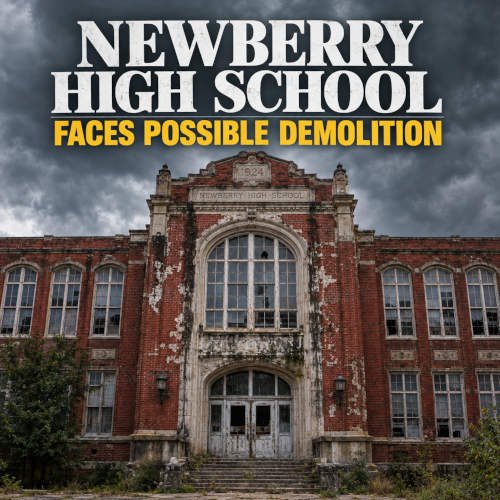
US Business : A historic school building in Michigan’s Upper Peninsula may be heading toward demolition after extensive water damage and mold made the structure unsafe to enter. The future of the former Newberry High School is now a major concern for local education officials, former students, and community members who hoped the building could be preserved.
The Tahquamenon Area Schools (TAS) Board of Education discussed the building’s condition during a special meeting on October 26, according to a November 3 report by The Newberry News. Superintendent Shawn Tebo told the board that mold inside the vacant building had become so severe that people should not enter it.
Although demolition is now being considered, the board did not approve a final decision at the meeting. Officials are also examining whether state funding could help pay for the work and whether important school records stored in the basement can be recovered.
The situation highlights a difficult choice facing many school districts: whether to invest in expensive school building renovation and mold remediation or remove a deteriorating property that may no longer be economically practical to restore.
Why the Former Newberry High School Is in Trouble
The former Newberry High School has been closed for more than a year. During that period, major water damage allowed extensive mold growth to develop inside the historic structure.
The building was originally expected to be mothballed. In practical terms, mothballing means closing a property while taking steps to protect it until officials decide whether it can be reused, renovated, or sold. However, leaving an older building unused without adequate protection against moisture can create serious maintenance challenges.
At the October 26 meeting, Superintendent Tebo said the mold problem had reached a level that made entering the building unsafe. The basement still contains important school records, but those materials may require testing before staff can determine whether they can be safely recovered.
Trustee Colleen Duflo recalled that the original understanding was that the building would be closed and left for a future administration to address. That future decision has now become urgent because the structure has continued to deteriorate.
The district is facing more than a preservation question. It must also consider employee safety, potential environmental hazards, the value of historical records, and the financial responsibility of maintaining an unused property.
A Building With a Long Educational History
The former school is not simply an empty structure. It represents a significant part of Newberry’s educational and community history.
Construction on the historic high school began in 1926 and was completed in 1927, according to earlier reporting by The Newberry News. The building served generations of students before the district moved secondary classes into renovated space elsewhere.
In August 2025, local reporting described plans proposed by Career and Technical Education teacher Linus Parr to give the old building a new purpose. His ideas included using parts of the structure for career and technical education classes, college instruction, and other community activities.
The possibilities discussed at that time included converting the former woodshop into a small-engine classroom and adapting the garage area for welding instruction. Other ideas included college classes and potential housing.
Those proposals reflected an effort to preserve the building while creating educational and economic value for the community. However, the building’s worsening physical condition has made that vision more difficult.
Why Mold Remediation Could Be Expensive
Mold remediation is not simply a matter of cleaning visible patches from walls or ceilings. When a building has experienced prolonged water intrusion, moisture can spread into materials and concealed spaces.
Roof leaks, damaged ceilings, wet insulation, wall cavities, flooring, and ventilation systems can all complicate a cleanup project. Before renovation can begin, professionals generally need to identify the moisture source, assess the affected materials, and determine how much contamination exists.
The U.S. Environmental Protection Agency advises that mold remediation in schools and commercial buildings should begin with an assessment of the moisture problem. Its guidance emphasizes correcting the source of water, removing contaminated materials where necessary, and preventing mold from spreading during cleanup.
For a large vacant school, a professional mold inspection and remediation plan could involve several stages. These may include building assessments, moisture testing, containment, removal of damaged materials, cleaning, drying, and repairs to the roof or plumbing.
The total mold remediation cost depends on the size of the affected area, the materials involved, the building’s condition, and the amount of reconstruction required. No verified remediation estimate for the former Newberry High School was included in the November 3 report, so a specific price should not be assumed.
Restoration Versus Demolition: The Financial Question
Trustee Jeff Puckett supports demolishing the structure, arguing that the cost of repurposing it would be difficult to recover. His position reflects a practical concern: even if a historic building can technically be repaired, the investment may exceed what a district or future owner can reasonably afford.
A complete school building renovation could require more than mold cleanup. Contractors might also need to address roof replacement, structural repairs, electrical systems, heating, plumbing, accessibility, fire safety, and modern building requirements.
That means the district would need to compare the full cost of restoration with the cost of demolition and the future expense of maintaining the property.
Demolition also carries a substantial price tag. The district has not announced a final demolition estimate, and officials have not confirmed that the building will be torn down.
The decision will likely depend on professional assessments, available funding, and whether a realistic reuse plan can be developed.
Could Michigan State Grants Help Pay for Demolition?
Funding is one of the most important parts of the discussion. Superintendent Tebo said the district may be able to use state funds associated with 23E grants for demolition. Information about those funds was expected by November 1, according to the November 3 local report.
Michigan has also been directing substantial funding toward school infrastructure needs. On July 17, 2026, the Michigan Department of Education announced $224 million in competitive infrastructure grants for projects across 31 school districts. The funded work included critical building improvements such as roofing, heating, ventilation, and air-conditioning systems.
Separately, Michigan’s 2026-2027 school aid legislation includes funding provisions for vacant school building demolition. Eligibility and award conditions matter, however, and the existence of a state funding program does not mean Tahquamenon Area Schools has received an award.
The district would need to confirm which funding program applies, whether the property meets the requirements, and how much assistance may be available. Public funding could reduce the financial burden, but it cannot be treated as guaranteed until an award is confirmed.
What Happens to School Records Inside the Building?
One immediate concern involves the school records stored in the basement. These documents may contain historical and administrative information that the district would prefer to preserve.
Tebo said she would investigate having the records tested for mold so they could potentially be digitized. Digitization could allow the district to preserve important information without requiring staff to keep using contaminated physical materials.
However, handling mold-affected documents requires care. Paper can absorb moisture and support mold growth, while moving contaminated materials without proper precautions may spread spores. The district may need advice from qualified environmental professionals and records-preservation specialists before attempting recovery.
Preserving the records could also help protect the community’s connection to the school’s history, particularly if demolition eventually becomes the preferred option.
Why This Decision Matters Beyond Newberry
The former Newberry High School situation reflects a wider challenge for public education: aging school facilities can become expensive liabilities when maintenance is delayed or buildings remain unused.
A recent Government Accountability Office report, published in October 2026, found that an estimated 47% of public school districts experienced chronic facility problems in at least one school during the 2024-2025 school year. Water intrusion was among the most common issues identified.
The report also highlighted concerns involving ventilation, plumbing, temperature control, and building conditions. These problems can affect the quality of the learning environment and create costly repair needs.
For districts with limited budgets, the challenge is deciding which facilities can be repaired, which should be replaced, and how to pay for essential work without placing excessive pressure on taxpayers.
The Importance of Early Building Maintenance
The EPA recommends responding quickly to leaks and wet building materials. Its school guidance says damp materials should generally be dried within 24 to 48 hours when possible to reduce the risk of mold growth.
That guidance is especially relevant to school administrators responsible for older buildings. Routine roof inspections, plumbing maintenance, ventilation checks, and moisture monitoring can help prevent small problems from developing into major restoration projects.
Once extensive mold and water damage have developed, the choices can become far more expensive. Professional mold remediation, structural assessment, and building renovation may require significant planning and funding.
What Residents Should Watch Next
The next important developments will involve funding, building assessments, and the board’s decision-making process. Residents may want to follow future Tahquamenon Area Schools meetings for updates on the following issues:
- Whether the district can access state funding for demolition.
- Whether officials obtain a reliable demolition cost estimate.
- Whether any professional assessment identifies a realistic restoration option.
- Whether basement records can be safely tested and digitized.
- Whether the board schedules a formal vote on the building’s future.
No Final Demolition Decision Yet
For now, the former Newberry High School remains a historic property facing serious deterioration, not a building with an approved demolition order. The district must weigh preservation against safety, cost, and the practical realities of restoring a structure affected by extensive water damage and mold.
The Bottom Line
Newberry’s former high school once represented opportunity and community pride. Today, its future depends on whether the district can identify a financially realistic and safe path forward. State funding may help, but the board still faces difficult questions about restoration, demolition, and preserving the building’s history.
The coming decisions will determine whether the nearly century-old structure can receive another purpose or whether the community will have to say goodbye to an important part of its educational past.