
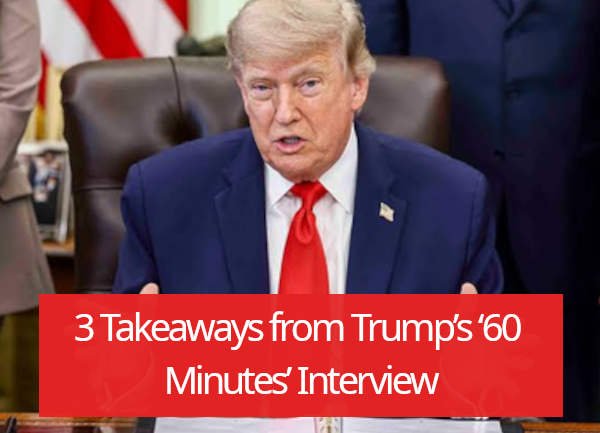
President Donald Trump faced questions about the Republican Party’s major 2026 midterm election losses during his first post-election television interview on CBS’s 60 Minutes. The conversation, which aired on November 8, covered the Iran war, rising gasoline prices, immigration enforcement and the political future of his administration.
Speaking with correspondent Ross Douthat at the White House, Trump offered several explanations for why Democrats made significant gains. He argued that his absence from the ballot made a difference, acknowledged that his deportation policies might have been too tough and suggested that some administration personnel changes could follow the Republican defeat.
The interview also brought attention to Defense Secretary Pete Hegseth, who faces an impeachment effort from Republican Representative Thomas Massie. Trump said he continued to have confidence in Hegseth.
Here are three major takeaways from Trump’s 60 Minutes interview and what they could mean for the remaining two years of his presidency.
1. Trump Blamed the Iran War, Higher Gas Prices and His Absence From the Ballot for Republican Losses
One of the most important moments came when Douthat asked Trump to explain why Republicans suffered such significant losses in the November 2026 midterm elections.
Trump first pointed to the fact that he was not personally running for office.
He argued that the outcome could have been different if his name had appeared on the ballot. He also said that although he campaigned for Republican candidates and held large rallies, some of his supporters did not transfer their enthusiasm to the candidates he endorsed.
Trump suggested that voters sometimes disliked the candidates they were asked to support. He said some people may have decided not to vote rather than support candidates they did not prefer.
However, the president also identified issues that could have damaged Republican support.
He acknowledged that voters were unhappy with the war involving Iran and the increase in gasoline prices. He also referred to public dissatisfaction related to Israel.
The comments were notable because they connected foreign policy and household expenses with the Republican Party’s election performance.
Why the Iran War Became an Election Issue
The Iran conflict was a major subject during the interview. Trump acknowledged that the war was unpopular with some voters, but he continued to defend his administration’s decision to prevent Iran from obtaining a nuclear weapon.
He argued that the military campaign would be viewed more positively over time, even if it created political difficulties in the short term.
Trump also said he believed the operation had prevented Iran from obtaining a nuclear weapon. That was his assessment of the military outcome, not an independently established conclusion presented during the interview.
When Douthat asked whether he planned to escalate the conflict after the midterms, Trump said he was not looking to do so and did not see a reason for further escalation.
The discussion demonstrated the political challenge facing the administration: defending a major foreign policy decision while responding to voters concerned about its economic and security consequences.
Gasoline Prices and the Cost of Living
Trump also pointed to rising gasoline prices as a possible reason for Republican losses.
He maintained that his administration had delivered strong economic results and described several economic indicators as historically positive. However, he acknowledged that his administration had failed to communicate its economic message effectively.
When Douthat questioned why many Americans remained unhappy with the economy, Trump responded that the administration had not successfully communicated its achievements.
This distinction matters because strong national economic indicators do not necessarily mean households feel financially secure.
Consumers often judge economic conditions through everyday expenses, including fuel, groceries, housing, utilities and healthcare. Even when financial markets perform well, higher household costs can influence how voters evaluate the government.
The interview therefore highlighted a gap between Trump’s economic defense and the concerns that influenced voters during the midterms.
2. Trump Admitted His Deportation Policy May Have Been Too Tough
Immigration enforcement was another major topic in the interview. Trump acknowledged that his administration’s deportation policies may have become too aggressive in certain cases.
The president said immigration had both helped and hurt his party politically. He defended efforts to remove people he described as dangerous but recognized that enforcement had also affected immigrants who had established jobs and worked in American communities.
Trump discussed people employed in hotels, landscaping businesses and other workplaces. He said some Americans believed such workers should be allowed to remain in the country if they were contributing to society and paying taxes.
When Douthat pressed him about the issue, Trump acknowledged that the deportation approach might have been too tough.
The statement was significant because immigration enforcement had been one of the central priorities of his administration.
Could Trump Reach an Immigration Agreement With Democrats?
Trump also indicated that he was willing to explore an immigration agreement with congressional Democrats.
He suggested that cooperation could be possible, particularly when addressing the situation of immigrants who have worked in the United States for years.
However, he did not announce a specific proposal or provide details about which groups might qualify for legal status.
Any agreement would face difficult political questions. Republicans and Democrats have different positions on border security, deportation priorities, legal immigration and protections for people who have lived in the country for extended periods.
The new Congress could make immigration negotiations especially important. Democrats are expected to use their increased influence to examine federal immigration enforcement and seek changes to administration policies.
For now, Trump’s comments indicate an openness to discussion rather than a confirmed change in federal deportation rules.
The Political Importance of Immigration Enforcement
The immigration debate also reflects a challenge for the Republican Party.
Strict border enforcement helped Trump attract voters who wanted stronger immigration controls. However, enforcement actions involving workers and long-established residents created criticism from other groups.
The election results raised questions about whether the administration’s approach had become too broad for some voters.
Trump’s comments suggest he recognizes that immigration policy can have different political effects depending on how enforcement is carried out.
The next question is whether his administration will translate that acknowledgment into policy changes or continue its existing enforcement strategy.
3. Trump Hinted at Administration Changes but Defended Pete Hegseth
The third major takeaway involved possible changes inside the Trump administration.
During the interview, Douthat asked whether Trump expected to remove anyone from his team following the Republican Party’s midterm losses.
Trump indicated that some changes were possible. He said he liked his Cabinet but suggested that a few personnel adjustments could happen.
The timing was notable because the interview was recorded before the White House announced a major leadership change.
Shortly after the conversation, Trump announced that Susie Wiles would leave her position as White House chief of staff and be replaced by Deputy Chief of Staff Stephen Miller.
Miller is a longtime Trump adviser and a prominent architect of the administration’s hard-line immigration agenda.
The change drew attention because it came after Trump acknowledged that his deportation policies might have been too tough for some voters.
Wiles had been a central figure in Trump’s White House and served as his chief of staff during the early part of his second term.
The appointment of Miller raised questions about whether the administration would adjust its immigration strategy or continue emphasizing stricter enforcement.
Trump Expressed Confidence in Defense Secretary Pete Hegseth
The interview also addressed Defense Secretary Pete Hegseth, who has faced criticism from lawmakers and an impeachment effort led by Republican Representative Thomas Massie.
Douthat asked Trump about his confidence in the Pentagon chief. Trump said he had confidence in Hegseth and defended his role in the administration’s military operations.
Trump also criticized efforts to impeach the defense secretary, describing the push as unfair.
The impeachment effort adds another challenge for the administration as Democrats prepare to exercise greater influence in Congress.
Hegseth has faced scrutiny over his leadership and the handling of sensitive military information. The political dispute could become more significant as lawmakers return to Washington and consider oversight actions.
Trump’s public support suggests that he is not currently signaling an intention to remove Hegseth. However, congressional pressure could keep the defense secretary in the political spotlight.
What the Interview Means for Trump’s Remaining Two Years
The 60 Minutes interview offered an important look at how Trump views the Republican Party’s midterm defeat and the challenges facing his administration.
His comments showed that he continues to defend major policy decisions, including the Iran campaign and his administration’s economic record. At the same time, he acknowledged that gasoline prices, the war and immigration enforcement may have contributed to voter dissatisfaction.
The interview also highlighted the difficult political environment that could shape the final two years of his presidency.
With Democrats gaining control of both chambers of Congress, the administration may face increased investigations, oversight hearings and legislative opposition.
Trump said he believed he could work with Democrats on certain issues, including immigration. However, cooperation will depend on whether both parties can agree on specific proposals.
The administration’s personnel decisions will also attract attention. Miller’s appointment as chief of staff could influence the direction of White House policy, especially on immigration and executive branch priorities.
What Happens Next?
Several developments will determine whether Trump’s interview comments lead to meaningful changes.
First, the administration will face pressure to explain how it plans to balance border security with concerns about deporting people who have established jobs and families in the United States.
Second, lawmakers will continue debating the Iran conflict, its costs and its broader consequences for American security and the economy.
Third, Congress is likely to increase scrutiny of the administration, including its defense leadership and immigration agencies.
The Republican Party will also need to evaluate its election strategy before the next national campaign cycle. Trump’s influence remains significant, but the midterm results have raised questions about how effectively his political popularity translates into support for other Republican candidates.
Three Takeaways at a Glance
- Midterm losses: Trump blamed his absence from the ballot, the Iran war, higher gasoline prices and dissatisfaction with Republican candidates for the election results.
- Immigration policy: Trump acknowledged that deportation policies may have been too tough and suggested he could work with Democrats on an agreement.
- Administration changes: Trump hinted at personnel changes, later replacing Susie Wiles with Stephen Miller as chief of staff, while expressing confidence in Defense Secretary Pete Hegseth.
Frequently Asked Questions
1. When did Trump’s 60 Minutes interview air?
The interview aired on November 8, 2026, on CBS. Ross Douthat conducted the conversation at the White House.
2. What did Trump say caused Republican midterm losses?
Trump cited his absence from the ballot, dissatisfaction with Republican candidates, the Iran war and higher gasoline prices. He also discussed public dissatisfaction related to Israel.
3. Did Trump admit his deportation policy was too tough?
Yes. Trump acknowledged during the interview that his administration’s deportation approach might have been too tough, particularly when enforcement affected people with established jobs.
4. Did Trump say he would work with Democrats on immigration?
Yes. He indicated that an immigration agreement with Democrats could be possible, but he did not announce a detailed proposal or specific policy changes.
5. Who replaced Susie Wiles as White House chief of staff?
Stephen Miller replaced Susie Wiles following Trump’s announcement after the interview was recorded.
6. Does Trump still support Pete Hegseth?
Yes. Trump expressed confidence in Defense Secretary Pete Hegseth and criticized the impeachment effort against him.
7. Who conducted Trump’s 60 Minutes interview?
CBS correspondent Ross Douthat interviewed Trump at the White House. The conversation covered the midterm elections, immigration, the economy, Iran, Ukraine and other subjects.
Final Thoughts
Trump’s November 8 60 Minutes interview revealed three important challenges for his administration: explaining the Republican midterm defeat, responding to criticism of deportation policies and managing leadership changes inside the White House.
His acknowledgment that immigration enforcement may have gone too far was particularly notable. However, his decision to appoint Stephen Miller as chief of staff created new questions about the direction of that policy.
As Democrats prepare to use their congressional majorities, the administration’s next decisions on immigration, foreign policy and economic priorities will help shape Trump’s remaining time in office.