


Read on this USA breaking news portal about the recent news of Butter recalled for yeast, mold and E. coli contamination and why this is a major concern.
As you see in the latest news, the recall highlights three different food safety concerns. Although yeast and mold can sometimes cause food spoilage, E. coli contamination can present a more serious health risk, depending on the strain involved.
Understanding E. coli Contamination in Food
Escherichia coli, commonly known as E. coli, is a group of bacteria that lives in the intestines of humans and animals. Many strains are harmless, but certain types can cause foodborne illness.
According to the Centers for Disease Control and Prevention (CDC), symptoms of an E. coli infection may include severe stomach cramps, diarrhea, vomiting, and, in some cases, patients will be seen with fever. Some infections can make bloody diarrhea and serious complications, including hemolytic uremic syndrome (HUS), a condition that can lead to kidney failure.
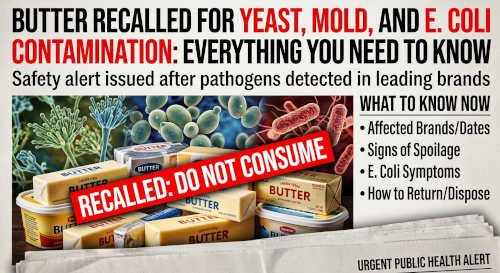
Its Symptoms vary depending on the strain and the person affected. Children under 5, older adults, and people with weakened immune systems may face a greater risk of severe illness.
Importantly, the reported butter recall does not, by itself, establish that consumers have become ill. The available information provided for this article does not confirm an outbreak, a specific E. coli strain, or several illnesses linked to the product.
Consumers should nevertheless treat the potential contamination seriously and avoid consuming any product confirmed to be part of the recall.
What About Yeast and Mold?
Yeast and mold are microorganisms that can grow in food under suitable conditions. Their presence may cause spoilage, unpleasant odors, discoloration, or changes in texture and flavor of food or edible items.
Some molds can also produce mycotoxins under particular conditions. However, not every mold produces toxins, and the presence of mold does not automatically mean that a food contains them.
The health implications depend on the organism, the food involved, the degree of contamination and the level of exposure.
Consumers should not attempt to determine whether recalled butter is safe by smelling it, tasting a small amount or examining its appearance. Contamination may not always be visible, and tasting a potentially contaminated product is not a safe way to assess risk.
What Should Consumers Do If They Have the Recalled Butter?
Those who purchased the affected product should take the following precautions.
1. Check the lot code and best-by date.
Look for lot code 07871 and the November 11, 2026, best-by date identified in the supplied recall report. Compare these details with the official FDA notice, including any product photographs, package sizes or additional identifying information.
2. Stop using the product.
If the packaging matches the confirmed recall details, do not eat the butter. Do not use it in baking, cooking, sauces or other recipes. Heating should not be treated as a reliable way to make a recalled product safe.
3. Follow the official disposal instructions.
Consult the recall notice for instructions on obtaining a refund or disposing of the product. Do not donate the recalled butter or give it to pets.
4. Clean potentially contaminated items
If the product leaked or came into contact with refrigerator shelves, countertops, utensils or other food, clean the affected areas thoroughly.
The FDA recommends washing surfaces that may have contacted contaminated food and sanitizing them appropriately. Wash your hands with soap and water after handling the product and cleaning the area.
5. Monitor your health.
If you have eaten the affected butter, do not assume that you will necessarily become ill. However, seek medical advice if you develop symptoms such as diarrhea, severe abdominal cramps, vomiting or fever.
Seek urgent medical attention for concerning symptoms, including bloody diarrhea, markedly reduced urination or signs of dehydration. Children, older adults and people with weakened immune systems should receive particular attention if symptoms develop.
Where Was the Recalled Butter Distributed?
The supplied report identifies 10 states where the affected product was reportedly distributed:
- Connecticut
- Florida
- Georgia
- Iowa
- Illinois
- Indiana
- Maryland
- New Jersey
- New Hampshire
- Wisconsin
Consumers in these states should check their purchases against the official product identification details.
However, a distribution list does not necessarily identify every individual store that received the product. Likewise, the absence of a state from this reported list should not be treated as definitive proof that a product is unaffected if other recall information suggests otherwise.
The FDA’s official recall database and enforcement reports are useful resources for checking product-specific notices and subsequent updates.
What Does an FDA Class II Recall Mean?
The supplied report describes the butter recall as a Class II recall.
The FDA uses three classifications to communicate the relative health risk associated with recalled products.
- A Class I recall applies when there is a reasonable probability that exposure to a product could cause serious adverse health consequences or death.
- A Class II recall applies when exposure may cause temporary or medically reversible health consequences, or when the probability of serious adverse health consequences is considered remote.
- A Class III recall applies when exposure to a product is not likely to cause adverse health consequences.
These classifications help communicate the assessed risk, but they should not be interpreted as guarantees about an individual’s health.
The FDA also notes that recall classifications can be assigned after a company has initiated a voluntary recall. Consumers should therefore consult the latest official notice rather than rely exclusively on an earlier news report.
Why Food Recalls Matter for Consumers
Food recalls are an important part of the food safety system. They help remove potentially unsafe products from distribution and alert consumers who may already have purchased them.
Packaged foods can move through multiple distribution channels before reaching grocery stores and household refrigerators. This makes accurate product identification especially important.
Lot codes and date markings help distinguish affected production batches from other products sold under the same brand. Consumers should avoid assuming that an entire brand has been recalled when the notice applies only to a specific product or lot.
At the same time, consumers should not dismiss a recall because the product looks normal or has been stored properly. Refrigeration and freezing do not reliably eliminate all foodborne pathogens, and appearance alone cannot establish that food is safe.
The most dependable approach is to follow the instructions in the official recall notice and seek guidance from qualified health professionals when illness is suspected.
How to Verify the Latest Recall Information
Consumers can consult the following authoritative resources:
- U.S. Food and Drug Administration: The FDA publishes food recall announcements, product identification details, and recall classifications.
- FDA Enforcement Reports: These records provide information about classified recalls and may be updated as additional information becomes available.
- Centers for Disease Control and Prevention: The CDC provides information about E. coli symptoms, complications, and foodborne illness prevention.
- Healthcare professionals: Doctors and other qualified medical professionals can assess symptoms and advise whether testing or treatment is necessary.
The contact number included in the supplied report for FDA inquiries is 1-888-463-6332 (1-888-INFO-FDA). Consumers should verify current contact options through the agency’s official website.
Frequently Asked Questions
1. Which butter is reportedly affected by the recall?
The supplied October 27, 2026, report identifies Miyoko’s Creamery European Style Salted Plant Milk Butter as the affected product. Consumers should verify the product and lot details against the official recall notice.
2. How can I identify the recalled butter?
The reported identifying details are lot code 07871 and a best-by date of November 11, 2026. Check the packaging and confirm these details using the FDA’s official information before determining whether your product is affected.
3. Is it safe to eat the butter if it looks and smells normal?
No. If the product matches a confirmed recall, do not consume it, even if it appears normal. Foodborne contamination cannot always be detected by sight or smell.
4. What symptoms can E. coli cause?
Symptoms can include abdominal cramps, diarrhea, vomiting and, in some cases, fever. Certain infections can cause bloody diarrhea and serious kidney complications. Anyone who develops concerning symptoms after eating a potentially contaminated product should seek medical advice.
5. Does a Class II recall mean the product is harmless?
No. A Class II classification indicates that adverse health consequences may occur but are generally expected to be temporary or medically reversible, or that the probability of serious consequences is remote. It does not mean the recalled product is safe to consume.
6. Should I throw away the recalled butter?
Do not eat or use it. Follow the official recall instructions for returning or disposing of the product. If contamination is suspected, clean any surfaces that may have contacted the butter.
7. What if I have already eaten the butter?
Eating the product does not mean you will necessarily become ill. Monitor for symptoms and contact a healthcare professional if you develop diarrhea, abdominal pain, vomiting, fever or other concerning symptoms. Seek urgent care for severe symptoms, including bloody diarrhea or signs of dehydration.
8. Where can I find updates about the recall?
Check the FDA’s official food recall announcements and enforcement reports for verified information. These resources can provide updates on affected products, recall classifications and consumer instructions.
Conclusion
The reported Miyoko’s Creamery plant-based butter recall is a reminder that food safety checks matter even for products kept in the refrigerator or freezer. The supplied report identifies yeast, mold and potential E. coli contamination concerns, along with a lot code and best-by date that consumers can use to check their packaging.
Anyone who has the product should stop using it if it matches the confirmed recall details, follow the official return or disposal instructions, and clean any surfaces that may have been exposed.
Useful References
- FDA Food Recalls: What You Need to Know — Guidance on identifying recalled food, returns, disposal and cleaning.
- FDA Enforcement Reports — Official recall records and classification information.
- FDA Recalls: Background and Definitions — Definitions of Class I, Class II and Class III recalls.