
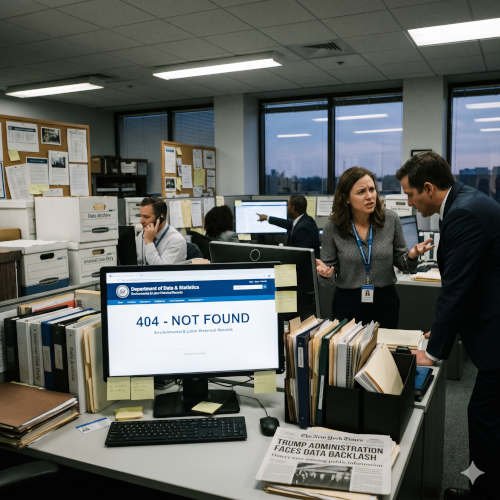
The Trump administration is facing renewed scrutiny over changes to federal government information after a major investigation found that hundreds of datasets and thousands of government webpages had been altered, restricted or removed. The findings have raised concerns about government transparency, scientific research and public access to reliable information.
A November 11 investigation by The Guardian, conducted by Amy Qin and Flávio Pessoa, identified at least 92 proposals in Project 2025 that called for deleting government data, changing scientific information, weakening transparency requirements or eliminating research offices. The newspaper reported that the administration had implemented most of those recommendations, while another 42 appeared to be in progress.
The findings have placed Project 2025, the Heritage Foundation’s policy blueprint for restructuring the federal government, back at the center of the American political debate.
The controversy is not simply about government websites disappearing. It concerns whether Americans can continue accessing the public records, scientific research and statistical information they need to understand government decisions and major national issues.
What the Guardian Investigation Found About Project 2025
The Guardian reviewed the 900-page Project 2025 document and identified recommendations involving federal data, scientific research, public guidance and government transparency.
Its investigation found that the recommendations covered several areas of government activity. Some called for removing specific terms from federal publications, while others proposed ending data collection, changing reporting requirements or dismantling offices responsible for producing public information.
The newspaper reported that the Trump administration had already carried out most of the identified proposals.
According to the investigation, the review included automated text analysis followed by manual examination of more than 500 passages. Journalists also consulted government documents, executive orders, regulatory records, news reports and subject-matter experts to assess whether recommendations had been implemented, were underway or had not yet been implemented.
The findings suggest a significant connection between the policy blueprint and subsequent government actions. However, identifying a similar proposal and government action does not, by itself, prove that every agency change was directly ordered by Project 2025.
Why Federal Data and Government Websites Matter
Federal agencies publish information used by millions of Americans. Government datasets help researchers study public health, businesses evaluate economic conditions, journalists investigate public spending and communities prepare for environmental emergencies.
For example, climate records help scientists understand changing weather patterns and environmental risks. Public health statistics help officials identify disease trends and healthcare needs. Census information supports decisions about representation, public services and government funding.
When agencies remove information or change how they collect it, the effects can extend beyond government offices.
Researchers may lose access to historical records. Journalists may find it harder to compare government claims with earlier data. Businesses and local governments may also face challenges when planning around incomplete or inconsistent information.
A March 2026 Congressional Research Service report highlighted the importance of federal data availability and identified gaps in existing rules governing how information is removed from public catalogues.
DEI Data and Federal Website Changes
One major area identified in the Guardian investigation involves diversity, equity and inclusion, commonly known as DEI.
Project 2025 included recommendations to remove or change language associated with DEI, gender equality and related government programs.
After returning to office in January 2025, President Donald Trump signed executive orders directing federal agencies to terminate what his administration described as unlawful or discriminatory DEI programs and preferences.
The January 20 executive order directed agencies to end DEI and DEIA programs and related initiatives to the extent permitted by law. A separate January 21 order focused on ending what the administration characterized as illegal discrimination and restoring merit-based opportunities.
These orders provide an official explanation for the administration’s policy direction. However, critics argue that removing terminology, research resources and public information can have consequences beyond ending specific workplace programs.
The Associated Press previously reported that federal agencies removed or archived hundreds of DEI-related documents and resources after the administration’s executive actions. The changes affected government guidance, training materials and resources concerning LGBTQ+ students and civil rights.
Climate Research and Scientific Information Under Scrutiny
Climate-related information is another major part of the controversy.
The Guardian reported that Project 2025 recommended removing references to the climate emergency from federal research programs. It also highlighted the removal of the Environmental Protection Agency’s dedicated climate research webpage and changes affecting federal climate science personnel.
The National Climate Assessment is particularly important because it provides a major federal review of climate-related risks across the United States. Its research informs discussions about extreme weather, infrastructure, agriculture, public health and environmental planning.
When climate research becomes harder to access, scientists and policymakers may face additional challenges when comparing long-term trends.
The wider concern is that public access to scientific evidence should not depend entirely on the political priorities of the administration currently in power.
Treasury Rules, Transportation Data and Census Changes
The investigation also identified proposals involving financial transparency, transportation safety and population statistics.
One example concerned beneficial ownership information. Such records can help authorities identify the individuals who ultimately own or control certain companies and investigate potential financial crimes.
The Guardian reported that the Treasury Department ended a requirement involving the collection of ownership information for certain companies, following a recommendation identified in Project 2025.
Another example involved crash reporting for self-driving vehicles. Project 2025 recommended ending certain reporting requirements, and the Guardian reported that the Transportation Department subsequently revised rules limiting which crashes must be reported to a federal highway safety agency.
Census policy is another important area. The Guardian reported that proposed changes to the 2030 census included excluding some immigrants from the survey and removing questions about race and ethnicity.
These issues matter because federal statistics influence policy decisions, research and the distribution of public resources. Changes to how information is collected can also make comparisons with earlier census years more difficult.
Why the Disappearance of Federal Data Matters to Ordinary Americans
The federal data controversy can affect people who have no direct connection to political debates.
Families rely on government health information when researching medical risks. Workers and businesses use economic statistics to understand employment and inflation. Local officials depend on environmental information when preparing for floods, storms and other emergencies.
Removing a webpage does not necessarily mean the underlying information has been permanently destroyed. Some material may remain available through archives, other agency websites or independent research organizations.
However, finding that information can become more difficult when agencies do not provide clear explanations, historical versions or replacement links.
A Congressional Research Service report published March 31, 2026, examined these challenges. It noted that federal data laws do not clearly explain whether and how information should be removed from Data.gov. The report also highlighted difficulties in determining why particular datasets disappear from the catalogue or whether agencies continue maintaining them elsewhere.
Project 2025 and the Debate Over Government Accountability
Project 2025 has become a central point of disagreement between supporters and critics of the Trump administration.
Supporters of the administration’s policy changes argue that federal agencies should eliminate programs they consider unnecessary, unlawful or inconsistent with the president’s policy priorities.
Critics argue that removing public information and scientific resources can weaken transparency and make it harder to evaluate government decisions.
The distinction is important. A government has legitimate reasons to update outdated information, correct errors and reorganize agencies. However, public accountability requires clear records explaining what changed, why it changed and where historical information can be found.
The Guardian quoted experts who argued that controlling access to information can influence public understanding of government policy. The White House did not respond to the newspaper’s request for comment, and the Heritage Foundation also did not provide a response, according to the report.
What Happens Next? Congressional Oversight Could Become a Major Issue
The investigation could provide lawmakers with a framework for examining changes to federal data systems.
The Guardian reported that Democrats regained control of both the House and Senate following the November 2026 midterm elections. Experts cited by the newspaper said the Project 2025 document could help congressional committees identify policy recommendations and compare them with actions taken by federal agencies.
Potential oversight questions include:
- Which federal datasets and webpages were removed or modified?
- Which agencies authorized the changes?
- Were historical records preserved?
- Did agencies follow existing records-management and transparency requirements?
- Can researchers and members of the public still access earlier versions of important information?
Congress could also consider whether federal data laws need stronger preservation requirements, clearer removal procedures and more consistent reporting of changes.
The Congressional Research Service has already identified potential gaps in the federal data framework, including the need for better information about data availability, preservation and governance.
Frequently Asked Questions
What is Project 2025?
Project 2025 is a policy blueprint developed by the Heritage Foundation and other conservative organizations. It outlines proposals for restructuring federal agencies and changing government policies.
How many Project 2025 data-related proposals did the Guardian identify?
The Guardian identified at least 92 proposals involving government data, scientific information, transparency laws and research offices. It reported that another 42 recommendations appeared to be in progress.
Why is the Trump administration facing criticism over federal data?
Critics argue that removing or changing government datasets and webpages can reduce transparency and make it harder for researchers, journalists and the public to access reliable information. The administration has defended its broader policy changes as efforts to eliminate programs it considers unlawful or unnecessary.
What types of federal information have been affected?
The Guardian investigation highlighted DEI-related information, climate research, beneficial ownership reporting, autonomous vehicle crash data and census-related policies.
Can deleted government data be recovered?
Sometimes. Archived webpages, research organizations, university libraries and independent data-preservation projects may retain copies of removed information. Recovery is not guaranteed, particularly when original datasets were not preserved elsewhere.
The Bottom Line
The Project 2025 federal data controversy raises important questions about government transparency and the long-term preservation of public information.
The Guardian’s investigation identified substantial overlap between recommendations in the Heritage Foundation’s policy blueprint and actions taken by the Trump administration. The administration’s executive orders provide its stated policy rationale, while critics warn that changes to public datasets and scientific resources could weaken accountability.
As congressional oversight develops, the central issue will be whether Americans can continue accessing accurate, complete and historically preserved government information, regardless of which political party controls the White House.