
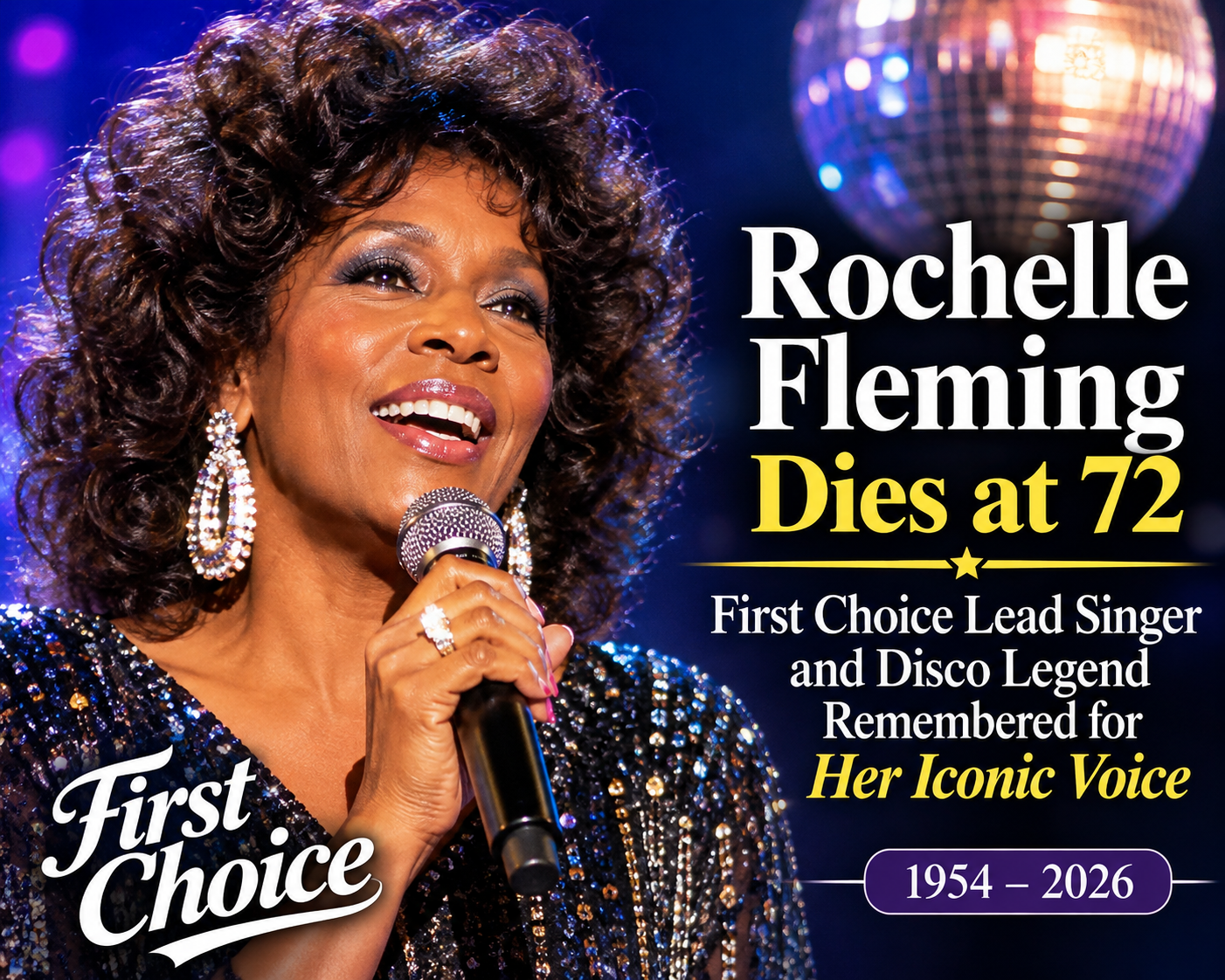
Rochelle Fleming, the celebrated lead singer and founding member of Philadelphia R&B and disco group First Choice, has died at the age of 72. Her powerful voice helped create some of the most memorable dance and soul recordings of the 1970s, including “Armed and Extremely Dangerous,” “Smarty Pants,” “Doctor Love,” and “Let No Man Put Asunder.”
Fleming’s death was announced through a statement shared on her official social media account by her manager, George Correia. According to the announcement, she died on November 5, 2026, in Philadelphia, Pennsylvania. No cause of death was disclosed.
Her passing has prompted tributes from fans, musicians, DJs, and members of her church community. Many have remembered her as an influential vocalist whose music reached audiences well beyond the United States.
Rochelle Fleming’s Death Confirmed at 72
News of Fleming’s death became public in November 2026, bringing sadness to fans of Philadelphia soul, R&B, disco, and house music.
Her manager, George Correia, shared a statement announcing the death of Rochelle Fleming-Finney, as she was known in later years. The message described her as someone who brought light, laughter, and love to the world.
The announcement also confirmed that she passed away in Philadelphia on November 5 at the age of 72. It did not provide information about the circumstances of her death.
As of November 9, no cause of death had been publicly announced. Details of memorial services were also expected to be shared at a later date.
Fleming’s death was particularly significant for the dance music community because her recordings continued to reach new listeners decades after First Choice’s original run.
Christian Hope Baptist Church Remembers Its Beloved Member
Christian Hope Baptist Church in Philadelphia also paid tribute to Fleming, describing her as a beloved member of its congregation.
The church said its family was heartbroken by her passing. Its statement highlighted the difference between the internationally recognized singer known to music fans and the person who remained connected to her local community.
According to the church, Fleming joined the congregation as a child with her family and remained a faithful member throughout her life.
The statement also remembered her singing in the church choir. Congregation members recalled how people would pay close attention whenever she stepped forward to perform a solo.
The church said her voice moved people emotionally and helped lift the congregation during worship.
Its tribute offered another perspective on Fleming’s life. Although audiences around the world knew her as the lead singer of First Choice, her church remembered her as a familiar member of its community who continued sharing her musical gift close to home.
How Rochelle Fleming Became Famous With First Choice
Fleming’s musical journey began in Philadelphia, where she attended Overbrook High School.
She joined fellow students Annette Guest and Wardell Piper to form a singing group initially known as the Debonettes. The young performers developed their sound while pursuing opportunities in Philadelphia’s music scene.
The group eventually received help from local radio personality Georgie Woods, who helped connect the singers with producer Norman Harris and songwriter Allan Felder.
Those connections helped the trio develop professionally and become First Choice.
The group became part of Philadelphia’s influential soul music scene during the early 1970s. Its combination of expressive vocals, energetic arrangements, and memorable melodies helped attract listeners interested in the developing R&B and disco sounds.
Fleming’s voice became an important part of the group’s identity. Her strong delivery helped distinguish First Choice’s recordings and contributed to their popularity on radio stations and dance floors.
First Choice’s Breakthrough With Armed and Extremely Dangerous
One of First Choice’s biggest early successes was the 1973 single “Armed and Extremely Dangerous.”
The recording became the group’s breakthrough hit and helped introduce its music to a wider American audience.
The song reached No. 11 on the U.S. Billboard R&B chart and No. 28 on the Billboard Hot 100, according to reports on the group’s chart history.
Its success established First Choice as a recognizable name in the 1970s R&B scene.
The group followed that achievement with other popular recordings, including “Smarty Pants,” “The Player (Part 1),” and “Guilty.”
These songs helped build a catalog that combined soul influences with the dance-oriented production becoming increasingly popular during the decade.
Fleming’s lead vocals remained central to the group’s sound, helping First Choice connect with audiences who appreciated both the emotional qualities of R&B and the energy of disco.
Doctor Love, Love Thang and Let No Man Put Asunder
First Choice’s musical influence expanded further through its disco recordings.
Songs such as “Doctor Love,” “Love Thang,” and “Double Cross” became important additions to the group’s catalog.
Another particularly influential recording was “Let No Man Put Asunder,” originally included on the group’s 1977 album Delusions.
The song later became a major favorite among DJs and house music audiences. Its vocal performance and musical elements were repeatedly used in dance music sets, remixes, and productions.
The track’s continued popularity helped introduce Fleming’s voice to listeners who were not necessarily familiar with First Choice’s original 1970s releases.
Singer Mary J. Blige also recorded a version of “Let No Man Put Asunder” in 1999, helping bring renewed attention to the composition.
First Choice Disbanded, but Fleming Continued Her Music Career
First Choice eventually broke up in 1980 after building a successful recording history.
However, Fleming did not leave music behind.
She continued pursuing a solo career and recorded dance-oriented releases, including “Love Itch” and “Danger!”
Her work allowed her to remain connected to the dance music world while the original First Choice recordings continued attracting listeners.
The group’s influence also grew as disco developed into new forms of electronic dance music. DJs and producers continued using its recordings, and songs such as “Let No Man Put Asunder” became recognizable across different generations of club culture.
First Choice’s music was not limited to the original disco audience. Its recordings became part of a wider musical history connecting Philadelphia soul, disco, and house music.
Why Rochelle Fleming’s Voice Influenced R&B, Disco and House Music
Fleming’s legacy extends beyond the group’s chart successes.
Her vocal performances helped connect the emotional style of Philadelphia soul with the rhythmic energy of disco. That combination made First Choice’s music suitable for both radio listening and dance floors.
The group’s recordings also remained relevant because later DJs and producers continued rediscovering and reworking them.
“Let No Man Put Asunder” is an important example. Its popularity among house music audiences demonstrated how a recording from the 1970s could find a new audience through club culture.
Fleming’s voice became recognizable to listeners who discovered the music through remixes, samples, covers, and DJ performances rather than through the original releases.
Music producer and DJ Lenny Fontana also remembered Fleming as an important figure in R&B, disco, and house music.
In a Facebook tribute, Fontana described her as an icon and highlighted how frequently her voice appeared in sampled dance recordings.
His message reflected the broader appreciation for Fleming among music professionals who understood the lasting influence of her recordings.
Frequently Asked Questions About Rochelle Fleming
1. Who was Rochelle Fleming?
Rochelle Fleming was an American R&B and disco singer best known as a founding member and lead vocalist of Philadelphia group First Choice. She performed on popular recordings including “Armed and Extremely Dangerous,” “Smarty Pants,” and “Let No Man Put Asunder.”
2. How old was Rochelle Fleming when she died?
Rochelle Fleming was 72 years old when she died on November 5, 2026, in Philadelphia, Pennsylvania.
3. What was Rochelle Fleming’s cause of death?
Her cause of death had not been publicly disclosed as of November 9, 2026. Her manager confirmed her passing but did not provide medical details.
4. What group was Rochelle Fleming part of?
She was a founding member and lead singer of First Choice, a Philadelphia R&B and disco group formed in the early 1970s. The group initially performed as the Debonettes.
5. What were Rochelle Fleming’s most famous songs?
Some of First Choice’s best-known recordings featuring Fleming include “Armed and Extremely Dangerous,” “Smarty Pants,” “The Player (Part 1),” “Guilty,” “Doctor Love,” “Love Thang,” and “Let No Man Put Asunder.”
6. Did Rochelle Fleming have a solo career?
Yes. After First Choice broke up in 1980, Fleming continued performing and recording as a solo artist. Her solo dance releases included “Love Itch” and “Danger!”
7. What did Christian Hope Baptist Church say about Rochelle Fleming?
The Philadelphia church described Fleming as a beloved lifelong member and remembered her contributions to its choir. Its statement emphasized that she remained connected to the congregation despite her international music career.
8. Why was Rochelle Fleming influential in house music?
First Choice’s recordings, especially “Let No Man Put Asunder,” became popular among DJs and house music audiences. Their continued use in dance sets, remixes, and productions helped introduce Fleming’s vocals to new generations.
Final Thoughts: Rochelle Fleming Leaves Behind a Lasting Musical Legacy
Rochelle Fleming’s death marks the loss of a distinctive voice from Philadelphia’s R&B and disco history.
As a founding member and lead singer of First Choice, she helped create recordings that became important parts of 1970s soul and dance music. Her performances continued reaching new audiences through house music, sampling, remixes, and later covers.
Her church community remembered her as a faithful member who shared her singing talent beyond the concert stage, while musicians and fans celebrated her influence on dance music.
Although her passing at 72 has brought sadness to listeners, the recordings she helped create remain part of the musical history of R&B, disco, and house music.