
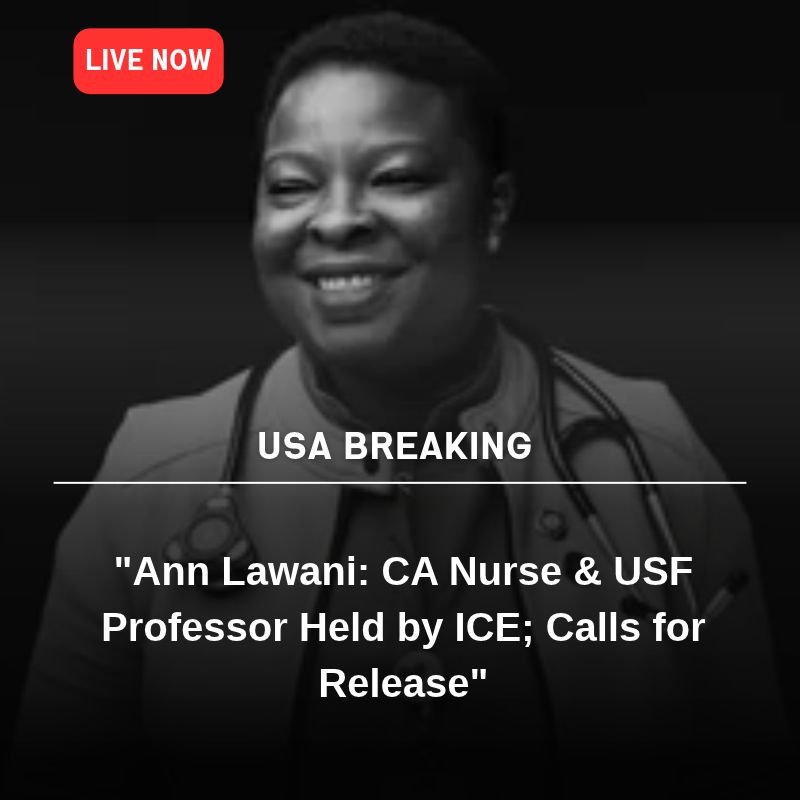
Dr. Ann Lawani, a California nurse and University of San Francisco professor, remains in federal immigration detention nearly two months after U.S. Immigration and Customs Enforcement (ICE) agents arrested her at her home in September 2026. Her detention has prompted growing concern among university colleagues, healthcare professionals, family members and elected officials, who are calling on federal authorities to release her.
Lawani, 39, was taken into custody at her home in Lodi, California, on September 16. Since then, she has reportedly been transferred between detention facilities in California, Texas and Louisiana. Her colleagues say the distance from her family and professional community has made an already difficult situation more distressing.
The case has attracted attention because Lawani has worked as a nurse and nursing educator, has authorization to work in the United States and previously received protection from deportation to Nigeria from an immigration judge. However, the Department of Homeland Security (DHS) says she overstayed her original admission and remains subject to a final removal order issued in 2013.
As Rep. Josh Harder and other supporters press for intervention, the dispute raises questions about immigration detention, legal protection from deportation and the circumstances under which federal authorities can continue holding someone in custody.
Who Is Ann Lawani? California Nurse and University Professor
Dr. Ann Lawani is a nursing professional and educator who has built her career in California. She has served on the faculty of the University of San Francisco (USF), where she has been involved in educating future nurses and overseeing the university’s master’s nursing program.
Her work has also included clinical nursing responsibilities at John Muir Health. Her colleagues describe her as an experienced healthcare professional who has contributed to patient care, nursing education and the development of future healthcare workers.
Lawani has reportedly lived in the United States for approximately 21 years and in Lodi for around 13 years. She is also a caregiver for her 83-year-old father, according to statements from her family and supporters.
Her detention has affected more than her immediate family. University colleagues say her absence has disrupted academic responsibilities and removed an experienced educator from a nursing program that prepares students for healthcare careers.
Dr. Eileen Fry-Bowers, dean of the USF School of Nursing and Health Professions, has publicly supported Lawani and spoken about the impact of her detention.
Fry-Bowers said colleagues decided to speak publicly because they believe community advocacy could help secure Lawani’s release. She also described her as a respected member of the university community.
ICE Arrested Ann Lawani at Her Lodi Home in September
Lawani’s detention began on September 16, 2026, when federal immigration agents arrested her at her Lodi residence.
According to Fry-Bowers, she received a message from Lawani after the arrest. The message reportedly said that immigration enforcement had detained her and that she did not understand what was happening.
Fry-Bowers recalled receiving several messages and a call-related notification from her colleague. She said the news immediately raised concern among people who knew Lawani through their professional relationship.
Following the arrest, Lawani was initially held at a facility in California. She was subsequently transferred to El Paso, Texas, before being moved to Louisiana, according to colleagues and other reports.
The transfers have become a major part of the controversy. Lawani’s supporters say moving her thousands of miles from California has made it more difficult for family members and legal representatives to maintain contact and follow her case.
Reports also indicate that her location was not consistently available through ICE’s public detainee locator, creating additional difficulties for people trying to determine where she was being held.
Her supporters argue that she should be returned to California and allowed to pursue her immigration proceedings outside detention.
Immigration Judge Granted Protection From Removal to Nigeria
One of the most important issues in Lawani’s case is the legal protection she previously received from an immigration judge.
According to a letter from Rep. Josh Harder to the Department of Homeland Security, an immigration judge determined that Lawani would likely face persecution if she were returned to Nigeria. The judge granted her protection from removal to that country.
This type of protection is generally known as withholding of removal. It prevents the government from deporting an individual to a specific country when the legal requirements for protection are met.
However, withholding of removal is not the same as permanent residency, citizenship or asylum. It does not automatically provide lawful immigration status or guarantee release from immigration detention.
That distinction is central to the disagreement between Lawani’s supporters and federal authorities.
Harder’s letter also states that a federal judge blocked her removal. Supporters say these legal protections should be respected while her immigration situation is addressed.
Her case has therefore attracted attention beyond the question of whether she can remain in the United States. It also concerns where she can legally be sent and whether continued detention is justified while those issues are considered.
Josh Harder Calls on DHS to Release Lawani
U.S. Rep. Josh Harder has become one of the leading elected officials publicly advocating for Lawani.
Harder, who represents California’s Central Valley, sent a letter to the Department of Homeland Security requesting intervention. He called for Lawani to be released under an order of supervision and returned to California for any further legal proceedings.
In his letter, Harder highlighted her work as a nurse and educator, her lack of a reported criminal history and her connections to the local community.
He argued that there was no apparent public safety justification for keeping her detained thousands of miles from home while her case proceeds.
Harder also requested information about the government’s intended removal plans, including the country to which authorities might seek to send her.
The congressman has questioned why Lawani was transferred across the country and called on federal officials to explain the legal basis for her continued detention.
California state Sen. Jerry McNerney has also expressed support for efforts to seek federal intervention. He said he intends to pressure federal officials to address the situation.
Their involvement has brought additional attention to a case that initially became known through Lawani’s colleagues and university community.
DHS Defends Its Decision to Keep Ann Lawani in Custody
The Department of Homeland Security has offered a different explanation for Lawani’s detention.
In a statement to CBS News San Francisco, DHS said Lawani entered the United States legally on June 7, 2007, on a temporary basis. However, the department said she failed to leave when her authorized stay expired on July 6, 2007.
DHS also said she received a final order of removal in 2013 and would remain in custody pending removal.
The department emphasized that employment authorization does not automatically establish lawful immigration status.
This point is important because Lawani’s supporters have highlighted her permission to work in the United States as evidence of her connection to the country. Federal officials, however, maintain that a work permit does not cancel an existing removal order or resolve every immigration issue.
DHS has not publicly provided a specific timeline for Lawani’s removal.
Its statement also included the position that people in immigration detention can choose to depart the United States. That response has drawn criticism from supporters, who say Lawani should not be held while legal questions about her protection and removal remain unresolved.
What Happens Next in Ann Lawani’s Immigration Case?
Lawani’s immediate future remains uncertain. Her supporters continue to seek her release, while DHS says she will remain in custody pending removal.
The central questions involve the scope of her protection from deportation, the legal basis for continued detention and whether federal authorities intend to pursue removal to a country other than Nigeria.
Harder’s request for intervention has added pressure on DHS to explain its actions. His office has asked federal officials to provide information about the proposed country of removal and the legal grounds for keeping Lawani detained.
Her colleagues also hope that public attention will encourage authorities to reconsider her detention.
Fry-Bowers has described Lawani as someone who makes a meaningful contribution to the university and the wider healthcare community. She believes Lawani should be able to return to her work and family.
For now, however, there is no confirmed date for her release, and DHS has not announced when it expects to resolve the matter.
The wider issue: Lawani’s case highlights the complicated relationship between immigration enforcement, employment authorization and judicial protection from deportation. While her supporters are demanding her release, federal officials maintain that the existing removal order remains relevant to her detention.
Until the legal and administrative questions are resolved, the California nurse and professor remains in ICE custody, far from the community where she spent years working and caring for others.