
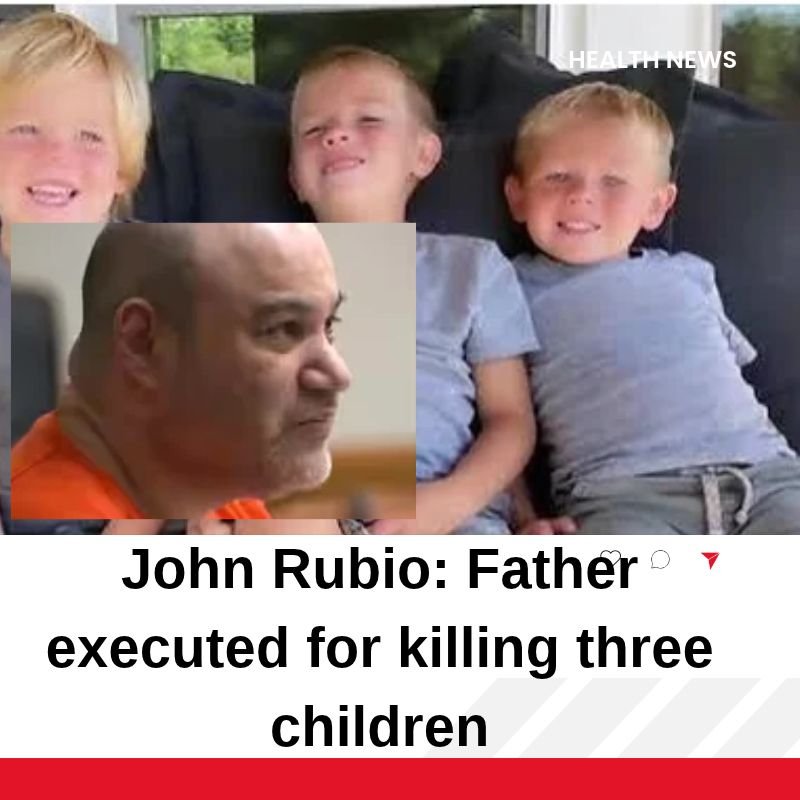
Two men were scheduled to be executed in the United States on Thursday, November 12, 2026, in separate cases in Texas and Oklahoma. One is John Allen Rubio, a Texas death row prisoner convicted in the 2003 killings of three young children he was raising in Brownsville. The other is James Pavatt, who was sentenced to death for the 2001 murder of Oklahoma City advertising executive Rob Andrew.
The cases have renewed attention on the use of the death penalty in the United States. Rubio’s case dates back more than two decades and involved the deaths of three children inside a Brownsville apartment. Pavatt’s conviction followed a separate investigation into a fatal shooting connected to an alleged affair and an insurance policy.
The executions were scheduled for Thursday, but their outcomes remained pending in the latest execution tracking information available at the time of reporting. The cases also come as the country approaches another year with more than 40 executions, continuing a period of increased use of capital punishment.
John Allen Rubio Case: Three Children Were Killed in Brownsville
John Allen Rubio, 46, was scheduled to be executed at the state prison in Huntsville, Texas. He was convicted in the deaths of three young children: 3-year-old Julissa Quesada, 14-month-old John E. Rubio and 2-month-old Mary Jane Rubio.
The killings happened in 2003 at an apartment in Brownsville, a city near the U.S.-Mexico border. Rubio and his girlfriend, Angela Camacho, were accused of killing the children in the apartment they shared.
The case shocked the local community because of the victims’ young ages and the circumstances described during the investigation and court proceedings. Prosecutors argued that the children were killed because the adults could not financially support them. Rubio reportedly claimed that the children were possessed by demons.
Camacho pleaded guilty and is serving a life sentence. Rubio maintained his innocence through the legal process and entered a plea of not guilty by reason of insanity during his second trial.
The case became one of the most closely followed capital murder prosecutions in the region. Its legal history included an overturned conviction, a second trial and repeated efforts by Rubio’s defense team to challenge the death sentence.
Why Rubio’s First Conviction Was Overturned
Rubio’s first capital murder conviction did not remain in place. An appeals court overturned it after finding that statements made by Camacho had been improperly admitted as evidence during the trial.
That ruling led to another trial. Rubio again pleaded not guilty by reason of insanity, but a jury convicted him and sentenced him to death.
The second conviction kept the case moving through the appeals process. Rubio’s attorneys continued to raise legal and mental-health arguments as the execution date approached.
In the final days before the scheduled execution, Rubio’s efforts to obtain relief did not succeed. The Texas Court of Criminal Appeals rejected a request to stop the execution, while the Texas Board of Pardons and Paroles unanimously declined to recommend clemency or a reprieve.
Those decisions left the execution scheduled for November 12. The legal proceedings show how a capital case can continue for many years, particularly when appeals challenge the evidence, the trial process or a prisoner’s mental condition.
James Pavatt Was Scheduled for Execution in Oklahoma
The second scheduled execution involved James Pavatt, 73, who was set to receive a lethal injection at the Oklahoma State Penitentiary in McAlester.
Pavatt was convicted in the 2001 fatal shooting of Rob Andrew, a 39-year-old Oklahoma City advertising executive and father of two. Prosecutors said Pavatt carried out the killing with Brenda Andrew, Rob Andrew’s estranged wife, with whom Pavatt was having an affair.
The prosecution argued that the murder was connected to an effort to obtain money from an $800,000 life insurance policy. Pavatt and Brenda Andrew were accused of conspiring to kill Rob Andrew.
Evidence presented in the case included allegations of an earlier attempt to interfere with Andrew’s vehicle. Prosecutors also described how Pavatt and Brenda Andrew fled to Mexico with her children after the murder. The pair were later arrested while returning to the United States.
Pavatt was convicted and sentenced to death. Brenda Andrew was tried separately, convicted and also sentenced to death. She remains on Oklahoma’s death row and is the only woman in the state facing that sentence.
Pavatt Continued to Dispute His Role in the Murder
Pavatt’s position in the case differed from the prosecution’s account. During his clemency hearing, he said he had been involved in an affair but denied that he killed Rob Andrew.
He argued that he had been manipulated and asked the Oklahoma Pardon and Parole Board to recommend clemency. The board voted against recommending relief, leaving the execution date in place.
Oklahoma’s attorney general had also urged the board to deny clemency. Prosecutors maintained that the evidence supported Pavatt’s conviction and death sentence.
Pavatt’s case also involved a last-minute legal effort. A request to the U.S. Supreme Court sought a stay of execution, arguing that new information about juror deliberations raised questions about the death sentence. The application was still listed as pending in the available court-tracking information.
The legal challenge was significant because a stay could have delayed the execution while the court considered the claims. However, a pending application did not itself stop the execution order.
Two Cases Bring Fresh Attention to the Death Penalty
The scheduled executions in Texas and Oklahoma came during a year of renewed attention to capital punishment across the United States.
The country was on track to exceed 40 executions for a second consecutive year, according to the Associated Press report. Florida has been a major contributor to the national pace.
The death penalty remains one of the most debated parts of the American criminal justice system. Supporters argue that it can deliver justice in the most serious murder cases and provide a form of accountability for victims’ families. Opponents raise concerns about wrongful convictions, unequal application, mental illness and whether executions serve a meaningful public purpose.
The Rubio and Pavatt cases illustrate different aspects of that debate. Rubio’s case involves the deaths of three very young children and years of legal arguments over his conviction and mental health. Pavatt’s case centers on a fatal shooting, an alleged financial motive and a dispute over his role in the killing.
Both cases also show how death penalty proceedings can continue long after a conviction. Appeals, court reviews and clemency applications can take years, while scheduled execution dates may change if courts or state officials intervene.
California Governor Announces Plans to Commute Hundreds of Death Sentences
The national debate gained further attention after California Gov. Gavin Newsom announced plans to commute hundreds of death sentences before leaving office.
If carried out, the move would represent one of the largest mass clemency actions in American history, according to experts cited by the Associated Press. A commutation changes a person’s sentence but does not erase the conviction.
California’s announcement highlights the different approaches states take toward capital punishment. Some states continue to carry out executions, while others have placed restrictions on the practice or pursued changes to death sentences.
The contrast between California’s planned commutations and the scheduled executions in Texas and Oklahoma reflects the continuing divide in the country over whether the death penalty should remain part of the justice system.
What Happens Next in the Rubio and Pavatt Cases?
The immediate question on November 12 was whether either execution would be delayed by a last-minute court order or other intervention. At the time of the available reporting, both men remained listed as scheduled for execution, with their outcomes not yet confirmed in the execution tracker.
Rubio’s execution was scheduled to take place in Huntsville, Texas, while Pavatt’s was scheduled at the Oklahoma State Penitentiary in McAlester. The cases were being handled separately under the laws and procedures of their respective states.
The families affected by the crimes have lived with the consequences for years. In Brownsville, the deaths of three children remain at the center of a case that has drawn attention because of the victims’ ages and the lengthy legal process. In Oklahoma, the murder of Rob Andrew left two children without their father and led to separate death sentences for Pavatt and Brenda Andrew.
The two scheduled executions underline the continuing role of capital punishment in the United States. They also show how individual criminal cases can become part of a much wider national discussion about justice, accountability, legal safeguards and the future of the death penalty.
The key update: John Allen Rubio and James Pavatt were both scheduled for execution on November 12, 2026. Their executions should only be described as completed after the relevant state corrections departments or reliable news organizations confirm the outcomes.