
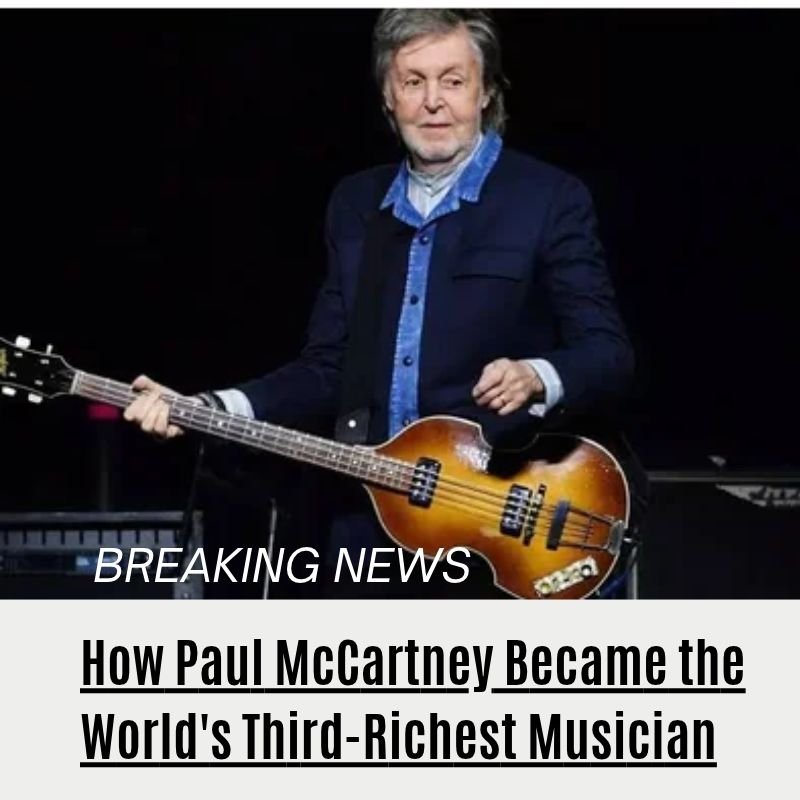
Paul McCartney has officially entered the billionaire club, adding another extraordinary milestone to a music career that has lasted more than six decades. According to a new estimate published by Forbes on November 9, 2026, the legendary Beatles musician has an estimated net worth of $1.4 billion.
The announcement places McCartney among the wealthiest musicians in the world. At 84, the British singer, songwriter and former member of The Beatles ranks third on the global musician wealth list, behind rapper and business entrepreneur Jay-Z, whose estimated fortune stands at $2.8 billion, and pop superstar Taylor Swift, with approximately $2 billion.
McCartney’s financial success comes from much more than his famous songs. His music publishing company, songwriting copyrights, Beatles-related earnings, international tours, property investments and valuable art collection have all contributed to his growing fortune.
The achievement also highlights how ownership of intellectual property can create substantial long-term income for successful musicians. Rather than depending entirely on album sales and concert tickets, McCartney has spent decades building businesses around music rights and publishing.
Paul McCartney’s Net Worth Reaches $1.4 Billion, According to Forbes
Forbes estimated McCartney’s fortune at approximately $1.4 billion in its November 9 report, published alongside the launch of its new billionaire-focused newsletter, The Billie.
The valuation recognizes the financial value of his extensive music catalog, business interests, touring income, real estate and art collection.
His position among the world’s richest musicians reflects a combination of artistic success and long-term financial decisions.
McCartney’s estimated fortune puts him behind two major names in the entertainment industry:
- Jay-Z: Approximately $2.8 billion.
- Taylor Swift: Approximately $2 billion.
- Paul McCartney: Approximately $1.4 billion.
These figures are estimates rather than publicly audited personal financial statements. Private investments, company valuations and intellectual property rights can make celebrity net worth calculations difficult.
Nevertheless, Forbes’ assessment highlights the extraordinary commercial value of McCartney’s musical career.
His journey began in Liverpool, England, where he became internationally famous as a member of The Beatles. Over the decades, he expanded his professional activities through solo music, Wings, publishing investments and worldwide performances.
MPL Communications: The Music Publishing Business Behind McCartney’s Wealth
One of the biggest contributors to Paul McCartney’s billionaire fortune is MPL Communications, the music publishing company he established in 1969.
The company manages publishing rights associated with McCartney’s own musical work and holds copyrights to songs written by other artists.
Unlike traditional musicians who primarily earn money through recording contracts and performances, McCartney developed a business model that generated income from music ownership.
MPL’s catalog includes works associated with legendary musician Buddy Holly, Broadway musical scores and well-known Christmas standards.
These publishing assets create revenue whenever qualifying songs are used commercially, streamed or performed.
For example, songs can generate publishing income when they appear in films, television programs, advertisements, theatrical productions and other licensed entertainment projects.
A particularly interesting aspect of MPL’s business is its collection of Christmas music copyrights.
Seasonal songs can generate recurring licensing and performance income because broadcasters, streaming platforms, retailers and entertainment companies use holiday music every year.
Forbes estimates that MPL’s value is at least $250 million.
This publishing business demonstrates why music catalogs have become valuable financial assets. A popular song can continue generating income decades after its original release.
McCartney’s decision to invest in music copyrights helped create a revenue stream that extends far beyond his original performances.
Beatles Royalties Continue Generating Millions for Paul McCartney
The Beatles remain one of the most commercially successful music groups in history. Their recordings continue attracting listeners through streaming platforms, vinyl records, merchandise and other entertainment products.
McCartney benefits financially from the band’s continuing commercial activities.
According to Forbes, The Beatles’ Apple Corps holding company generates approximately $50 million annually through streaming, vinyl sales and merchandise.
McCartney receives a 25% share of the company’s earnings. Ringo Starr and the estates of John Lennon and George Harrison also receive their respective shares.
Forbes estimates that the value of this income stream exceeds $150 million for each surviving member or the estates of deceased members.
The continuing popularity of Beatles music helps explain why the group’s financial influence remains significant more than half a century after its original success.
Songs such as Hey Jude, Let It Be, Yesterday and Come Together continue reaching new generations of listeners.
Their availability on modern streaming services has also helped keep the group’s music commercially relevant.
For McCartney, the Beatles catalog represents both a cultural legacy and an important source of long-term financial returns.
Paul McCartney’s Songwriting Copyrights Add Another $200 Million
Another major contributor to McCartney’s estimated wealth is his songwriting catalog.
His work with John Lennon created some of the most recognizable songs in popular music history. However, ownership and control of songwriting copyrights became a complicated issue throughout his career.
McCartney spent years pursuing greater control over the publishing rights associated with his compositions.
According to Forbes, his share of Beatles songwriting copyrights generates approximately $10 million annually.
The publication estimates that these rights are worth at least $200 million.
Songwriting copyrights are different from ownership of sound recordings. They can generate royalties when compositions are reproduced, performed publicly, streamed or licensed for commercial use.
This distinction is important because a successful song can produce multiple types of income.
For example, a streaming platform may generate payments connected to both the recording and the underlying composition.
For a songwriter with a catalog as extensive as McCartney’s, these payments can accumulate into substantial amounts over time.
His experience also demonstrates why music rights have become an important investment category in the entertainment industry.
Got Back Tour: How Live Performances Increased McCartney’s Fortune
Although music publishing and royalties represent major parts of McCartney’s wealth, touring has also played an important role.
His international concerts have attracted audiences across multiple generations.
The Got Back tour, which ran from 2022 through 2025, included 79 performances, according to Forbes.
The tour featured music from different stages of his career, including Beatles classics, Wings songs and solo material.
Live performances provide musicians with opportunities to earn revenue through ticket sales, merchandise and other commercial arrangements.
For established performers, international tours can generate significant income because their music already has a large worldwide audience.
McCartney’s ability to continue performing at major venues also demonstrates the lasting commercial appeal of his music.
Unlike artists whose popularity depends heavily on recent releases, his concert repertoire includes songs that have remained popular for decades.
This combination of recognizable music and international demand has helped sustain his touring career.
Real Estate and Art Collection Add to Paul McCartney’s Net Worth
McCartney’s estimated $1.4 billion fortune also includes valuable assets outside the music business.
Forbes identifies international real estate holdings and an art collection among the contributors to his wealth.
His property interests include homes in the United Kingdom and the Hamptons in the United States.
Real estate can contribute to long-term wealth through property appreciation and investment value.
His art collection also includes works associated with internationally recognized artists such as Pablo Picasso and René Magritte.
These assets add another dimension to his financial portfolio.
For wealthy entertainers, investments outside the music industry can help diversify their holdings and reduce dependence on a single source of income.
However, the precise market value of privately held properties and artwork can change over time.
Forbes’ $1.4 billion figure therefore represents an overall estimate rather than a fixed amount of cash or publicly disclosed investments.
Paul McCartney Remains Active With New Music in 2026
McCartney’s financial milestone arrives during another active period in his music career.
In May 2026, he released The Boys of Dungeon Lane, his first new solo album in more than five years.
The album explores personal memories, childhood experiences in Liverpool and the early years that shaped his life before worldwide Beatlemania.
According to his official website, the album was released on May 29, 2026.
It features 14 tracks, including Days We Left Behind, Ripples in a Pond, Home to Us and Momma Gets By.
The project offered fans a more personal look at the experiences that influenced his development as a musician.
The album also demonstrated that McCartney continues creating new music rather than relying exclusively on the success of his earlier recordings.
In October 2026, he released a special edition of the album featuring additional recordings, including a new version of Home to Us, his collaboration with Ringo Starr.
The special edition also included three previously unreleased songs.
These projects keep his name connected to the contemporary music industry while introducing his work to new audiences.
What Paul McCartney’s Billionaire Status Means for the Music Industry
McCartney’s estimated fortune highlights the growing financial importance of music publishing and intellectual property.
A musician’s earnings no longer need to depend entirely on touring or physical album sales.
Publishing companies, songwriting copyrights, streaming royalties and licensing arrangements can generate income for many years.
McCartney’s business approach offers an example of how musicians can build lasting financial value around their creative work.
His decision to establish MPL Communications in 1969 helped him develop interests that extended beyond performing and recording music.
The wider music industry has also seen growing interest in acquiring established music catalogs because popular songs can generate recurring royalty payments.
For investors, these catalogs represent intellectual property with potential long-term commercial value.
However, not every music catalog produces the same returns. Earnings depend on popularity, licensing agreements, copyright ownership, streaming activity and market demand.
McCartney’s position is unusual because his catalog combines decades of successful songwriting with a major publishing business and the continuing commercial success of The Beatles.
His billionaire status therefore reflects both an exceptional musical career and decades of business activity.
Will Paul McCartney remain one of the world’s richest musicians?
His future ranking will depend on changes in asset values, music royalties, business performance and the fortunes of other major entertainers. Forbes’ November 2026 estimate provides a snapshot of his financial position rather than a guarantee of future rankings.
For now, the $1.4 billion valuation places him among the most financially successful musicians in the world.
Frequently Asked Questions About Paul McCartney’s Net Worth
1. Is Paul McCartney a billionaire in 2026?
Yes. Forbes estimated Paul McCartney’s net worth at approximately $1.4 billion in November 2026, placing him among the world’s billionaire musicians.
2. What is Paul McCartney’s net worth in 2026?
His estimated net worth is $1.4 billion, according to Forbes’ November 9, 2026 report.
3. Who is the world’s third-richest musician?
Paul McCartney ranks third in Forbes’ reported musician wealth comparison, behind Jay-Z and Taylor Swift.
4. Who are the two richest musicians ahead of Paul McCartney?
Jay-Z, with an estimated $2.8 billion, and Taylor Swift, with approximately $2 billion, rank ahead of McCartney.
5. How did Paul McCartney become a billionaire?
His wealth comes from music publishing, Beatles-related earnings, songwriting copyrights, international tours, real estate and art investments.
6. What is MPL Communications?
MPL Communications is the music publishing company McCartney founded in 1969. It manages his publishing interests and owns copyrights to works by other artists.
7. How much does Paul McCartney earn from Beatles royalties?
Forbes estimates that Beatles songwriting copyrights generate approximately $10 million annually for McCartney. He also receives a share of Apple Corps’ earnings.
8. What is Paul McCartney’s latest album in 2026?
His latest solo album is The Boys of Dungeon Lane, released on May 29, 2026.
9. How old is Paul McCartney in 2026?
Paul McCartney is 84 years old in 2026. He was born on June 18, 1942.
10. Is Paul McCartney still making music?
Yes. He remains active in music and released The Boys of Dungeon Lane in May 2026, followed by a special edition in October.
Conclusion
Paul McCartney’s rise to an estimated $1.4 billion fortune is a remarkable financial achievement for one of the most influential musicians of all time. His success demonstrates how songwriting, music publishing, copyright ownership and live performances can create wealth that lasts for generations.
From The Beatles’ historic recordings to MPL Communications and his recent solo album, McCartney has built a financial legacy that extends far beyond the stage. His position as the world’s third-richest musician underscores the extraordinary commercial value of a career built on music, creativity and long-term business decisions.